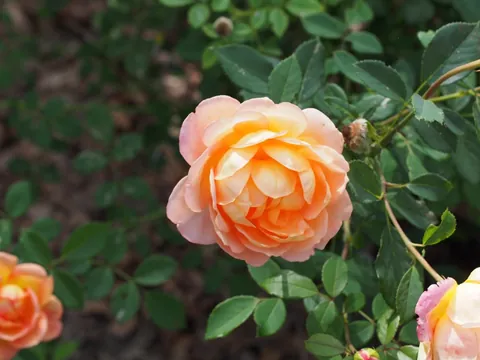
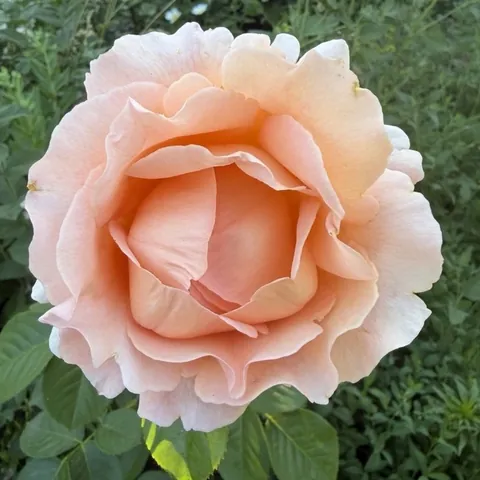
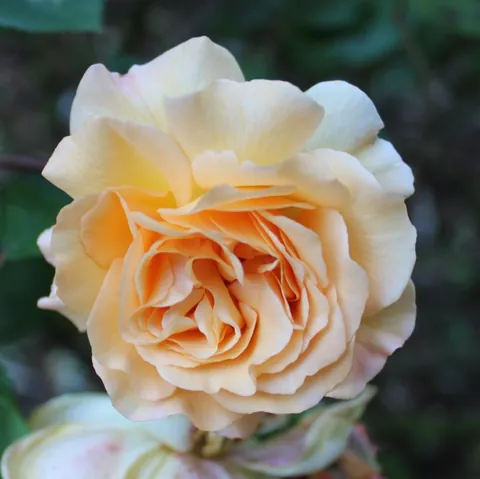
Leander, close-up of the flower
Back to catalogue
English rose (David Austin); large shrub roseDavid Austin, 1982Apricot and orange

Leander

A very large apricot shrub rose — can be trained as a low climber.

Can be trained as a climber

Variety profile

Flowering

Repeat, in flushes

A lavish first flush in early summer; weak / sporadic repeat. Months are approximate, for the climate of Ukraine.

Feature

All-rounder

A large shrub or a low climber on a support

Winter hardiness

−29 °C

USDA zone 5. Hardy to ≈ −29 °C (RHS H6).

Compare reference temperatures

Plant size

180 × 150 cm
person 170 cmon a supportup to 4 m180 cm
Habit
Very large, spreading, with long arching canes
Dimensions
As a bush ~180×150 cm; as a climber up to ~2.5–4 m
Support
As a climber — a support (fence, wall, arch); as a bush — no
Shoots
Long, arching
Branching
Dense

Flower

≈ 6 cm
Bud shape
Small, apricot
Open flower
Very full rosette, many small flowers in large clusters; ~6 cm
Centre
Dense, rosette-shaped
Fullness
Very full
Flower carriage
In large clusters at the tips of arching canes
Flower durability
A spectacular mass flush

Fragrance

Moderate

Fruity (raspberry + tea rose), moderate strength.

Disease resistance

4 out of 5

Mostly resistant; in wet weather it may be affected by powdery mildew.

Sun

Full sun

Abundant first flush + weak repeat.

Thorns

Many
thornlessfewmoderatemanyvery many

The canes are covered in bright red thorns.

Foliage

Dark green, semi-glossy; young foliage bronze.

Other names

Breeder's code AUSlea.

All characteristics in a table
Group
English rose (David Austin); large shrub rose
Breeder
David Austin, 1982
Bud shape
Small, apricot
Open flower
Very full rosette, many small flowers in large clusters; ~6 cm
Centre
Dense, rosette-shaped
Colour
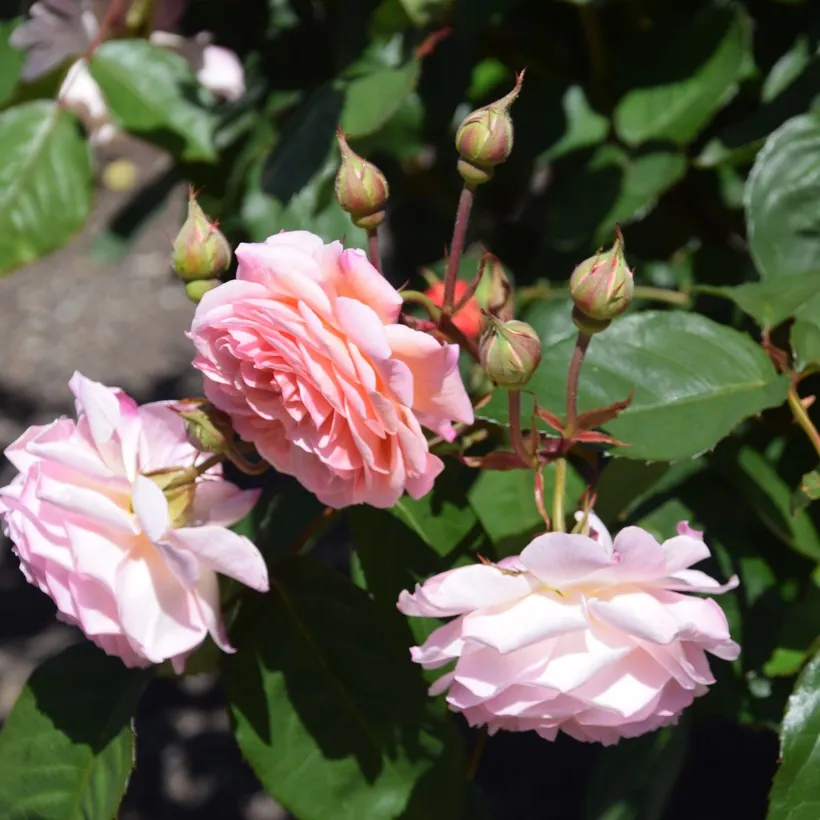
Deep apricot, fading to a lighter shade
Fullness
Very full
Flower carriage
In large clusters at the tips of arching canes
Flowering
A lavish first flush in early summer; weak / sporadic repeat
Fragrance
Fruity (raspberry + tea rose), moderate strength
Flower durability
A spectacular mass flush
Habit
Very large, spreading, with long arching canes
Branching
Dense
Shoots
Long, arching
Thorns
The canes are covered in bright red thorns.
Dimensions
As a bush ~180×150 cm; as a climber up to ~2.5–4 m
Support
As a climber — a support (fence, wall, arch); as a bush — no
Foliage
Dark green, semi-glossy; young foliage bronze
Resistance
Mostly resistant; in wet weather it may be affected by powdery mildew
Use
A fence, a large arch, a wall or a specimen shrub rose
Colour scheme

Deep apricot, fading to a lighter shade

Rose neighbours

Perennials to plant nearby

Rose neighbours

Apricot and warm roses keep one 'honeyed' palette around Leander.

Companion perennials

Blue perennials provide contrast with the warm apricot:

catmint (Nepeta)sagePerovskialavender

Contrast accents

For contrast beside the apricot, blue accents:

delphiniumcatmint (Nepeta)blue accents

More about the variety

Use
A fence, a large arch, a wall or a specimen shrub rose
How to grow

Where to plant. A fence, a large arch, a wall (as a climber) or as a specimen shrub; in early summer — a solid apricot cascade. Along a fence: plant no closer than ~1 m from a neighbouring bush, so the bushes get enough light and air.

Climate. Hardy (USDA 5, to ≈ −29 °C, RHS H6).

Care. Mostly disease-resistant; in wet weather watch for powdery mildew. Pruning shapes the plant; on a support, canes are tied in.

About the name

Name. After Leander, the hero of the Greek myth (Hero and Leander). Sometimes listed as 'Lovely Apricot'.

Breeding. David Austin (UK), code AUSlea, 1982. Father — 'Charles Austin'.

Significance. One of the largest English shrub roses — easily trained into a low climber for a fence or wall.

Frequently asked questions about Leander

Does Leander need winter protection?

The cultivar’s reference temperature is −29 °C (USDA zone 5). Overwintering depends on the conditions. Hardy to ≈ −29 °C (RHS H6).

How many times a season does Leander flower?

A lavish first flush in early summer; weak / sporadic repeat.

How big does Leander grow?

About 180 cm tall, about 150 cm wide. On a support — up to 400 cm.

Which diseases affect Leander?

Overall resistance: 4 out of 5. Mostly resistant; powdery mildew possible in wet weather.

How much sun does Leander need?

Sun; full sun; abundant first flush + weak repeat.

What does Leander smell like?

Fruity (raspberry + tea rose), moderate strength.

Gardeners' photos and reviews

My climate

Choose a reference temperature to compare with the cultivar’s data. This is not an overwintering forecast or advice on winter protection; consider wind, moisture and the duration of frost.

Regional data are generalised. USDA describes average annual extreme minima, not a forecast; the values in the list are rounded. Check the conditions at your site. More information: Roses in Ukraine's climate.