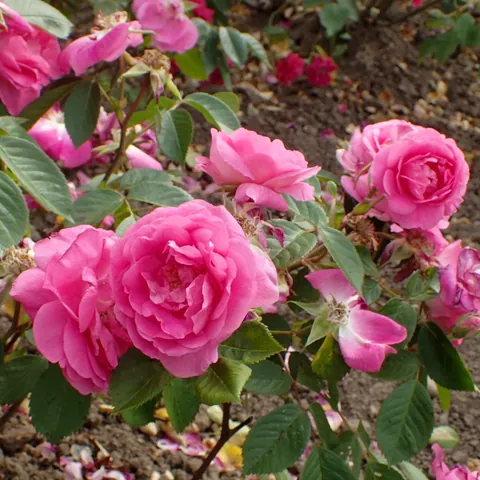
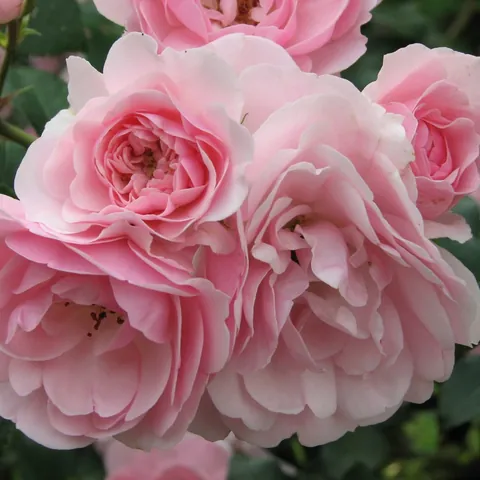
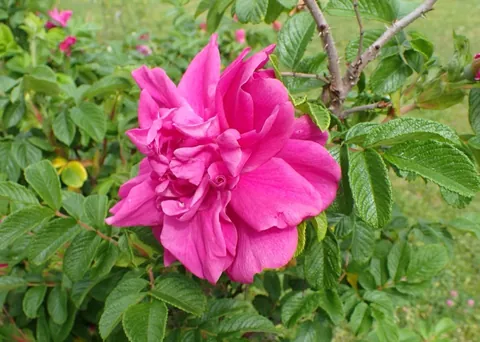
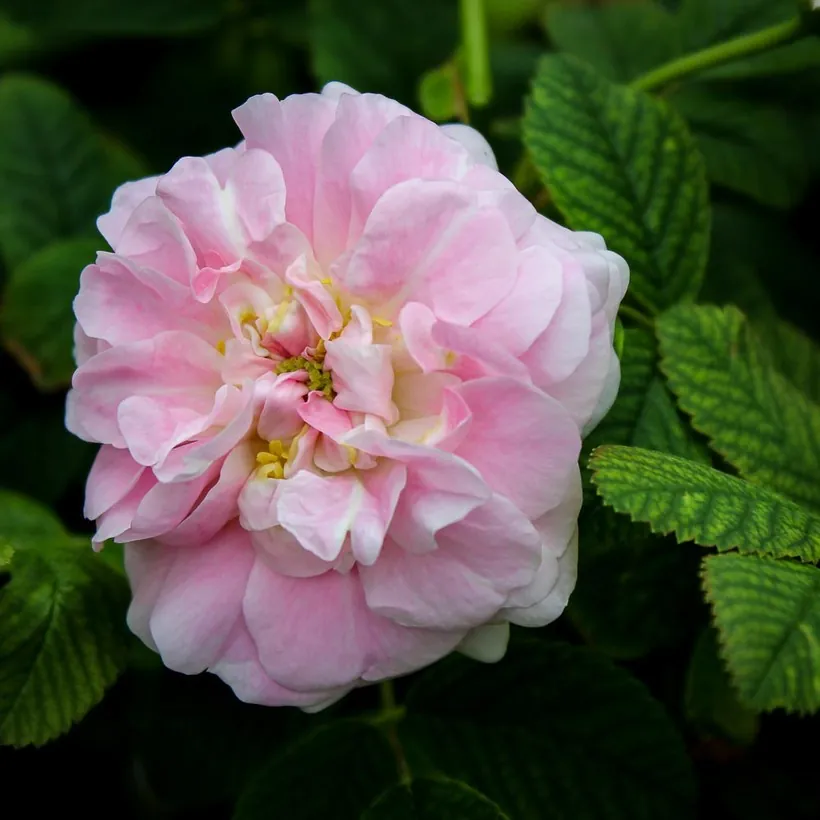
Martin Frobisher, close-up of the flower
Back to catalogue
Rugosa hybrid; Explorer series (Canada)Svejda, 1968Pink

Martin Frobisher

Explorer series; soft pink Canadian rugosa, hardy to zone 2.

The first rose of the Explorer series · very winter-hardy

Variety profile

Flowering

Repeat flowering in flushes all summer

Feature

Explorer №1

The first rose of the Canadian Explorer series

Winter hardiness

−40 °C

USDA zone 2–3. Down to about −40 °C; one of the hardiest; no cover needed. To ≈ −40 °C · one of the most winter-hardy; without winter protection.

Compare reference temperatures

Plant size

150–200 × 120–150 cm
person 170 cm150–200 cm
Habit
Upright, vase-shaped, well balanced, vigorous
Dimensions
150–200 cm tall × about 1.2–1.5 m wide
Support
Not needed; stiff canes can be tied in vertically by the fence
Shoots
Stiff, straight — can be tied in vertically ('column' form)
Branching
Good

Flower

5–6 cm
Bud shape
Round, pink
Open flower
Cupped, double, old-fashioned type; yellow stamens visible; about 5–6 cm
Centre
With yellow stamens
Fullness
Double, about 25–40 petals
Flower carriage
Singly and in small groups
Flower durability
A delicate old-fashioned flower on a hardy bush

Fragrance

Medium

Medium to strong, pleasant.

Disease resistance

4 out of 5
Black spotsusceptiblePowdery mildewresistant

Very resistant to powdery mildew; occasionally susceptible to black spot.

Sun

Sun + partial shade

Undemanding; repeat flowering all summer.

Thorns

Few
thornlessfewmoderatemanyvery many

Almost thornless on the upper canes — a rarity for rugosas.

Foliage

Wrinkled (rugose), grey-green; turns red in autumn.

All characteristics in a table
Group
Rugosa hybrid; Explorer series (Canada)
Breeder
Svejda, Canada, 1968
Bud shape
Round, pink
Open flower
Cupped, double, old-fashioned type; yellow stamens visible; about 5–6 cm
Centre
With yellow stamens
Colour
Soft / light pink, fading to creamy pink
Fullness
Double, about 25–40 petals
Flower carriage
Singly and in small groups
Flowering
Repeat flowering in flushes all summer
Fragrance
Medium to strong, pleasant
Flower durability
A delicate old-fashioned flower on a hardy bush
Habit
Upright, vase-shaped, well balanced, vigorous
Branching
Good
Shoots
Stiff, straight — can be tied in vertically ('column' form)
Thorns
Almost thornless on the upper canes — a rarity for rugosas.
Dimensions
150–200 cm tall × about 1.2–1.5 m wide
Support
Not needed; stiff canes can be tied in vertically by the fence
Foliage
Wrinkled (rugose), grey-green; turns red in autumn
Resistance
Very resistant to powdery mildew; occasionally susceptible to black spot
Use
Hedge along a fence, specimen — for the coldest regions
Colour scheme

Soft / light pink, fading to creamy pink

Rose neighbours

Perennials to plant nearby

Neighbouring roses

Hardy Canadian and rugosa roses — a natural partner for a winter-hardy hedge.

Companion perennials

Blue perennials bring out the soft pink:

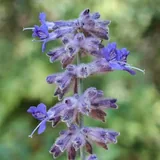
catmintsage (Salvia)perovskialavender

Contrasting accents

For contrast beside the soft pink, blue or silvery accents:

delphiniumcatmintsilvery foliage

More about the variety

Use
Hedge along a fence, specimen — for the coldest regions
How to grow

Where to plant. A hedge along a fence, or a specimen; stiff canes can be tied in vertically. Along a fence: plant no closer than about 1 m from the next bush, so the bushes get enough light and air.

Climate. One of the hardiest roses (USDA 2–3, to ≈ −40 °C) — overwinters without cover in the coldest regions.

Care. Almost indestructible and undemanding; almost thornless — easy to care for. Pruning is minimal.

About the name

Name. After Sir Martin Frobisher — a XVI-century English navigator who searched for the Northwest Passage and reached northern Canada three times.

Breeding. Felicitas Svejda, Agriculture Canada (Ottawa); bred in 1961, introduced in 1968. Descended from open pollination of the rugosa 'Schneezwerg'.

Significance. The first rose of the famous Canadian Explorer series — exceptionally hardy varieties named after explorers. Almost thornless, which is rare for rugosas.

Frequently asked questions about Martin Frobisher

Does Martin Frobisher need winter protection?

The cultivar’s reference temperature is −40 °C (USDA zone 2–3). Overwintering depends on the conditions. Down to about −40 °C; one of the hardiest; no cover needed.

How many times a season does Martin Frobisher flower?

Repeat flowering in flushes all summer.

How big does Martin Frobisher grow?

150–200 cm tall, 120–150 cm wide.

Which diseases affect Martin Frobisher?

Overall resistance: 4 out of 5. Very resistant to powdery mildew; leaf spot in places.

How much sun does Martin Frobisher need?

Sun + partial shade; undemanding; repeat flowering all summer.

What does Martin Frobisher smell like?

Medium to strong, pleasant.

Gardeners' photos and reviews

My climate

Choose a reference temperature to compare with the cultivar’s data. This is not an overwintering forecast or advice on winter protection; consider wind, moisture and the duration of frost.

Regional data are generalised. USDA describes average annual extreme minima, not a forecast; the values in the list are rounded. Check the conditions at your site. More information: Roses in Ukraine's climate.