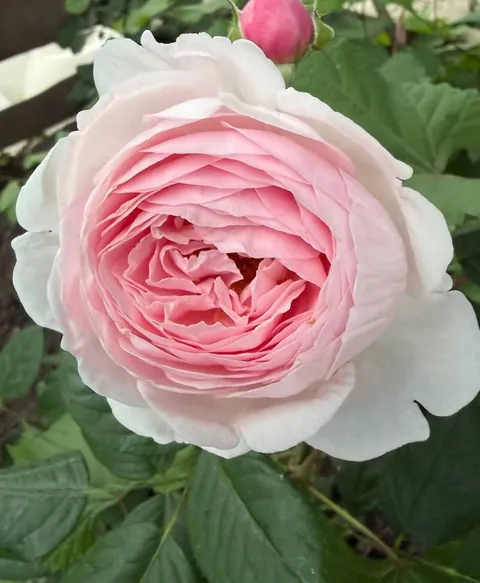
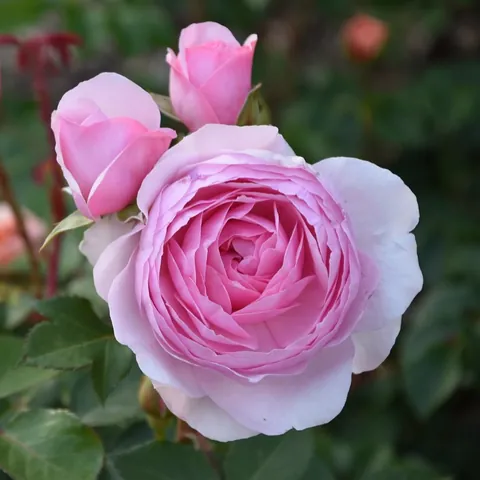
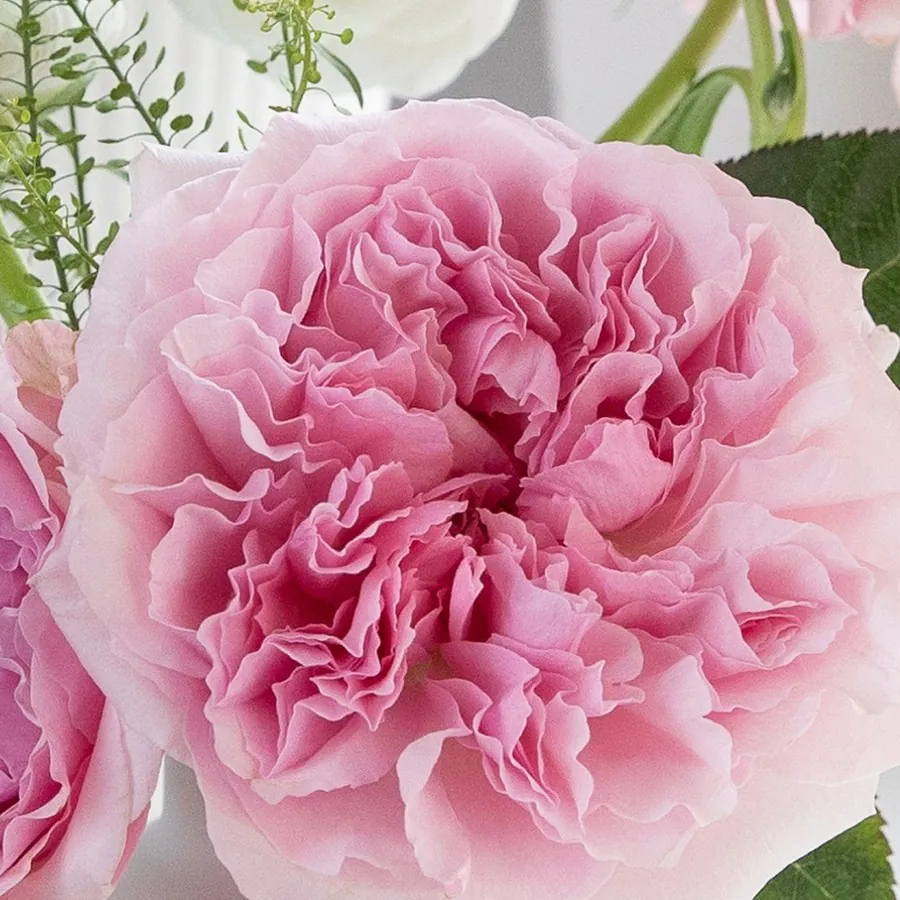
Miranda, close-up of the flower
Photo: David Austin Roses (nursery)
Back to catalogue
English rose (cut flower, Wedding & Event)David Austin, 2007Pink

Miranda

A large sugar-pink wedding rose for floristry; mainly a cut-flower variety; SAF Red Ribbon.

Variety profile

Flowering

Repeat, in flushes

Repeat-flowering; blooms in waves through the season. Months are approximate, for the climate of Ukraine.

Awards

SAF Red Ribbon

US florists' award

Plant size

120 × 60 cm
person 170 cm120 cm
Habit
No data: the variety was created and is grown mainly in greenhouses for cutting, so there is practically no description of its garden silhouette.
Dimensions
Up to 120 cm tall and up to 60 cm wide. These are figures from greenhouse cut-flower production; there are no data for open ground.
Support
Needs no support
Shoots
No data.
Branching
No data.

Flower

12–13,5 cm
Bud shape
A large, full bud that gradually opens into a cup-shaped form.
Open flower
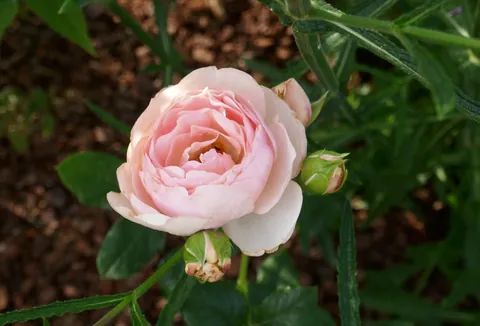
A very large, full flower, 12–13.5 cm across; cupped at first and opening over time into a flat rosette.
Fullness
Very double, up to 120 petals.
Flower carriage
No data: the variety is grown mainly in greenhouses for cutting, and no detailed description of the flower on the bush has been found.

Fragrance

Light, fruity, with spring notes

Sun

No data

Typically full sun.

Thorns

Moderate
thornlessfewmoderatemanyvery many

No exact data; the level is marked approximately as moderate, typical of David Austin cut roses.

Foliage

No data.

Other names

Breeder's code AUSimmon.

All characteristics in a table
Group
English rose (cut flower, Wedding & Event)
Breeder
David Austin, United Kingdom, 2007
Bud shape
A large, full bud that gradually opens into a cup-shaped form.
Open flower
A very large, full flower, 12–13.5 cm across; cupped at first and opening over time into a flat rosette.
Colour
Sugar pink: a saturated cherry-pink centre fades to light pink edges; the outer petals sometimes show faint green streaks.
Fullness
Very double, up to 120 petals.
Flower carriage
No data: the variety is grown mainly in greenhouses for cutting, and no detailed description of the flower on the bush has been found.
Flowering
Repeat-flowering; blooms in waves through the season.
Fragrance
Light, fruity, with spring notes.
Hips
No data.
Habit
No data: the variety was created and is grown mainly in greenhouses for cutting, so there is practically no description of its garden silhouette.
Branching
No data.
Shoots
No data.
Thorns
No exact data; the level is marked approximately as moderate, typical of David Austin cut roses.
Dimensions
Up to 120 cm tall and up to 60 cm wide. These are figures from greenhouse cut-flower production; there are no data for open ground.
Support
Needs no support
Foliage
No data.
Resistance
No data: no garden observations of disease resistance have been found, and the variety is grown mainly in controlled greenhouse conditions.
Variations of the variety
Code AUSimmon; parents: AO/045 × an unknown seedling.
Colour scheme

Sugar pink: a saturated cherry-pink centre fades to light pink edges; the outer petals sometimes show faint green streaks.

Rose neighbours

Perennials to plant nearby

Neighbouring roses

Soft pink roses — one colour family:

Companion perennials

Blue, lilac and silver neighbours highlight the soft pink:

lavendercatmintstachysgypsophila

Variety features

Miranda stands out among pink English roses above all by its purpose: it is a variety bred first and foremost for floristry:

English wedding / cut-flower roselarge rosettesugar pinkAUSimmon

More about the variety

Hips
No data.
Variations of the variety
Code AUSimmon; parents: AO/045 × an unknown seedling.
How to grow

Where to plant. Miranda was created first of all as a cut rose for wedding and event floristry, so there are no detailed recommendations for a spot in the garden. By analogy with other David Austin English roses, a sunny spot in a mixed border or flower bed will probably suit, but this is not confirmed by open-ground practice.

Climate. There are no exact data on hardiness; roughly USDA 6b–7 could be assumed, but this is not officially confirmed. In Ukraine, outside the warmest regions, it is worth covering it for winter.

Care. There are no garden care data; the variety is known mainly as a greenhouse cut flower. Following general advice for English roses, regular watering, feeding and pruning after flowering are a reasonable guide.

About the name

Name. Named after Miranda, the daughter of Prospero and a heroine of William Shakespeare's play 'The Tempest'.

Breeding. Bred at David Austin Roses (Great Britain). The variety was created in 1997 and introduced in 2007. Code AUSimmon. Parents: AO/045 × an unnamed seedling.

Significance. Miranda is a large sugar-pink rose with an impressive full rosette of up to 120 petals, grown mainly for floristry: wedding bouquets and event decoration. It received the SAF Red Ribbon from the Society of American Florists.

Frequently asked questions about Miranda

How many times a season does Miranda flower?

Repeat-flowering; blooms in waves through the season.

How big does Miranda grow?

About 120 cm tall, about 60 cm wide.

How much sun does Miranda need?

No data; typically full sun.

What does Miranda smell like?

Light, fruity, with spring notes.

Gardeners' photos and reviews

My climate

Choose a reference temperature to compare with the cultivar’s data. This is not an overwintering forecast or advice on winter protection; consider wind, moisture and the duration of frost.

Regional data are generalised. USDA describes average annual extreme minima, not a forecast; the values in the list are rounded. Check the conditions at your site. More information: Roses in Ukraine's climate.