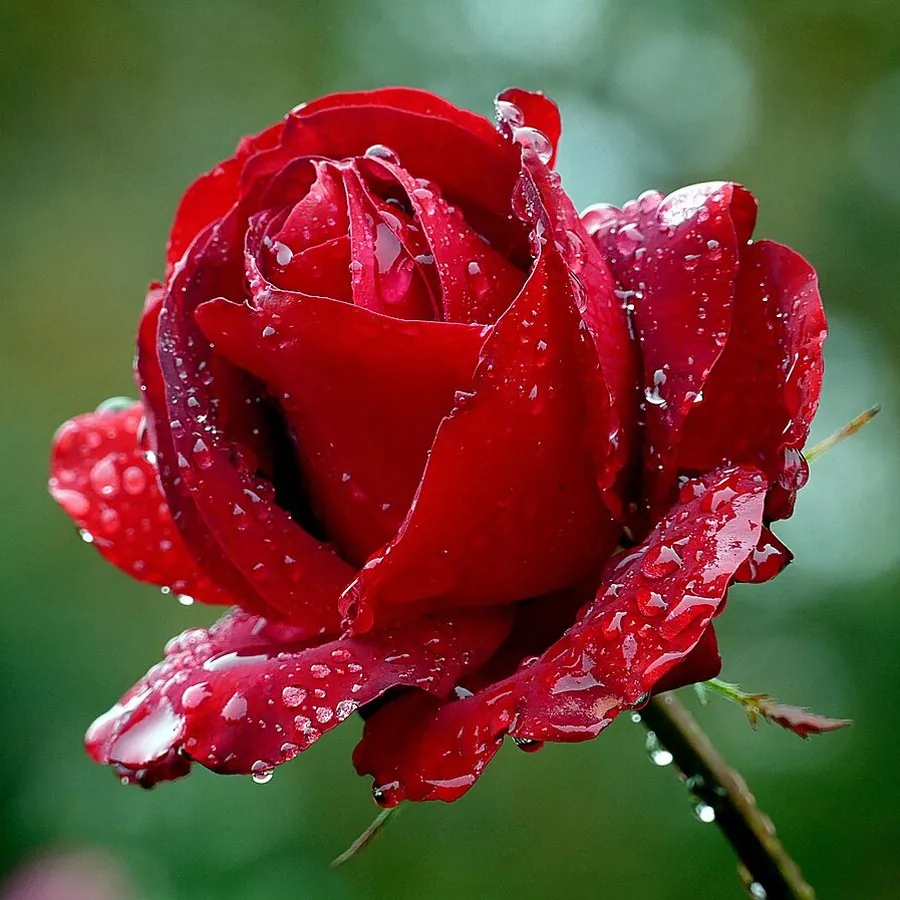
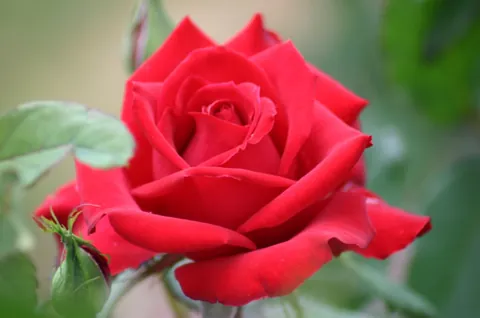
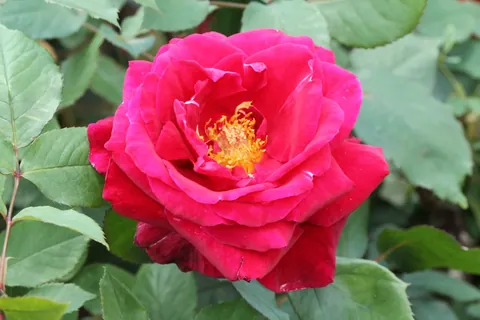
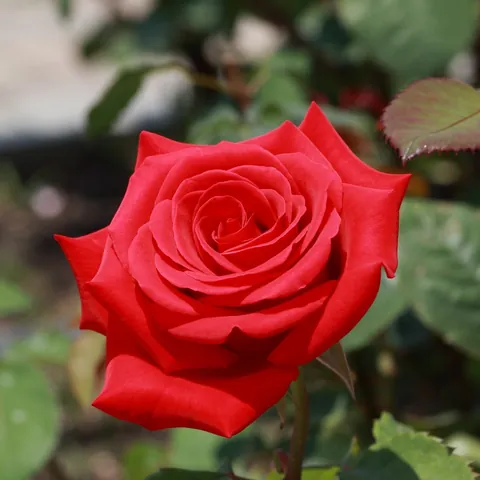




Precious Platinum, close-up of the flower
Photo: Bernard Spragg, CC0
Back to catalogue
Hybrid TeaPatrick Dickson; Dickson Roses (DIClem), 1974Red

Precious Platinum

A bright red classic of the 1970s; rich, glossy crimson, stable colour; very full, high-centred flower about 12 cm; hardy and easy to grow; excellent for cutting.

Variety profile

Flowering

Repeat, in flushes

Repeat-flowering, in flushes from spring to autumn. Months are approximate, for the climate of Ukraine.

Awards

Bagatelle · ARS

Bagatelle, Paris 1977 · Queen of Show ARS 2000 · AGM not confirmed

Plant size

90–150 × 60–90 cm
person 170 cm90–150 cm
Habit
Upright, vigorous, well foliaged
Dimensions
90–150 × 60–90 cm — from compact to tall, depending on conditions
Support
Not needed — the stems hold the flower up on their own
Shoots
Long, strong stems — convenient for cutting
Branching
Strong, straight stems — they hold the flower without flopping over

Flower

≈ 12 cm

35 petals.

Bud shape
Egg-shaped, bright red; borne singly, on long strong stems
Open flower
Classic high-centred HT form — very full, about 12 cm when fully open
Centre
Tall, tightly furled — an exhibition shape
Fullness
About 35 petals — very full
Flower carriage
Flowers borne singly on long, strong stems — excellent for cutting

Fragrance

Barely noticeable; light, unobtrusive

Barely noticeable — light, unobtrusive; not a strong point of the variety.

Disease resistance

5 out of 5

4–5/5 — resistant, hardy, tolerant even of poor soils, easy to grow.

Sun

Full sun

Colour fading — no data.

Thorns

Moderate
thornlessfewmoderatemanyvery many

A number of thorns typical of Hybrid Teas; no separate data.

Foliage

Dark green, leathery.

Other names

Red Star, Opa Pötschke
All characteristics in a table
Group
Hybrid Tea
Breeder
Patrick Dickson; Dickson Roses (DIClem), Northern Ireland, 1974
Bud shape
Egg-shaped, bright red; borne singly, on long strong stems
Open flower
Classic high-centred HT form — very full, about 12 cm when fully open
Centre
Tall, tightly furled — an exhibition shape
Colour
Bright red, a rich, glossy crimson, stable — it does not drift towards raspberry or cherry. Fading in sun — no data
Fullness
About 35 petals — very full
Flower carriage
Flowers borne singly on long, strong stems — excellent for cutting
Flowering
Repeat-flowering, in flushes from spring to autumn
Fragrance
Barely noticeable — light, unobtrusive; not a strong point of the variety
Hips
No data
Habit
Upright, vigorous, well foliaged
Branching
Strong, straight stems — they hold the flower without flopping over
Shoots
Long, strong stems — convenient for cutting
Thorns
A number of thorns typical of Hybrid Teas; no separate data.
Dimensions
90–150 × 60–90 cm — from compact to tall, depending on conditions
Support
Not needed — the stems hold the flower up on their own
Foliage
Dark green, leathery
Resistance
4–5/5 — resistant, hardy, tolerant even of poor soils, easy to grow
Variations of the variety
Code DIClem; synonyms Red Star and Opa Pötschke (German)

Colour scheme

Bright red, a rich, glossy crimson, stable — it does not drift towards raspberry or cherry. Fading in sun — no data

Rose neighbours

Perennials to plant nearby

Neighbouring roses

Bright and dark red Hybrid Teas — red classics:

Companion perennials

Cool lilac-blue and silvery tones — a classic contrast to red:

lavendercatmint (Nepeta)lamb's ears (Stachys)gypsophila

Availability worldwide

A classic red Dickson variety, sold under several names:

  • 🇬🇧 UK: as 'Precious Platinum'
  • 🇩🇪 Germany: as 'Opa Pötschke'
  • 🌍 also sold as 'Red Star'
  • 🇺🇦 Ukraine: found in collections and as cut flowers

More about the variety

Hips
No data
Variations of the variety
Code DIClem; synonyms Red Star and Opa Pötschke (German)

How to grow

Where to plant. A bright red Hybrid Tea for sunny spots — as a specimen, in a bed or a rose mixed border. The upright, vigorous bush (90–150 cm) needs no support. Long, strong stems with solitary flowers make it excellent for cutting.

Climate. USDA 6b and warmer (down to about −20…−23 °C). In Ukraine (Forest-Steppe, Steppe) it overwinters well with a dry, airy winter cover. The variety is noted for its hardiness and its tolerance even of poor soils — easy to grow, even for beginners.

Care. Full sun, standard spring pruning for Hybrid Teas. It repeat-flowers in flushes from spring to autumn — removing spent flowers encourages new flushes.

About the name

Name. 'Precious Platinum' means 'precious platinum' — a marketing contrast with the flower's bright red colour (a precious cold metal against a hot crimson). In Germany the variety is known as 'Opa Pötschke', and it also appears under the name 'Red Star' — these are synonyms of the same variety.

Breeding. Bred by Patrick Dickson at Dickson Roses (Northern Ireland), introduced in 1974. Breeder's code DIClem. Parents — 'Red Planet' × 'Franklin Engelmann'.

Significance. Awarded at the Bagatelle contest (Paris, 1977) and recognised as Queen of Show ARS (2000). The AGM (Award of Garden Merit) is not confirmed. A classic bright red Hybrid Tea of the 1970s, still valued for its stable, rich colour, hardiness and stems that are good for cutting.

Frequently asked questions about Precious Platinum

How many times a season does Precious Platinum flower?

Repeat-flowering, in flushes from spring to autumn.

How big does Precious Platinum grow?

90–150 cm tall, 60–90 cm wide.

Which diseases affect Precious Platinum?

Overall resistance: 5 out of 5. 4–5 / 5; resistant and hardy; tolerates poor soils; easy to grow.

How much sun does Precious Platinum need?

Sun; full sun; colour fading — no data.

What does Precious Platinum smell like?

Barely noticeable — light, unobtrusive; not a strong point of the variety.

Gardeners' photos and reviews

My climate

Choose a reference temperature to compare with the cultivar’s data. This is not an overwintering forecast or advice on winter protection; consider wind, moisture and the duration of frost.

Regional data are generalised. USDA describes average annual extreme minima, not a forecast; the values in the list are rounded. Check the conditions at your site. More information: Roses in Ukraine's climate.