




About the name
Name. 'Robin Hood' — after Robin Hood, the legendary English archer and 'outlaw hero' of Sherwood Forest. A symbol of English folklore, nonconformity and social justice (according to legend, he robbed the rich and gave to the poor). Pemberton liked literary and mythological names: Penelope (the Odyssey), Cornelia (a Roman matron), Felicia (Latin), Pax ('peace'), Robin Hood (English folklore), Daphne (Greek mythology).
Breeding. Bred by Rev. Joseph Hardwick Pemberton (1852–1926) at Havering-atte-Bower (Essex, UK). Introduced 1927. Pemberton died in 1926 — Robin Hood was released posthumously by his secretary Florence Bennett and his assistant J.A. Bentall, who carried on Pemberton's work. Parentage: an unnamed seedling × 'Miss Edith Cavell' (Floribunda/Polyantha).
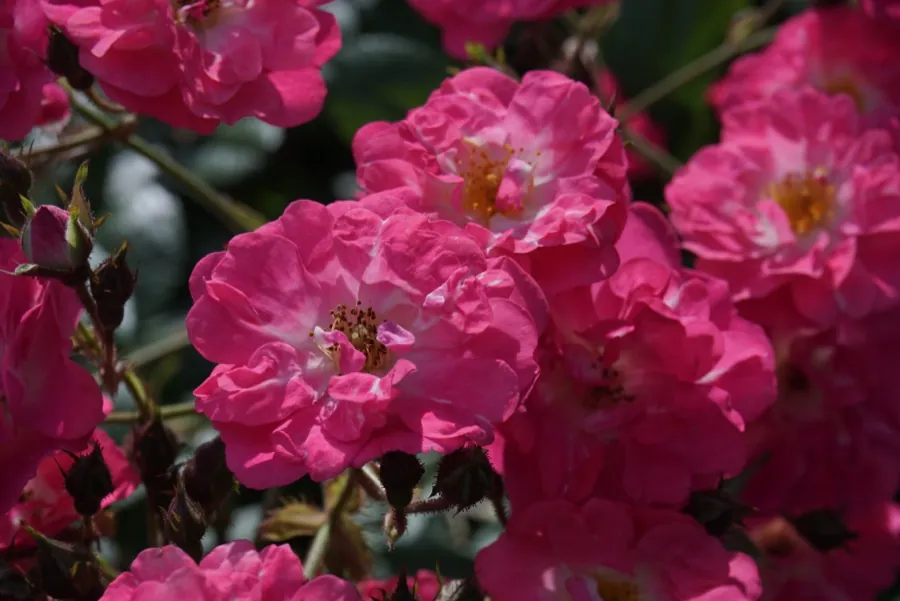
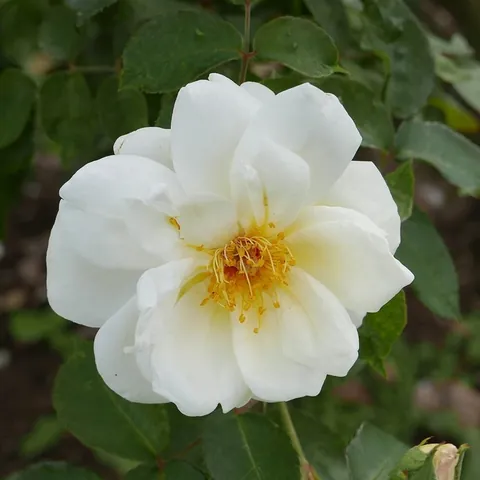
Significance. One of Pemberton's top varieties — alongside Pax (1918), Penelope (1924), Prosperity (1919), Felicia (1928) and Cornelia (1925), all already in the catalogue. A distinctive flower with a white eye — a rarity among Hybrid Musks. Decorative red hips in autumn — an extra decorative feature. It tolerates partial shade — typical of Hybrid Musks; a good choice for shady areas. One of the last Pemberton-bred varieties — a posthumous legacy of the 'father of the Hybrid Musk class'. A classic in the catalogues of Peter Beales, Trevor White and David Austin.