


Back to catalogue
Shrub; one of the best modern “fountain” shrub rosesRobert A. Holmes; amateur hybridiser, 1976White and cream

Sally Holmes

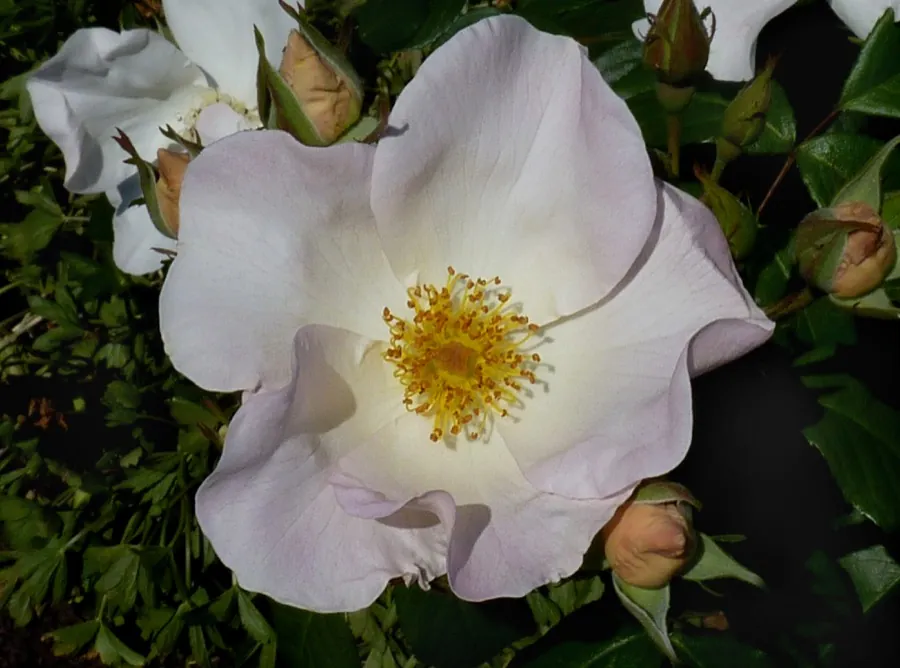
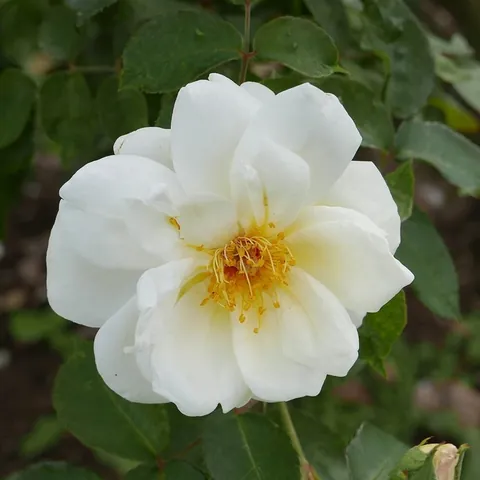
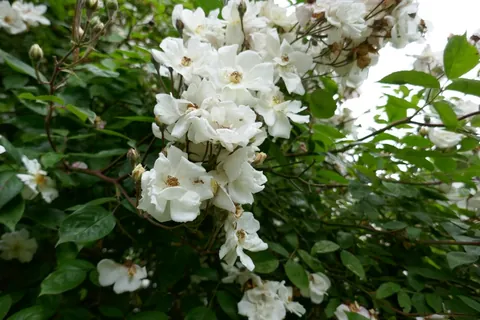
White single flowers with yellow stamens in large clusters of 10-40; WFRS Hall of Fame 2012 + RHS AGM + Monza Gold 1979 + Baden-Baden Gold 1980 + Portland Gold 1993; named after the breeder's wife; parentage Ivory Fashion × Ballerina; one of the best modern 'fountain' shrub roses, for a hedge up to 3.6 m tall.

WFRS Hall of Fame 2012 + RHS AGM + 3 Gold Medals

Variety profile

Flowering

Repeat flowering

Generously repeat-flowering from June to October. Months are approximate, for the climate of Ukraine.

Legacy

WFRS HoF 2012

RHS AGM · 3 Gold Medals

Winter hardiness

−26 °C

USDA zone 5b-9b. All of Ukraine, without winter protection.

Compare reference temperatures

Plant size

185–365 × 120–185 cm
person 170 cm185–365 cm
Habit
'fountain': flexible shoots with clusters of white flowers falling like a waterfall
Dimensions
185-365 cm tall × 120-185 cm wide: quite large, often shaped as a “living wall” or hedge
Support
Not needed; self-supporting, but it can be trained on a support for extra height
Shoots
Almost thornless, a rarity among shrub roses
Branching
Well branched, with flexible stems

Flower

10-12 cm
Bud shape
With a pink tinge and peach-cream: a contrasting base
Open flower
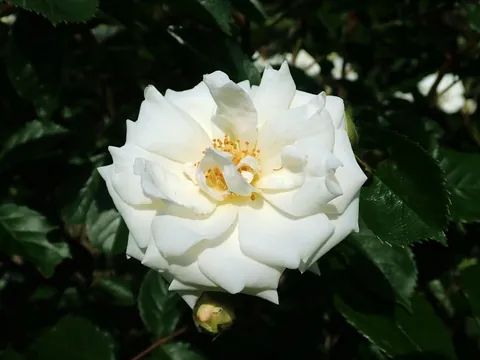
Single, 4-8 petals, 10-12 cm, in large clusters of 10-40 flowers
Centre
Bright yellow stamens, the main visual accent against the white background
Fullness
4-8 petals (single)
Flower carriage
In very large clusters of 10-40 flowers at once, hence the 'fountain'

Fragrance

Light; musky

Mild musky, a hint of kinship with Hybrid Musks through the Ballerina-parent.

Disease resistance

4 out of 5
Black spotresistant

Good, 4/5; may be affected by black spot in unfavourable seasons; USDA 5b-9b.

Sun

Sun and shade

Tolerates partial shade; almost thornless.

Thorns

Thornless
thornlessfewmoderatemanyvery many

Almost thornless, a special feature of Sally Holmes.

Foliage

Dark green, semi-glossy.

All characteristics in a table
Group
Shrub; one of the best modern “fountain” shrub roses
Breeder
Robert A. Holmes; amateur hybridiser, United Kingdom, 1976
Bud shape
With a pink tinge and peach-cream: a contrasting base
Open flower
Single, 4-8 petals, 10-12 cm, in large clusters of 10-40 flowers
Centre
Bright yellow stamens, the main visual accent against the white background
Colour
Metamorphosis: a peach-cream bud with a pink tinge opens into white or cream single flowers with yellow stamens, and finally pure white. Three colour stages on the bush at the same time
Fullness
4-8 petals (single)
Flower carriage
In very large clusters of 10-40 flowers at once, hence the 'fountain'
Flowering
Generously repeat-flowering from June to October
Fragrance
Mild musky, a hint of kinship with Hybrid Musks through the Ballerina-parent
Hips
Not documented; typically cut off
Habit
'fountain': flexible shoots with clusters of white flowers falling like a waterfall
Branching
Well branched, with flexible stems
Shoots
Almost thornless, a rarity among shrub roses
Thorns
Almost thornless, a special feature of Sally Holmes.
Dimensions
185-365 cm tall × 120-185 cm wide: quite large, often shaped as a “living wall” or hedge
Support
Not needed; self-supporting, but it can be trained on a support for extra height
Foliage
Dark green, semi-glossy
Resistance
Good, 4/5; may be affected by black spot in unfavourable seasons; USDA 5b-9b
Variations of the variety
Code HOLcocha. Introduced 1976 through Fryer's Roses. Breeder: Robert A. Holmes, an amateur hybridiser. Parentage: 'Ivory Fashion' (Floribunda) × 'Ballerina' (Hybrid Musk); the musky character is inherited from Ballerina

Colour scheme

Metamorphosis: a peach-cream bud with a pink tinge opens into white or cream single flowers with yellow stamens, and finally turns pure white. Three colour stages on the bush at the same time

Rose neighbours

Perennials to plant nearby

Neighbouring roses

The Pemberton Hybrid Musk family creates a “classic shrub corner”:

Perennial companions

Classic English cottage palette:

lavenderhostalady's mantle (Alchemilla)catmint (Nepeta)

Availability worldwide

⭐⭐ One of the most famous modern shrub roses:

🇬🇧 UK: very high · country of origin🇺🇸 USA: high · classic🇪🇺 Europe: very high🇺🇦 Ukraine: high · via landscape designers

More about the variety

Hips
Not documented; typically cut off
Variations of the variety
Code HOLcocha. Introduced 1976 through Fryer's Roses. Breeder: Robert A. Holmes, an amateur hybridiser. Parentage: 'Ivory Fashion' (Floribunda) × 'Ballerina' (Hybrid Musk); the musky character is inherited from Ballerina

How to grow

Where to plant. As a hedge or “living wall” (up to 3.6 m); as a “fountain” accent in the garden; as a backdrop for mixed borders; ideal for “English” corners with a pastoral feel; good for children's gardens because it has no thorns.

Climate. All of Ukraine without winter protection (USDA 5b-9b); copes well with summer heat and partial shade.

Care. Full sun or light shade; moderate disease prevention; feed 2-3 times per season; prune ⅓ in spring.

About the name

Name. 'Sally Holmes' honours Sally Holmes, the wife of the breeder Robert Holmes. A touching family name, a symbol of love and of the wife's contribution to the breeder's work. One of the few cases where a variety carries the name of a living loved one, not a historical figure.

Breeding. Bred by Robert A. Holmes, an amateur hybridiser from Great Britain. Code HOLcocha. Introduced in 1976 through Fryer's Roses. Parentage: 'Ivory Fashion' (Floribunda, Boerner 1958) × 'Ballerina' (Hybrid Musk, Bentall 1937). From Ballerina, a successor in the Pemberton Hybrid Musks line, it inherited the fountain-shaped habit of the bush and the character of the flower clusters.

Significance. WFRS World's Favourite Rose / Hall of Fame 2012, one of the highest global honours among modern shrub roses. RHS Award of Garden Merit. 3 Gold Medals: Monza 1979, Baden-Baden 1980, Portland 1993. A 'miracle of amateur breeding': Sally Holmes is one of the few cases where an amateur's variety became a world classic. One of the best modern fountain shrub roses, a benchmark for hedges and landscape groups. Almost thornless, which is rare among shrub roses. Versatile: as a bush, a low climber, a hedge or a backdrop. Recommended by the RHS as a reliable garden rose.

Frequently asked questions about Sally Holmes

Does Sally Holmes need winter protection?

The cultivar’s reference temperature is −26 °C (USDA zone 5b−9b). Overwintering depends on the conditions. All of Ukraine, without winter protection.

How many times a season does Sally Holmes flower?

Generously repeat-flowering from June to October.

How big does Sally Holmes grow?

185–365 cm tall, 120–185 cm wide.

Which diseases affect Sally Holmes?

Overall resistance: 4 out of 5. Good; may be affected by black spot in unfavourable seasons.

How much sun does Sally Holmes need?

Sun and shade; tolerates partial shade; almost thornless.

What does Sally Holmes smell like?

Mild musky, a hint of kinship with Hybrid Musks through the Ballerina-parent.

Gardeners' photos and reviews

My climate

Choose a reference temperature to compare with the cultivar’s data. This is not an overwintering forecast or advice on winter protection; consider wind, moisture and the duration of frost.

Regional data are generalised. USDA describes average annual extreme minima, not a forecast; the values in the list are rounded. Check the conditions at your site. More information: Roses in Ukraine's climate.