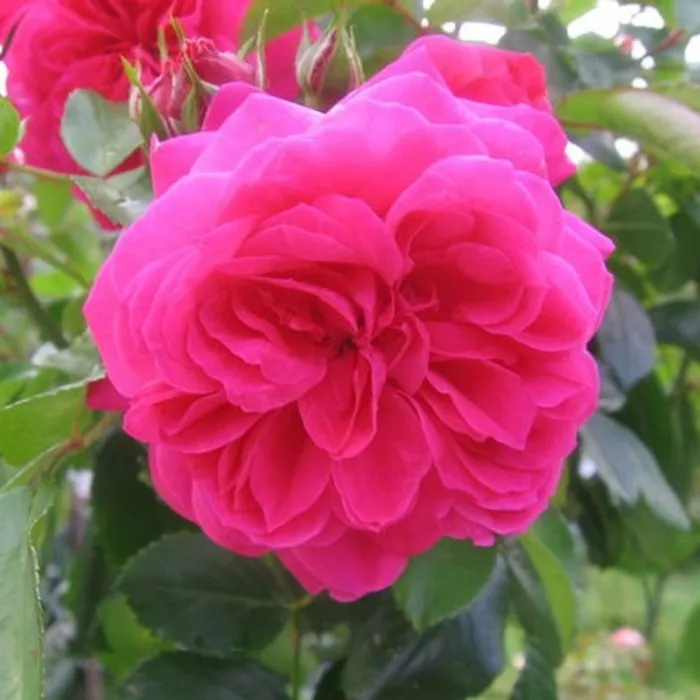
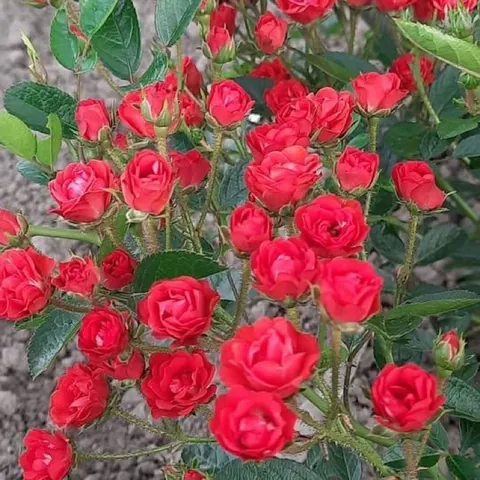
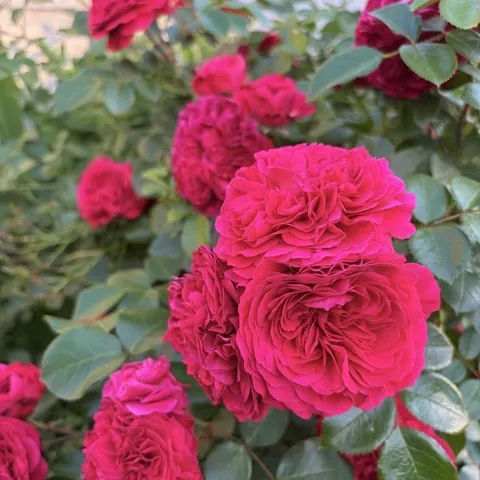
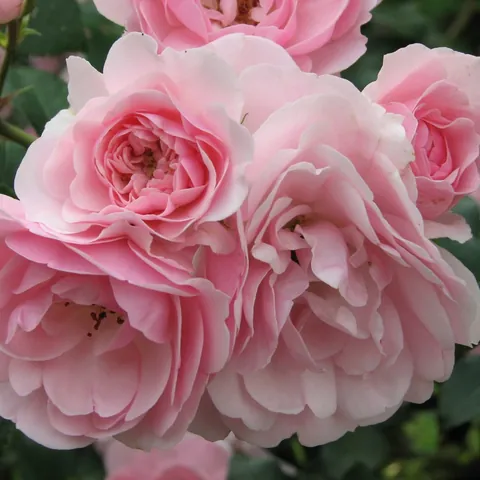
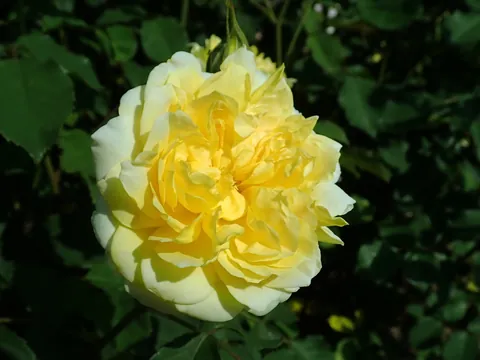




Sangria, close-up of the flower
Photo: Pétales de Roses nursery (petales-de-roses.com)
Back to catalogue
Landscape shrub; bedding; Farniente series (Meilland)MeillandPink

Sangria

Rich pink-fuchsia flowers in the colour of a summer drink; very double rosettes in clusters; the Farniente series is tough and needs almost no treatments; abundant repeat flowering from May to October.

Meiprille · not to be confused with another 'Sangria' (Meiestho, Floribunda 1966)

Variety profile

Flowering

Repeat flowering

Repeat-flowering (remontant), May–October. Months are approximate, for the climate of Ukraine.

Legacy

Farniente series

Meilland landscape roses — no spraying

Plant size

80–90 × 60–80 cm
person 170 cm80–90 cm
Habit
Bushy, dense, compact ('port buissonnant et touffu')
Dimensions
80–90 cm tall × 60–80 cm wide, for a bed, border or low hedge
Support
Not needed
Shoots
Sturdy, short
Branching
Dense and even

Flower

6–8 cm
Bud shape
Round, pink-fuchsia
Open flower
Cup-shaped, very double, in clusters
Centre
Dense, with many petals
Fullness
Very full, around 60–80 petals
Flower carriage
Flowers gathered in clusters

Fragrance

No scent

Disease resistance

5 out of 5

High (4–5/5): the Meilland series needs no treatments; 'exceptionnelle résistance aux maladies'.

Sun

Sun and shade

Sun or light partial shade; drought-tolerant.

Thorns

Few
thornlessfewmoderatemanyvery many

No exact data; probably few.

Foliage

Dense, green and healthy; deciduous.

All characteristics in a table
Group
Landscape shrub; bedding; Farniente series (Meilland)
Breeder
Meilland, France
Bud shape
Round, pink-fuchsia
Open flower
Cup-shaped, very double, in clusters
Centre
Dense, with many petals
Colour
Pink-fuchsia with a carmine tint ('rose fuchsia carminé'): the colour of summer sangria; rich and stable
Fullness
Very full, around 60–80 petals
Flower carriage
Flowers gathered in clusters
Flowering
Repeat-flowering (remontant), May–October
Fragrance
No scent
Hips
Not documented
Habit
Bushy, dense, compact ('port buissonnant et touffu')
Branching
Dense and even
Shoots
Sturdy, short
Thorns
No exact data; probably few.
Dimensions
80–90 cm tall × 60–80 cm wide, for a bed, border or low hedge
Support
Not needed
Foliage
Dense, green and healthy; deciduous
Resistance
High (4–5/5): the Meilland series needs no treatments; 'exceptionnelle résistance aux maladies'
Variations of the variety
Code Meiprille, Farniente series (landscape roses). There is ANOTHER 'Sangria': Meiestho (Floribunda, 1966, orange-red). The year and awards of Meiprille are not confirmed in open sources

Colour scheme

Pink-fuchsia with a carmine tint ('rose fuchsia carminé'): the colour of a summer sangria; rich and stable

Rose neighbours

Perennials to plant nearby

Neighbouring roses

A rich pink-red palette, “calmed” by soft contrast:

Perennial companions

Grey-silver and lilac tones balance the bright fuchsia:

lavendercatmint (Nepeta)woodland sage (Salvia nemorosa)silver lamb's ear (Stachys)

Why it's convenient

⭐ A hassle-free landscape rose:

💪 Farniente series — almost no spraying☀️ drought- and disease-resistant🌿 in groups of 3–5 in a bed or hedge✂️ no annual formative pruning needed

More about the variety

Hips
Not documented
Variations of the variety
Code Meiprille, Farniente series (landscape roses). There is ANOTHER 'Sangria': Meiestho (Floribunda, 1966, orange-red). The year and awards of Meiprille are not confirmed in open sources

How to grow

Where to plant. In a sunny bed, in a border, in a low living hedge, in groups of 3–5; the bright fuchsia is the accent of the planting.

Climate. Good winter hardiness (the Farniente series is described as tough); in colder parts of Ukraine, protect the base for winter.

Care. Minimal, with no annual formative pruning and sanitary thinning in spring; drought- and disease-resistant.

About the name

Name. 'Sangria' is a Spanish/Catalan summer drink of red wine with fruit. The name echoes the rich wine-raspberry colour of the flower. Meilland often gives its varieties 'summery, southern' associative names (like 'La Sevillana').

Breeding. Bred by the Meilland house (France), code Meiprille, from the Farniente series of landscape roses. Do not confuse it with another rose called 'Sangria': Meiestho (Floribunda, 1966, Louisette Meilland, orange-red).

Significance. A modest landscape 'workhorse', bright, drought- and disease-resistant, almost care-free. It is easy to overlook among showier varieties, but in a bed or hedge it gives generous colour all summer without fuss.

Frequently asked questions about Sangria

How many times a season does Sangria flower?

Repeat-flowering (remontant), May–October.

How big does Sangria grow?

80–90 cm tall, 60–80 cm wide.

Which diseases affect Sangria?

Overall resistance: 5 out of 5. Exceptional: a series that needs no treatments.

How much sun does Sangria need?

Sun and shade; sun or light partial shade; drought-tolerant.

What does Sangria smell like?

No scent.

Gardeners' photos and reviews

My climate

Choose a reference temperature to compare with the cultivar’s data. This is not an overwintering forecast or advice on winter protection; consider wind, moisture and the duration of frost.

Regional data are generalised. USDA describes average annual extreme minima, not a forecast; the values in the list are rounded. Check the conditions at your site. More information: Roses in Ukraine's climate.