



About the name
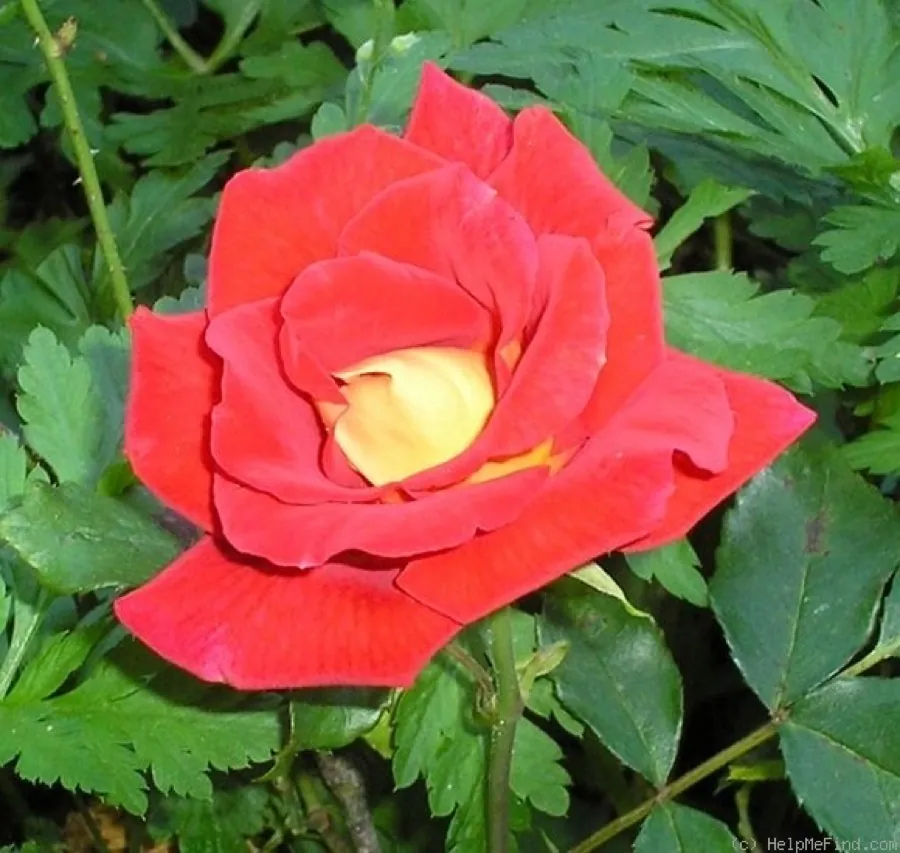
Name. 🇪🇸 'Senorita' = 'young lady' (Spanish). A poetic Spanish name hinting at the lively, 'temperamental' character of the two-tone flower. Typical of J&P marketing in the 90s: internationally recognisable names.
Breeding. Bred by William A. Warriner at Jackson & Perkins / Bear Creek (USA). Code JACdor. Introduced 1991. US Patent PP 8,579 (1994). William Warriner was the successor of the legendary Eugene Boerner ('Papa Floribunda') at J&P. Warriner continued Boerner's tradition in the floribunda class, but actively experimented with two-tone varieties in the style of the 1990s.
Significance. A typical J&P floribunda of the 1990s, representing a new stage in American breeding after Boerner: experiments with the two-tone look and reverse-coloured petals. The red-and-yellow bicolour with a reverse is a characteristic iconic look of the 1990s, alongside similar varieties of the period. Warriner's legacy: together with Showbiz (Tantau 1981) and J&P's Senorita, it held the position of a leading American floribunda rose. There are no major international awards (ADR/AARS/RHS AGM): Senorita is known above all as a commercial J&P variety, not as a competition winner. Several varieties named 'Senorita' exist in history; this main garden variety, from 1991, is Warriner's.