




Back to catalogue
Floribunda; a compact scarlet-red floribundaMathias Tantau Jr.; Rosen Tantau, 1981Red

Showbiz

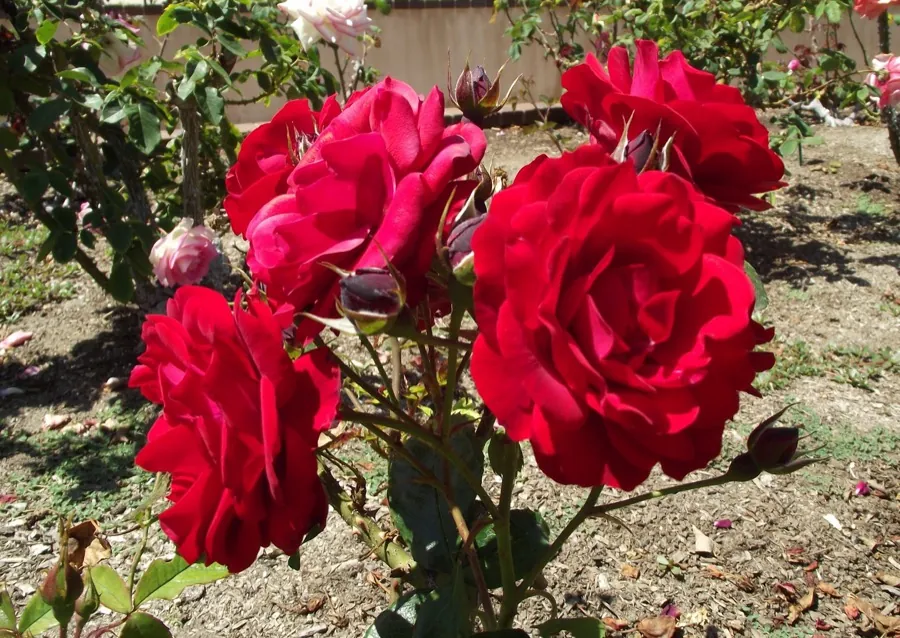
Scarlet-red velvety floribunda in large clusters; AARS 1985: it won with such a 'foregone conclusion' that the result was obvious long before the end of the 30-month trial; named for its 'spectacular' character and its record generosity of bloom; compact, 40-60 cm, for small beds.

AARS 1985 — won by a record margin, a rare “foregone conclusion”

Variety profile

Flowering

Repeat, in flushes

Record-generous repeat flowering, the main reason for its AARS-win. In flushes from June to October. Months are approximate, for the climate of Ukraine.

Legacy

AARS 1985

Foregone conclusion

Winter hardiness

−23 °C

USDA zone 6b. Ukraine: Centre / South.

Compare reference temperatures

Plant size

40–60 × 40–60 cm
person 170 cm40–60 cm
Habit
Compact, well branched: a typical Tantau-type floribunda of the 1980s
Dimensions
40-60 cm tall × 40-60 cm wide: compact, for small beds and borders
Support
Not needed; self-supporting
Shoots
Medium stiffness
Branching
Densely branched, with every side shoot carrying flowers

Flower

≈ 7.5 cm

28-30 petals.

Bud shape
Round, dark red
Open flower
Semi-double and open: ≈7.5 cm (3"), 28-30 petals
Centre
Yellow stamens visible when open: a characteristic contrast
Fullness
28-30 petals (semi-double)
Flower carriage
In large clusters: the typical 'spectacle' of a floribunda, hence the name

Fragrance

Light, sweet

Light, sweet; the breeder's priority was a spectacular quantity of flowers, not scent.

Disease resistance

4 out of 5

Good, 4/5: the glossy foliage resists disease well. USDA 6b: Ukraine Centre / South without winter protection; in the North / East, light protection.

Sun

Full sun

Thorns

Moderate
thornlessfewmoderatemanyvery many

Moderate number of thorns, typical of floribundas.

Foliage

Glossy dark green: a typical Tantau-type quality.

All characteristics in a table
Group
Floribunda; a compact scarlet-red floribunda
Breeder
Mathias Tantau Jr.; Rosen Tantau, Germany, 1981
Bud shape
Round, dark red
Open flower
Semi-double and open: ≈7.5 cm (3"), 28-30 petals
Centre
Yellow stamens visible when open: a characteristic contrast
Colour
Bright scarlet-red, velvety: rich, does not fade in the sun
Fullness
28-30 petals (semi-double)
Flower carriage
In large clusters: the typical 'spectacle' of a floribunda, hence the name
Flowering
Record-generous repeat flowering, the main reason for its AARS-win. In flushes from June to October
Fragrance
Light, sweet; the breeder's priority was a spectacular quantity of flowers, not scent
Hips
Not documented; typically cut off
Habit
Compact, well branched: a typical Tantau-type floribunda of the 1980s
Branching
Densely branched, with every side shoot carrying flowers
Shoots
Medium stiffness
Thorns
Moderate number of thorns, typical of floribundas.
Dimensions
40-60 cm tall × 40-60 cm wide: compact, for small beds and borders
Support
Not needed; self-supporting
Foliage
Glossy dark green: a typical Tantau-type quality
Resistance
Good, 4/5: the glossy foliage resists disease well. USDA 6b: Ukraine Centre / South without winter protection; in the North / East, light protection
Variations of the variety
Code TANweieke. Bred 1980, introduced 1981 through Rosen Tantau. Breeder: Mathias Tantau Jr. Parentage: 'Dream Waltz' (Floribunda, Tantau 1969) × 'Marlena®' (Floribunda, Kordes 1964); both parents are red floribundas. From 1981 to 1984 it grew under the working code '81R42' at 23 AARS trial sites

Colour scheme

Bright scarlet-red, velvety: rich, does not fade in the sun

Rose neighbours

Perennials to plant nearby

Neighbouring roses

Contrasting floribundas — for bright beds and borders:

Perennial companions

Cool purple-silver tones set off the scarlet red:

lavendercoreopsislamb's ear (Stachys)catmint (Nepeta)

Availability worldwide

A US AARS classic from the 80s:

🇺🇸 USA: very high · AARS classic🇩🇪 Germany: high · country of origin🇪🇺 Europe: high🇺🇦 Ukraine: moderate

More about the variety

Hips
Not documented; typically cut off
Variations of the variety
Code TANweieke. Bred 1980, introduced 1981 through Rosen Tantau. Breeder: Mathias Tantau Jr. Parentage: 'Dream Waltz' (Floribunda, Tantau 1969) × 'Marlena®' (Floribunda, Kordes 1964); both parents are red floribundas. From 1981 to 1984 it grew under the working code '81R42' at 23 AARS trial sites

How to grow

Where to plant. In groups of 3-5 bushes for a 'spectacular' effect; in small beds; along paths as a low red edging; as an accent in a mixed border; good in pots on a terrace.

Climate. Ukraine Centre / South without winter protection (USDA 6b); in the North / East, light protection; copes well with summer heat without fading.

Care. Full sun; moderate disease prevention (the glossy foliage protects itself); feed 2-3 times per season; prune ⅓ in spring; deadheading speeds up the second flush.

About the name

Name. 'Showbiz', short for 'show business'. For the spectacular, eye-catching character of its abundant flowering: the bush is like a 'star on stage'. Typical of Tantau-marketing in the 1980s: bright, short English names for easy recognition.

Breeding. Bred by Mathias Tantau Jr. at Rosen Tantau (Uetersen, Germany). Code TANweieke. Bred 1980, introduced 1981. Parentage: 'Dream Waltz' (Floribunda, Tantau 1969) × 'Marlena®' (Floribunda, Kordes 1964); both parents are red floribundas, which explains the exceptionally rich red pigment.

Significance. AARS 1985 (All-America Rose Selections, the main American award). A remarkable win: according to the Christian Science Monitor (1984), Showbiz won the AARS-trial by such a record margin over its rivals that the result was obvious long before the end of the 30-month trial cycle, a rare 'foregone conclusion' in AARS history. Glossy, healthy foliage, a typical quality of Tantau roses of the 1980s. Its compact size makes it ideal for small beds, borders and pots. It does not fade in the sun, a rarity among red floribundas. ADR and Belfast Gold are NOT confirmed: some secondary sources wrongly attribute these awards; checked, there is no official confirmation.

Frequently asked questions about Showbiz

Does Showbiz need winter protection?

The cultivar’s reference temperature is −23 °C (USDA zone 6b). Overwintering depends on the conditions. Ukraine: Centre / South.

How many times a season does Showbiz flower?

Record-generous repeat flowering, the main reason for its AARS-win. In flushes from June to October.

How big does Showbiz grow?

40–60 cm tall, 40–60 cm wide.

Which diseases affect Showbiz?

Overall resistance: 4 out of 5. Good; glossy foliage.

How much sun does Showbiz need?

Sun; full sun.

What does Showbiz smell like?

Light, sweet; the breeder's priority was a spectacular quantity of flowers, not scent.

Gardeners' photos and reviews

My climate

Choose a reference temperature to compare with the cultivar’s data. This is not an overwintering forecast or advice on winter protection; consider wind, moisture and the duration of frost.

Regional data are generalised. USDA describes average annual extreme minima, not a forecast; the values in the list are rounded. Check the conditions at your site. More information: Roses in Ukraine's climate.