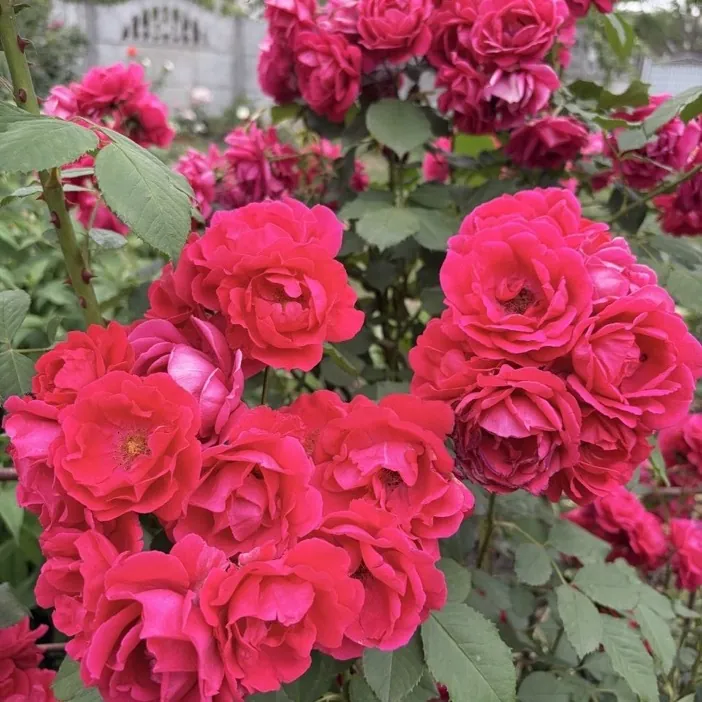
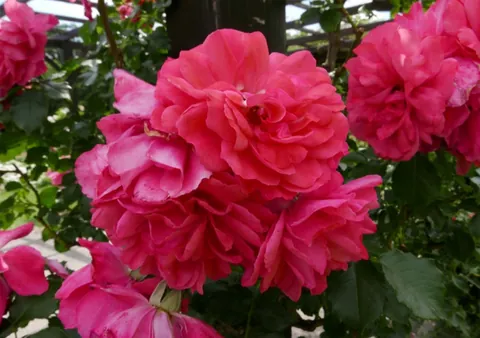





Sympathie, close-up of the flower
Back to catalogue
Hybrid Kordesii / Large-Flowered Climber; benchmark red climberReimer Kordes; W. Kordes' Söhne, 1964Red

Sympathie

Velvety cardinal-red climber that does not fade in sun; ADR 1966 (2 years after introduction — a rare speed of recognition); parentage Wilhelm Hansmann × Don Juan — both parents red climbers; one of Europe's best-selling climbers for 60+ years; exceptional winter hardiness of the Kordesii series — grows in Ukraine without winter protection.

ADR 1966 · 60+ years in Europe's bestseller lists

Variety profile

Flowering

Repeat, in flushes

Strong repeat flowering in flushes from June to October — more generous than most red climbers. Months are approximate, for the climate of Ukraine.

Legacy

ADR 1966

The benchmark red climber

Winter hardiness

−34 °C

USDA zone 4-9. All of Ukraine without winter protection.

Compare reference temperatures

Plant size

275–365 × 150–200 cm
person 170 cm275–365 cm
Habit
Powerful upright climber with stiff canes
Dimensions
275–365 cm tall × 150–200 cm wide — a full-size climber for arches, pergolas and tall walls
Support
Needs a sturdy support: arch, pergola, metal grid or wall; shapes well horizontally
Shoots
Sturdy, easy to shape on a support
Branching
Well branched; side shoots covered in flowers

Flower

9-10 cm
Bud shape
Elongated classic red
Open flower
Cupped semi-double: 9–10 cm, 17–25 petals
Centre
Opens to reveal prominent golden stamens — a distinctive contrast
Fullness
17–25 petals (semi-double)
Flower carriage
In clusters of 3–7 flowers

Fragrance

Strong; classic red rose

Strong — the classic “red rose”; noticeable from a distance on a warm summer evening.

Disease resistance

4 out of 5
Black spotresistantPowdery mildewresistant

Very good 4/5; the whole Hybrid Kordesii series was bred by Wilhelm Kordes to be resistant to black spot and powdery mildew; USDA 4–9 — one of the most frost-hardy climbers.

Sun

Full sun

Tolerates partial shade.

Thorns

Moderate
thornlessfewmoderatemanyvery many

Average number of thorns — typical for Kordesii climbers.

Foliage

Dark green, glossy, leathery — typical of Kordesii.

All characteristics in a table
Group
Hybrid Kordesii / Large-Flowered Climber; benchmark red climber
Breeder
Reimer Kordes; W. Kordes' Söhne, Germany, 1964
Bud shape
Elongated classic red
Open flower
Cupped semi-double: 9–10 cm, 17–25 petals
Centre
Opens to reveal prominent golden stamens — a distinctive contrast
Colour
Rich cardinal-red velvet — does not fade in sun, which is rare for climbers. Colour uniform all season
Fullness
17–25 petals (semi-double)
Flower carriage
In clusters of 3–7 flowers
Flowering
Strong repeat flowering in flushes from June to October — more generous than most red climbers
Fragrance
Strong — the classic “red rose”; noticeable from a distance on a warm summer evening
Hips
Not documented — typically cut
Habit
Powerful upright climber with stiff canes
Branching
Well branched; side shoots covered in flowers
Shoots
Sturdy, easy to shape on a support
Thorns
Average number of thorns — typical for Kordesii climbers.
Dimensions
275–365 cm tall × 150–200 cm wide — a full-size climber for arches, pergolas and tall walls
Support
Needs a sturdy support: arch, pergola, metal grid or wall; shapes well horizontally
Foliage
Dark green, glossy, leathery — typical of Kordesii
Resistance
Very good 4/5; the whole Hybrid Kordesii series was bred by Wilhelm Kordes to be resistant to black spot and powdery mildew; USDA 4–9 — one of the most frost-hardy climbers
Variations of the variety
Code KORlift. Introduced 1964 by W. Kordes' Söhne. Breeder: Reimer Kordes. Parentage: 'Wilhelm Hansmann' × 'Don Juan' — both parents red climbers, which explains the exceptional red pigment. Belongs to the Hybrid Kordesii series, bred from a hybrid of R. rugosa × R. wichuraiana for cold climates

Colour scheme

Rich cardinal-red velvet — does not fade in sun, which is rare for climbers. Colour uniform all season

Rose neighbours

Perennials to plant nearby

Neighbouring roses

Contrasting climbers for architectural schemes on arches and pergolas:

Perennial companions

Cool purple-silver tones — a gentle contrast to the bright red:

lavenderStachyslady's mantle (Alchemilla)catmint (Nepeta)

Availability worldwide

⭐⭐ One of Europe's best-known red climbers:

  • 🇩🇪 Germany: very high · home country
  • 🇪🇺 Europe: very high · best-seller for 60+ years
  • 🇺🇸 USA: moderate
  • 🇺🇦 Ukraine: high · a classic choice for arches

More about the variety

Hips
Not documented — typically cut
Variations of the variety
Code KORlift. Introduced 1964 by W. Kordes' Söhne. Breeder: Reimer Kordes. Parentage: 'Wilhelm Hansmann' × 'Don Juan' — both parents red climbers, which explains the exceptional red pigment. Belongs to the Hybrid Kordesii series, bred from a hybrid of R. rugosa × R. wichuraiana for cold climates

How to grow

Where to plant. On an arch or pergola as a showy accent at an entrance; on a south or south-west wall of the house; as a “rose wall” on a metal grid; to climb over a gazebo; it also works well on its own because of its intense colour.

Climate. All of Ukraine without winter protection (USDA 4–9); exceptional winter hardiness of the Kordesii series; tolerates summer heat without the colour fading.

Care. Full sun; moderate disease prevention; feed 2–3× per season; prune weak shoots in spring, and leave the main framework canes for 3–5 years for flowering.

About the name

Name. “Sympathie” = “Sympathy” (German/French). A classic “emotional” name from Kordes — an expression of sympathy for the person to whom the rose is given. A universal name that makes the variety easy to give as a gift and recognisable across Europe. Breeder: bred by Reimer Kordes at W. Kordes' Söhne (Sparrieshoop, Germany). Code KORlift. Introduced 1964. Parentage: 'Wilhelm Hansmann' × 'Don Juan' — both parents are red climbers, which gives an exceptionally saturated red pigment. It belongs to the Hybrid Kordesii series, founded by Reimer's father Wilhelm Kordes on the basis of a frost-hardy hybrid of R. rugosa × R. wichuraiana — which is why Sympathie withstands down to −34 °C without winter protection.

Significance. ADR 1966 — the prestigious German award Allgemeine Deutsche Rosenneuheitenprüfung, received 2 years after introduction (a rare speed of recognition). One of Europe's best-selling climbers for 60+ years — the standard against which all new red climbers are compared. Does not fade in sun — a rare quality for red climbers. Exceptional winter hardiness — grows without protection where other climbers freeze. Highly resistant to black spot and powdery mildew — the Kordesii series was specifically bred as a “healthier” alternative to older climbers. Versatile: arch, pergola, wall, large support — suitable in any format.

Frequently asked questions about Sympathie

Does Sympathie need winter protection?

The cultivar’s reference temperature is −34 °C (USDA zone 4−9). Overwintering depends on the conditions. All of Ukraine without winter protection.

How many times a season does Sympathie flower?

Strong repeat flowering in flushes from June to October — more generous than most red climbers.

How big does Sympathie grow?

275–365 cm tall, 150–200 cm wide.

Which diseases affect Sympathie?

Overall resistance: 4 out of 5. Very good — the Kordesii series was bred to be resistant.

How much sun does Sympathie need?

Sun; full sun; tolerates partial shade.

What does Sympathie smell like?

Strong — the classic “red rose”; noticeable from a distance on a warm summer evening.

Gardeners' photos and reviews

My climate

Choose a reference temperature to compare with the cultivar’s data. This is not an overwintering forecast or advice on winter protection; consider wind, moisture and the duration of frost.

Regional data are generalised. USDA describes average annual extreme minima, not a forecast; the values in the list are rounded. Check the conditions at your site. More information: Roses in Ukraine's climate.