Back to catalogue
English shrub rose (David Austin)David Austin, 1991Red

The Dark Lady

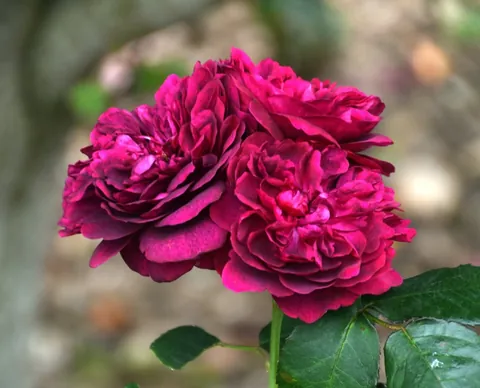
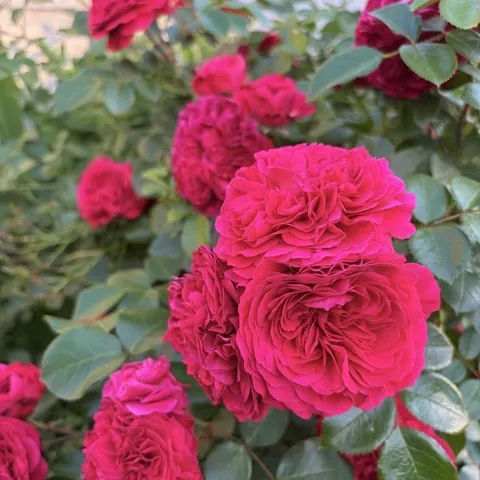
Dark raspberry English rose with a fluffy, peony-like flower.

A dark 'old-fashioned' bloom in the style of a tree peony

Variety profile

Flowering

Repeat flowering in flushes with short pauses

Feature

Peony form

Bloom like a tree peony; named after Shakespeare's sonnets

Winter hardiness

−29 °C

USDA zone 5–9. To ≈ −29 °C; overwinters with light protection. Hardy to ≈ −29 °C · overwinters with light winter protection.

Compare reference temperatures

Plant size

100–120 × 120 cm
person 170 cm100–120 cm
Habit
Spreading, rounded — wider than tall
Dimensions
100–120 cm tall × ~1.2 m wide
Support
Not needed; holds its shape well as a border bush
Shoots
Arching, flexible
Branching
Good, bushy

Flower

9–13 cm
Bud shape
Round, dark raspberry
Open flower
Loosely cupped, peony-like, slightly quartered; ~9–13 cm
Centre
Dense, no visible stamens
Fullness
Very double, up to ~140 petals
Flower carriage
Singly and in small groups on sturdy flower stalks
Flower durability
The heavy flower may bow after rain

Fragrance

Light

Light fragrance of an old rose (Old Rose).

Disease resistance

3 out of 5
Black spotmoderate

Moderate; in a wet summer blackspot is possible.

Sun

Sun and partial shade

Repeat-flowering in flushes; colour more intense in cool weather.

Foliage

Medium green, matt.

Other names

Breeder's code AUSbloom.

All characteristics in a table
Group
English shrub rose (David Austin)
Breeder
David Austin, England, 1991
Bud shape
Round, dark raspberry
Open flower
Loosely cupped, peony-like, slightly quartered; ~9–13 cm
Centre
Dense, no visible stamens
Colour
Dark muted raspberry-red; in heat it fades to dark pink
Fullness
Very double, up to ~140 petals
Flower carriage
Singly and in small groups on sturdy flower stalks
Flowering
Repeat flowering in flushes with short pauses
Fragrance
Light fragrance of an old rose (Old Rose)
Flower durability
The heavy flower may bow after rain
Habit
Spreading, rounded — wider than tall
Branching
Good, bushy
Shoots
Arching, flexible
Thorns
Moderate number of thorns — usual for Austins.
Dimensions
100–120 cm tall × ~1.2 m wide
Support
Not needed; holds its shape well as a border bush
Foliage
Medium green, matt
Resistance
Moderate; in a wet summer blackspot is possible
Use
Front and middle of a border, romantic compositions
Colour scheme

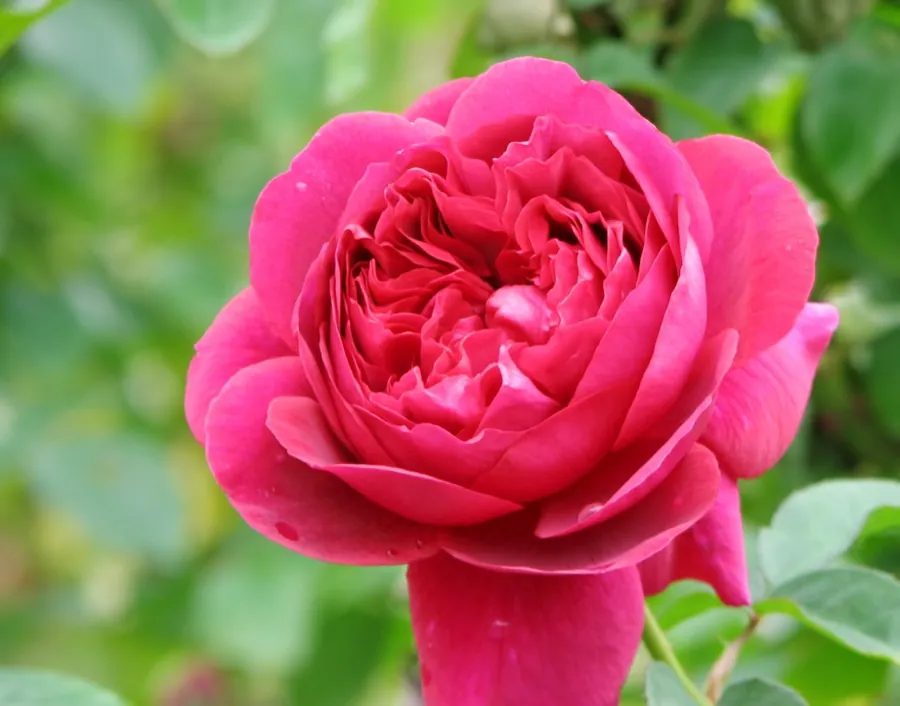
Dark muted raspberry-red; in heat it fades to dark pink

Rose neighbours

Perennials to plant nearby

Neighbouring roses

Dark and rich pink roses in the same bed intensify the deep tone of 'The Dark Lady'.

Perennial companions

Blue and silver perennials lighten the dark bloom:

catmint (Nepeta)salviaStachyslavender

Contrasting accents

For a play of light beside the dark crimson, silver and blue:

silver foliagedelphiniumcatmint (Nepeta)

More about the variety

Use
Front and middle of a border, romantic compositions
How to grow

Where to plant. At the front or middle of a border, and in romantic corners beside a bench or an entrance.

Climate. USDA 5–9 (to ≈ −29 °C) — in our conditions it overwinters with light protection at the base of the bush.

Care. Undemanding; in a wet summer watch for spotting. Moderate pruning in spring.

About the name

Name. After “The Dark Lady” — the mysterious addressee of William Shakespeare's sonnets. Breeder: David Austin (England); bred 1987, presented 1991; code AUSbloom. Descends from 'Mary Rose' × 'Prospero'.

Significance. One of David Austin's early dark red English roses, with the characteristic form of a tree peony flower.

Frequently asked questions about The Dark Lady

Does The Dark Lady need winter protection?

The cultivar’s reference temperature is −29 °C (USDA zone 5–9). Overwintering depends on the conditions. To ≈ −29 °C; overwinters with light protection.

How many times a season does The Dark Lady flower?

Repeat flowering in flushes with short pauses.

How big does The Dark Lady grow?

100–120 cm tall, about 120 cm wide.

Which diseases affect The Dark Lady?

Overall resistance: 3 out of 5. Generally healthy; moderately prone to blackspot.

How much sun does The Dark Lady need?

Sun and partial shade; repeat-flowering in flushes; colour more intense in cool weather.

What does The Dark Lady smell like?

Light fragrance of an old rose (Old Rose).

Gardeners' photos and reviews

My climate

Choose a reference temperature to compare with the cultivar’s data. This is not an overwintering forecast or advice on winter protection; consider wind, moisture and the duration of frost.

Regional data are generalised. USDA describes average annual extreme minima, not a forecast; the values in the list are rounded. Check the conditions at your site. More information: Roses in Ukraine's climate.