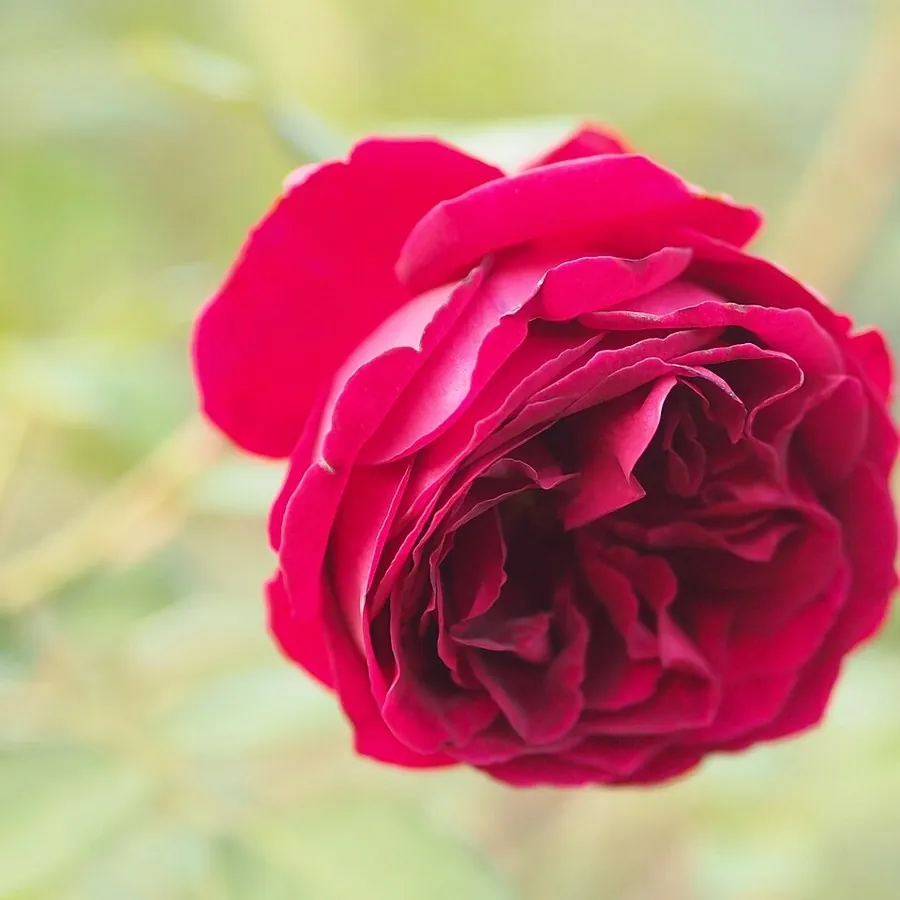
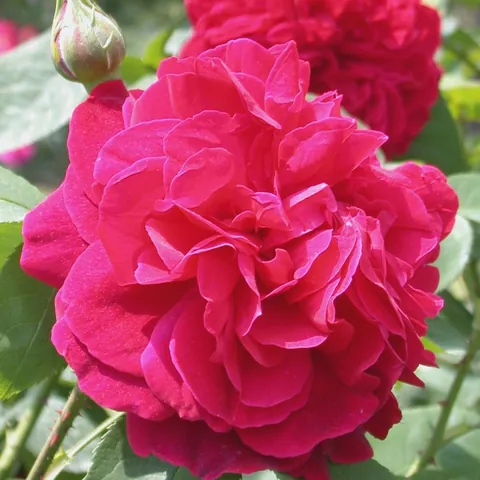
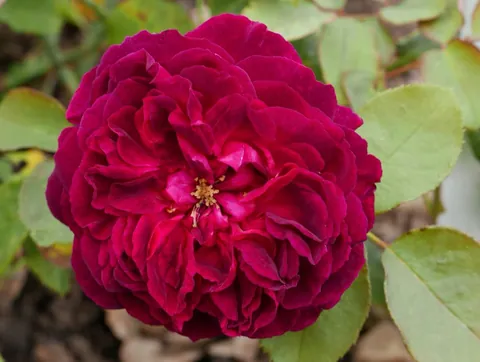
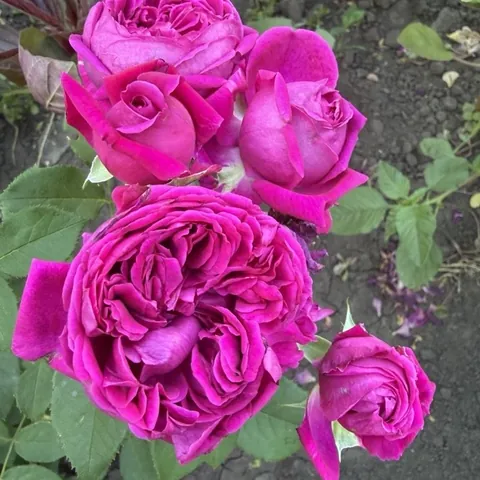





The Squire, close-up of the flower
Photo: T.Kiya, CC BY-SA 2.0
Back to catalogue
English (Austin) / shrub; deep crimsonDavid AustinRed

The Squire

Deep red / crimson with red-black velvet tones; fades in heat to dark pink — we are being honest about this; STRONG rich fragrance of an old rose; ~120 petals (very double); a weak-growing and capricious bush — needs care; became the parent of the legendary Othello, L.D. Braithwaite and The Prince.

Early David Austin collection

Variety profile

Flowering

Repeat flowering in flushes; one of the best repeat-bloomers among the early Austins

Plant size

110–150 × 90–120 cm
person 170 cm110–150 cm
Habit
Upright, sprawling, open / thin bush — not dense
Dimensions
1.1–1.5 m tall × 0.9–1.2 m wide
Support
Not needed — a self-supporting upright bush
Shoots
Upright, medium-strength canes
Branching
Moderate; weak-growing — both parents (The Knight and Château de Clos Vougeot) are also weak-growing, so this trait is inherited; honestly, it is worth taking into account

Flower

120 petals
Bud shape
Round, dark crimson, almost black in the velvety bud
Open flower
Shallow cupped, later opening into a rosette; medium-sized, very full
Centre
Densely filled with numerous small petals (rosette structure)
Fullness
~120 petals — very double (very full)
Flower carriage
Singly or in small clusters of 1–5

Fragrance

Strong; Old Rose (Damask)

Strong, rich fragrance of an old rose (Damask type) — one of the variety's main assets, a classic “Old Rose”.

Disease resistance

3 out of 5
Powdery mildewsusceptible

Capricious, 2–3/5 — prone to powdery mildew, needs regular prevention. Honestly: this is not a “tough” variety, but one for an attentive gardener, for the sake of its fragrance and colour.

Sun

No extreme heat

The colour fades in hot sun.

Thorns

Moderate
thornlessfewmoderatemanyvery many

Average number of thorns — typical for Austins.

Foliage

Green; needs prevention against powdery mildew.

All characteristics in a table
Group
English (Austin) / shrub; deep crimson
Breeder
David Austin, United Kingdom
Bud shape
Round, dark crimson, almost black in the velvety bud
Open flower
Shallow cupped, later opening into a rosette; medium-sized, very full
Centre
Densely filled with numerous small petals (rosette structure)
Colour
Deep dark red / crimson with red-black velvet tones. Honestly: in strong heat and bright sun the colour fades to dark pink — this is a feature of the variety, not a disease
Fullness
~120 petals — very double (very full)
Flower carriage
Singly or in small clusters of 1–5
Flowering
Repeat flowering in flushes; one of the best repeat-bloomers among the early Austins
Fragrance
Strong, rich fragrance of an old rose (Damask type) — one of the variety's main assets, a classic “Old Rose”
Hips
No data
Habit
Upright, sprawling, open / thin bush — not dense
Branching
Moderate; weak-growing — both parents (The Knight and Château de Clos Vougeot) are also weak-growing, so this trait is inherited; honestly, it is worth taking into account
Shoots
Upright, medium-strength canes
Thorns
Average number of thorns — typical for Austins.
Dimensions
1.1–1.5 m tall × 0.9–1.2 m wide
Support
Not needed — a self-supporting upright bush
Foliage
Green; needs prevention against powdery mildew
Resistance
Capricious, 2–3/5 — prone to powdery mildew, needs regular prevention. Honestly: this is not a “tough” variety, but one for an attentive gardener, for the sake of its fragrance and colour
Variations of the variety
Code AUSquire; bred by David Austin, UK, 1976/1977. Parentage: 'The Knight' × 'Château de Clos Vougeot'

Colour scheme

Deep red / crimson with red-black velvety tones. Honestly: in strong heat and bright sun the colour fades to dark pink — this is a feature of the variety, not a disease

Rose neighbours

Perennials to plant nearby

Neighbouring roses

Dark red, fragrant English Austins — the family to which The Squire contributed as a parent:

Perennial companions

Silver and blue perennials set off the deep 'wine' colour:

lavenderStachyscatmint (Nepeta)lady's mantle (Alchemilla)

Availability worldwide

⚠️ An early Austin, withdrawn from mass production — a collector's variety:

  • 🇬🇧 UK: for collectors · home of Austin
  • 🇪🇺 Europe: for collectors · older Austin catalogues
  • 🇺🇸 USA: rare · specialist nurseries
  • 🇺🇦 Ukraine: rare · via collectors

More about the variety

Hips
No data
Variations of the variety
Code AUSquire; bred by David Austin, UK, 1976/1977. Parentage: 'The Knight' × 'Château de Clos Vougeot'

How to grow

Where to plant. In a fragrance corner near resting places — for the strong damask scent; as a historic accent in a collection of early Austins; better in a spot that is semi-shaded in the afternoon, to protect the deep crimson colour from fading in hot midday sun; the open, sparse silhouette works well alongside fuller neighbours.

Climate. USDA 5b–10b (~−26…−23 °C); in Ukrainian conditions dry air-based winter protection is recommended.

Care. Needs attention — regular prevention against powdery mildew; a well-ventilated spot; full sun, but no extreme heat at the midday peak; prune about ⅓ in spring; feed during the season; water at the root, not on the leaves.

About the name

Name. “The Squire” (from English: squire — a minor landowner, a country gentleman) — in the spirit of David Austin's “English” names. When it appeared, the variety was praised as the best crimson rose of Austin's early collection. Breeder: bred by David Austin, UK, 1976/1977. Code AUSquire. Parentage: 'The Knight' × 'Château de Clos Vougeot'. Both parents are weak-growing — that is where The Squire inherited its weak vigour.

Significance. Despite its capriciousness and weak growth, The Squire played an important role in breeding — it became the parent of the legendary dark-red Austins: Othello, L.D. Braithwaite and The Prince. Its main assets are the deep crimson colour with red-black velvet and a strong damask fragrance. Honestly: the variety is demanding (powdery mildew, weak growth, colour fading in heat), so it suits an attentive collector who values fragrance and history more than someone looking for an undemanding garden bush.

Frequently asked questions about The Squire

How many times a season does The Squire flower?

Repeat flowering in flushes; one of the best repeat-bloomers among the early Austins.

How big does The Squire grow?

110–150 cm tall, 90–120 cm wide.

Which diseases affect The Squire?

Overall resistance: 3 out of 5. 2–3 / 5; capricious; prone to powdery mildew; needs prevention.

How much sun does The Squire need?

Sun; no extreme heat; the colour fades in hot sun.

What does The Squire smell like?

Strong, rich fragrance of an old rose (Damask type) — one of the variety's main assets, a classic “Old Rose”.

Gardeners' photos and reviews

My climate

Choose a reference temperature to compare with the cultivar’s data. This is not an overwintering forecast or advice on winter protection; consider wind, moisture and the duration of frost.

Regional data are generalised. USDA describes average annual extreme minima, not a forecast; the values in the list are rounded. Check the conditions at your site. More information: Roses in Ukraine's climate.