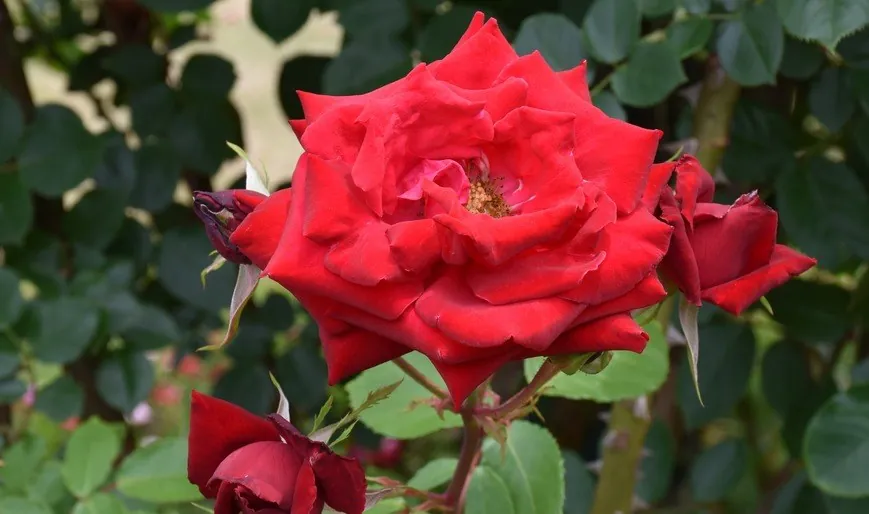
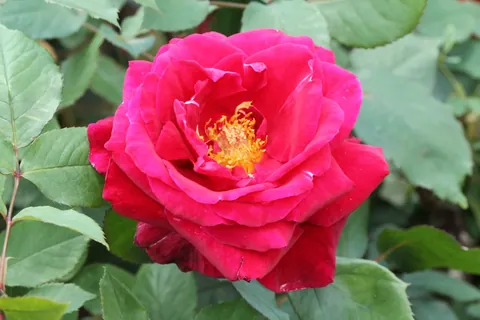
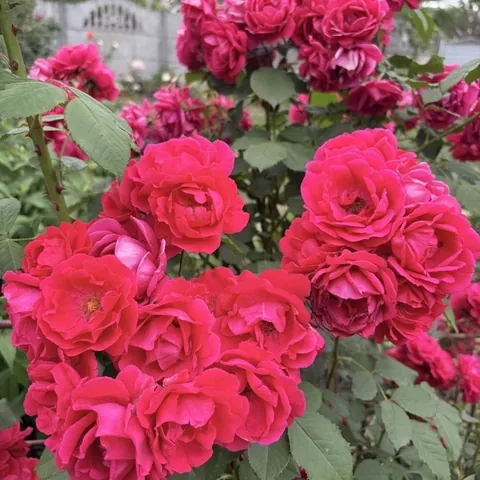
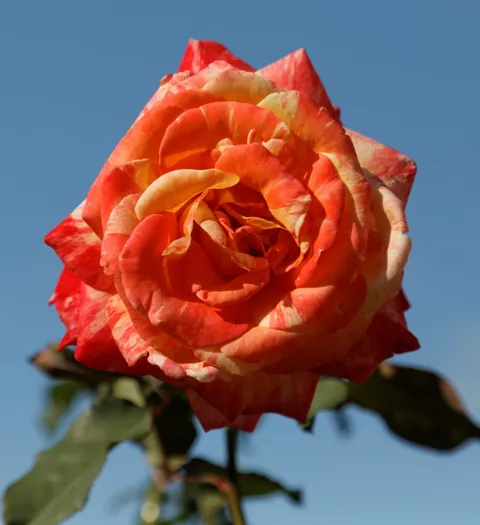





Uncle Walter, close-up of the flower
Back to catalogue
Hybrid Tea / Climber / Shrub; a rare triple classification, actually up to 4 m tallSamuel Darragh McGredy IVRed

Uncle Walter

Crimson-scarlet, blood red, which does not fade, in large cupped flowers of 26-40 petals; a rare triple HT/Climber/Shrub classification; it actually grows 2.5-4 m. Named after the breeder's uncle, Walter Johnston, a rose nurseryman and Trustee of the McGredy family business when Sam IV was young.

Bred by McGredy IV — 4th generation of the dynasty · named after the breeder's uncle, Walter Johnston

Variety profile

Flowering

Repeat flowering

Repeat from June to October. Months are approximate, for the climate of Ukraine.

Legacy

McGredy IV

4th generation of the dynasty

Winter hardiness

−18 °C

USDA zone 7b. Southern Ukraine without cover.

Compare reference temperatures

Plant size

150–425 × 120 cm
person 170 cm150–425 cm
Habit
Triple nature: HT / large shrub / moderate climber up to 4 m
Dimensions
150-425 cm tall × up to 120 cm wide. In the garden it actually grows 250-400 cm as a shrub or climber, not a typical 100 cm HT. This is an important detail: it needs room 3-4 m high
Support
As a shrub it needs no support; as a climber, an arch or pergola
Shoots
Strong, holding large flowers well
Branching
Well branched, with strong long shoots

Flower

26-40 petals
Bud shape
Elongated, dark red
Open flower
Very large, full, cupped and high-centred: 26-40 petals (often about 30-35)
Centre
Densely packed, goblet-shaped
Fullness
26-40 petals (medium-full)
Flower carriage
Singly or in small clusters

Fragrance

Weak or absent

Weak or absent. NOT a fragrant rose; the commercial description 'intensely scented' is marketing and is not confirmed by HMF.

Disease resistance

3.5 out of 5

Good, 3.5/5. USDA 7b. Southern Ukraine without cover; centre and north with mandatory winter cover; needs protection from spring frosts.

Sun

Full sun

Protection against spring frosts.

Thorns

Moderate
thornlessfewmoderatemanyvery many

Medium number of thorns; typical for McGredy.

Foliage

Bronze-green, leathery, with strongly marked veins; a characteristic decorative quality.

All characteristics in a table
Group
Hybrid Tea / Climber / Shrub; a rare triple classification, actually up to 4 m tall
Breeder
Samuel Darragh McGredy IV, Northern Ireland
Bud shape
Elongated, dark red
Open flower
Very large, full, cupped and high-centred: 26-40 petals (often about 30-35)
Centre
Densely packed, goblet-shaped
Colour
Crimson-scarlet, blood red; does not fade in the sun; occasionally with white streaks
Fullness
26-40 petals (medium-full)
Flower carriage
Singly or in small clusters
Flowering
Repeat from June to October
Fragrance
Weak or absent. NOT a fragrant rose; the commercial description 'intensely scented' is marketing and is not confirmed by HMF
Hips
Not documented; usually cut
Habit
Triple nature: HT / large shrub / moderate climber up to 4 m
Branching
Well branched, with strong long shoots
Shoots
Strong, holding large flowers well
Thorns
Medium number of thorns; typical for McGredy.
Dimensions
150-425 cm tall × up to 120 cm wide. In the garden it actually grows 250-400 cm as a shrub or climber, not a typical 100 cm HT. This is an important detail: it needs room 3-4 m high
Support
As a shrub it needs no support; as a climber, an arch or pergola
Foliage
Bronze-green, leathery, with strongly marked veins; a characteristic decorative quality
Resistance
Good, 3.5/5. USDA 7b. Southern Ukraine without cover; centre and north with mandatory winter cover; needs protection from spring frosts
Variations of the variety
Code MACon. Bred 1959, introduced in the UK 1962-1963. Breeder: Samuel Darragh McGredy IV. Parentage: 'Detroiter' (Kordes 1952) × 'Heidelberg' (Kordes climbing floribunda 1959). McGredy IV moved the business from Northern Ireland to New Zealand in 1972

Colour scheme

Crimson-scarlet, blood red; does not fade in the sun; occasionally with white streaks

Rose neighbours

Perennials to plant nearby

Neighbouring roses

Red classics of the 60s + the McGredy family:

Companion perennials

Cool tones set off the crimson-scarlet:

lavenderstachyslady's mantle (Alchemilla)salvia

Availability worldwide

A cult vintage McGredy from the 1960s:

  • 🇬🇧 UK: moderate · home
  • 🇳🇿 New Zealand: moderate · McGredy IV there later
  • 🇪🇺 Europe: moderate
  • 🇺🇦 Ukraine: rare

More about the variety

Hips
Not documented; usually cut
Variations of the variety
Code MACon. Bred 1959, introduced in the UK 1962-1963. Breeder: Samuel Darragh McGredy IV. Parentage: 'Detroiter' (Kordes 1952) × 'Heidelberg' (Kordes climbing floribunda 1959). McGredy IV moved the business from Northern Ireland to New Zealand in 1972

How to grow

Where to plant. As a large shrub at the back of a mixed border; as a climber on a wall or pergola; as a vertical red accent in the garden. It needs room 3-4 m high, so it is not for small beds.

Climate. USDA 7b. Southern Ukraine without cover; centre and north with mandatory winter cover; protect from spring frosts.

Care. Full sun; moderate disease prevention; feeding 2-3× per season; in spring, prune weak shoots and keep the main framework.

About the name

Name. 'Uncle Walter', after the breeder's uncle, Walter Johnston, a rose nurseryman and Trustee of the McGredy family business when Sam McGredy IV was young. A personal family dedication, typical of the McGredy-style, which often names roses after relatives and friends.

Breeding. Bred by Samuel Darragh McGredy IV. Code MACon. Bred 1959, introduced in the UK in 1962-1963. Parentage: 'Detroiter' (Kordes 1952) × 'Heidelberg' (Kordes climbing floribunda 1959). McGredy IV was the fourth generation of the legendary dynasty of breeders founded by Sam McGredy I in Portadown (Northern Ireland) in 1817. McGredy IV moved the family business to New Zealand in 1972.

Significance. A cult vintage McGredy of the 1960s. The rare triple classification HT/Climber/Shrub is unusual in the rose catalogue; the actual height is 150-425 cm (in practice a shrub or climber). Not fading in the sun is a rare quality for red classic HTs. The bronze-green leathery foliage with pronounced veins is a decorative bonus. The family dedication to uncle Walter Johnston is part of the McGredy family's personal history. No major international awards (AARS/ADR/RNRS/Belfast/RHS AGM) are documented; the AARS hypothesis mentioned in the original brief was not confirmed. The marketing description 'intensely scented' is a myth; HMF gives 'none to mild fragrance'. Uncle Walter is valued above all for its colour, habit and family history, not for competition awards or fragrance.

Frequently asked questions about Uncle Walter

Does Uncle Walter need winter protection?

The cultivar’s reference temperature is −18 °C (USDA zone 7b). Overwintering depends on the conditions. Southern Ukraine without cover.

How many times a season does Uncle Walter flower?

Repeat from June to October.

How big does Uncle Walter grow?

150–425 cm tall, about 120 cm wide.

Which diseases affect Uncle Walter?

Overall resistance: 3.5 out of 5. 3.5 / 5; leathery bronze-green foliage.

How much sun does Uncle Walter need?

Sun; full sun; protection against spring frosts.

What does Uncle Walter smell like?

Weak or absent. NOT a fragrant rose; the commercial description 'intensely scented' is marketing and is not confirmed by HMF.

Gardeners' photos and reviews

My climate

Choose a reference temperature to compare with the cultivar’s data. This is not an overwintering forecast or advice on winter protection; consider wind, moisture and the duration of frost.

Regional data are generalised. USDA describes average annual extreme minima, not a forecast; the values in the list are rounded. Check the conditions at your site. More information: Roses in Ukraine's climate.