


Back to catalogue
Rambler; Hybrid WichuraianaBarbier Frères, 1900White and cream

Albéric Barbier

A classic shade-tolerant rambler rose with an apple scent — one of the best for north walls and old trees.

Classic French climber of the nineteenth–twentieth century

Variety profile

Flowering

Once-flowering

Once-flowering — a powerful summer flush in early summer (June), 4–6 weeks of abundant flowering; later, isolated flowers are possible. Months are approximate, for the climate of Ukraine.

Awards

RHS AGM

1993 · confirmed in reviews

Winter hardiness

−15 °C

USDA zone 6–7. All of Ukraine; north — with the base protected.

Compare reference temperatures

Plant size

400–800 × 250–400 cm
person 170 cm400–800 cm
Habit
A long, vigorous rambler; canes arching, flexible, weeping
Dimensions
4–8 m tall × 2.5–4 m wide
Support
Yes — it needs a support: pergola, large arch, north or east wall, fence, or scrambling into an old tree (apple, pear). Without support it sprawls like groundcover
Shoots
Long, flexible — scramble well into old trees or wrap around a pergola
Branching
Strong; many long basal canes each year

Flower

6–8 cm
Bud shape
Small, globular; apricot-yellow or lemon-yellow — the most striking stage of the variety
Open flower
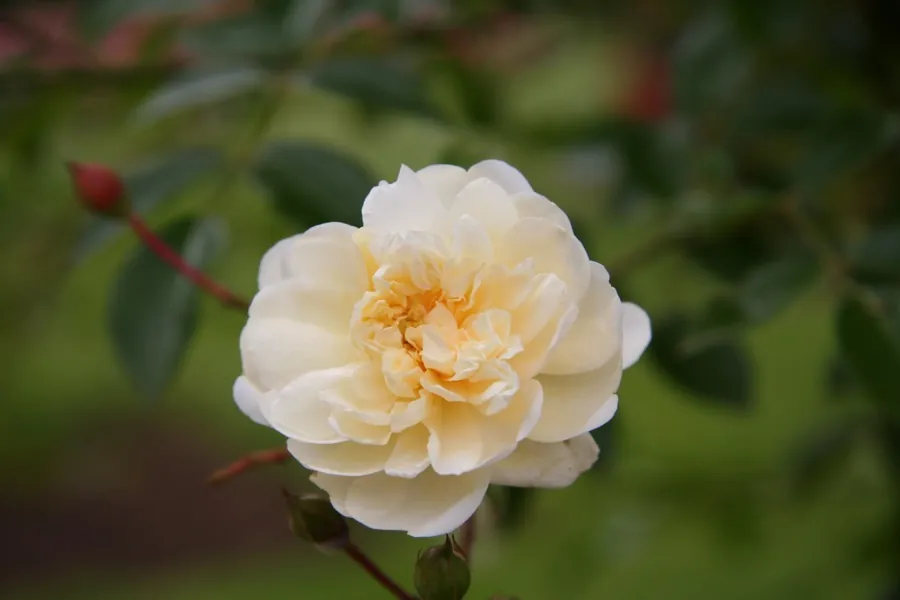
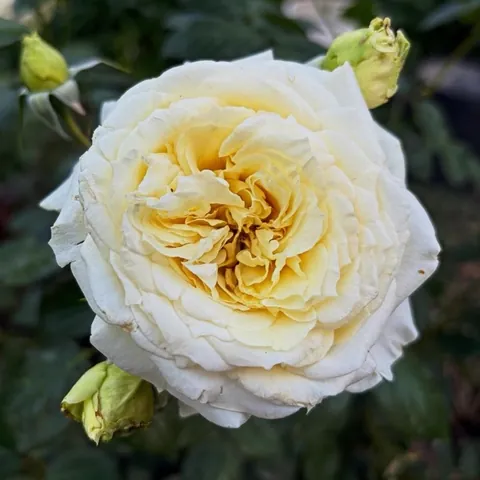
Globular and quartered, semi-double; diameter 6–8 cm; with age the petals take on an 'old-fashioned' form
Centre
Becomes quartered with age — petals fold into 4 sections; the young flower shows a pale yellow centre
Fullness
Semi-double, 9–16 petals
Flower carriage
Singly or in small clusters of 3–5

Fragrance

Moderate

Light to moderate, with notes of green apple and tea — a characteristic trait of the variety.

Disease resistance

4.5 out of 5
Black spotresistantPowdery mildewresistant

High resistance to powdery mildew and black spot; occasionally prone to powdery mildew in dense plantings.

Sun

Sun or partial shade

One of the few ramblers that flowers well on north-facing walls and in light shade.

Thorns

Thornless
thornlessfewmoderatemanyvery many

Very few thorns or none at all — a rare advantage for ramblers; easy to work without gloves.

Foliage

Small, dark green, very glossy; almost evergreen in mild climates; typical of Wichuraiana hybrids.

All characteristics in a table
Group
Rambler; Hybrid Wichuraiana
Breeder
Barbier Frères, 1900
Bud shape
Small, globular; apricot-yellow or lemon-yellow — the most striking stage of the variety
Open flower
Globular and quartered, semi-double; diameter 6–8 cm; with age the petals take on an 'old-fashioned' form
Centre
Becomes quartered with age — petals fold into 4 sections; the young flower shows a pale yellow centre
Colour
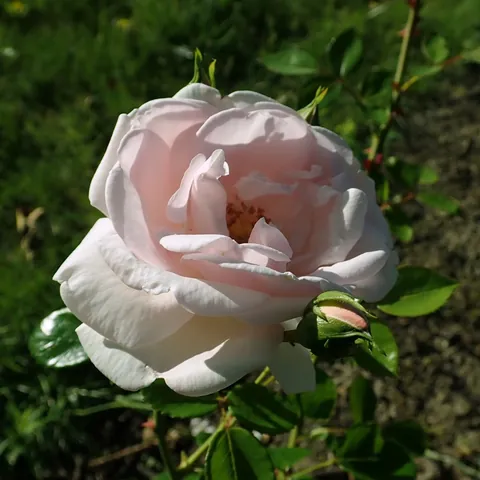
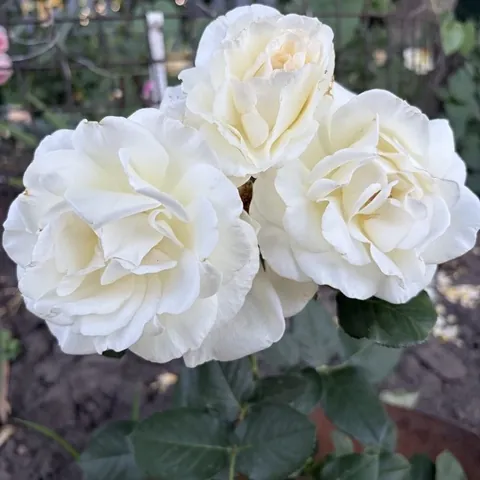
Apricot-yellow bud – opens into a cream-white flower with a pale yellow centre; fades completely to white
Fullness
Semi-double, 9–16 petals
Flower carriage
Singly or in small clusters of 3–5
Flowering
Once-flowering — a powerful summer flush in early summer (June), 4–6 weeks of abundant flowering; later, isolated flowers are possible
Fragrance
Light to moderate, with notes of green apple and tea — a characteristic trait of the variety
Habit
A long, vigorous rambler; canes arching, flexible, weeping
Branching
Strong; many long basal canes each year
Shoots
Long, flexible — scramble well into old trees or wrap around a pergola
Thorns
Very few thorns or none at all — a rare advantage for ramblers; easy to work without gloves.
Dimensions
4–8 m tall × 2.5–4 m wide
Support
Yes — it needs a support: pergola, large arch, north or east wall, fence, or scrambling into an old tree (apple, pear). Without support it sprawls like groundcover
Foliage
Small, dark green, very glossy; almost evergreen in mild climates; typical of Wichuraiana hybrids
Resistance
High resistance to powdery mildew and black spot; occasionally prone to powdery mildew in dense plantings
Soil tolerance
Undemanding — grows in poor, chalky, sandy and loamy soils

Colour scheme

Apricot-yellow bud – opens into a cream-white flower with a pale yellow centre; fades completely to white

Rose neighbours

Perennials to plant nearby

Neighbouring roses

Other Barbier ramblers and classic climbers of the same style — for a romantic garden in the spirit of the early twentieth century:

Perennial companions

A cool lavender-purple frame and chartreuse foam at the base — to hide the rambler's 'bare legs':

clematis Etoile Violette (viticella)lavendercatmint (Nepeta)salvialady's mantle (Alchemilla)foxglove (Digitalis)

Contrasting accents

Dark raspberry and violet-blue ramblers for a dramatic contrast with the creamy Albéric:

Bleu MagentaVeilchenblauCrimson Shower

More about the variety

Soil tolerance
Undemanding — grows in poor, chalky, sandy and loamy soils

How to grow

Where to plant. Large pergolas, arches, north- and east-facing walls (one of the few ramblers that flowers without full sun!), and scrambling into old fruit trees — apple, pear, wild apple. As groundcover — on slopes and sloping areas.

Climate. Hardy to −15 °C without protection in zones 6–7. In zone 5 (northern Polissia, Ukraine) protecting the base with leaves, branches or spruce boughs is advisable. In the Forest-Steppe and Steppe it overwinters without protection.

Care. Needs almost no attention — undemanding about soil and disease-resistant. Prune after flowering (it flowers once), removing only old and diseased canes — the main bloom is on last year's canes. Tie in young canes horizontally for abundant flowering the following year.

About the name

Name. Named after a member of the Barbier family. Sources give two versions: some (Wikipedia) point to the founder of the firm, Albert (Alberic) Barbier (1845–1931); others (HelpMeFind) to the founder's father, the gardener Alberic Barbier. The variety was bred in 1900 by the family firm Barbier Frères & Compagnie in Orléans (France).

Breeding. A classic Hybrid Wichuraiana. Parentage: Rosa wichuraiana (the current correct name is R. luciae) × 'Shirley Hibberd' (yellow Hybrid Tea, Levet, 1874). It has no breeder's code — the variety was bred before the code system was introduced.

Significance. One of the best-known classic rambler roses in the world; it received the prestigious RHS Award of Garden Merit (1993), confirmed in later reviews. A special value of this variety is its shade tolerance: one of the few ramblers that flowers abundantly on north and east walls. A classic feature of English cottage gardens and French botanic gardens.

Frequently asked questions about Albéric Barbier

Does Albéric Barbier need winter protection?

The cultivar’s reference temperature is −15 °C (USDA zone 6–7). Overwintering depends on the conditions. All of Ukraine; north — with the base protected.

How many times a season does Albéric Barbier flower?

Once-flowering — a powerful summer flush in early summer (June), 4–6 weeks of abundant flowering; later, isolated flowers are possible.

How big does Albéric Barbier grow?

400–800 cm tall, 250–400 cm wide.

Which diseases affect Albéric Barbier?

Overall resistance: 4.5 out of 5. 4.5 / 5; high; resistant to powdery mildew and black spot.

How much sun does Albéric Barbier need?

Sun or partial shade; one of the few ramblers that flowers well on north-facing walls and in light shade.

What does Albéric Barbier smell like?

Light to moderate, with notes of green apple and tea — a characteristic trait of the variety.

Gardeners' photos and reviews

My climate

Choose a reference temperature to compare with the cultivar’s data. This is not an overwintering forecast or advice on winter protection; consider wind, moisture and the duration of frost.

Regional data are generalised. USDA describes average annual extreme minima, not a forecast; the values in the list are rounded. Check the conditions at your site. More information: Roses in Ukraine's climate.