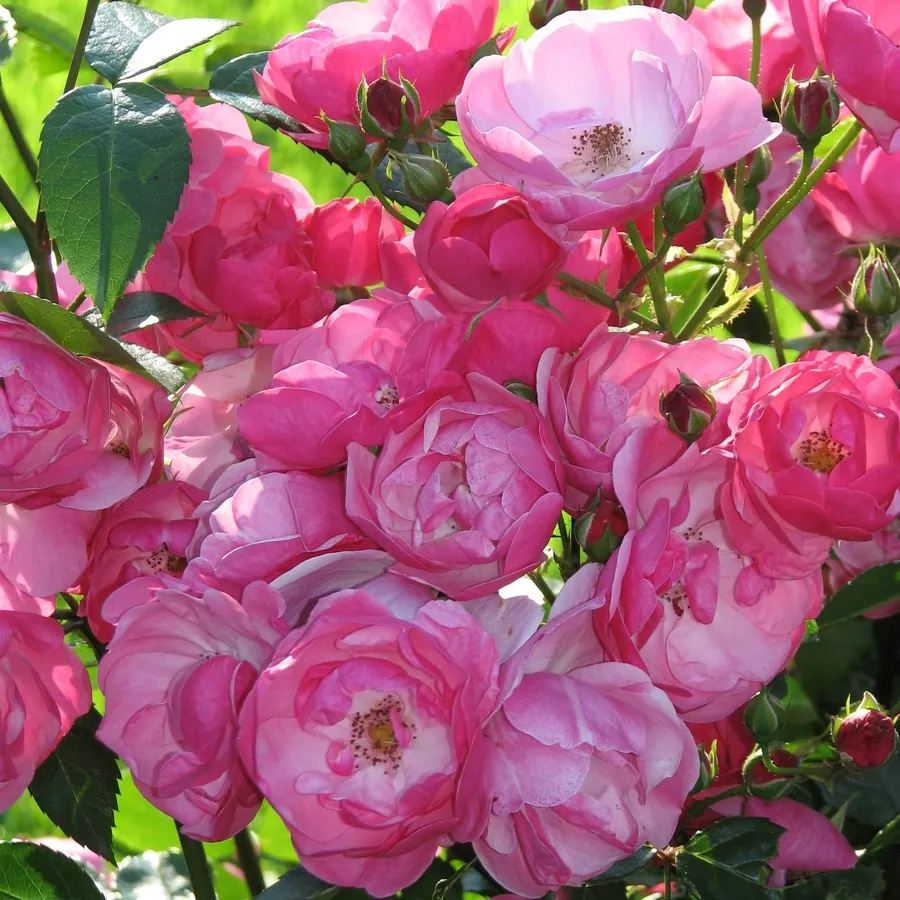
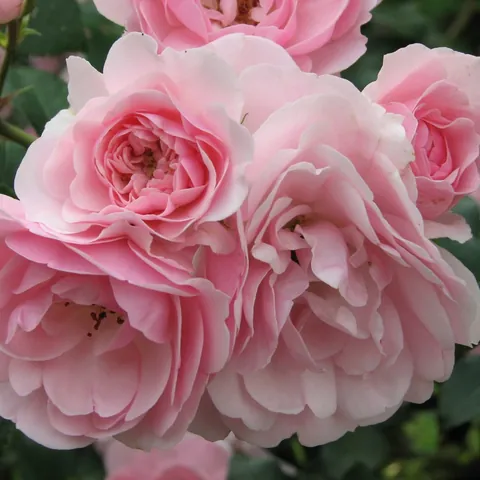
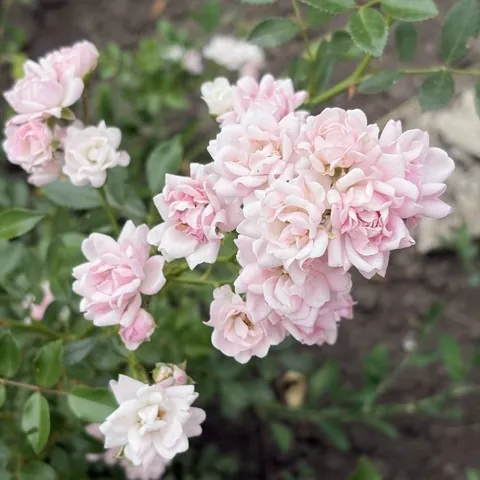
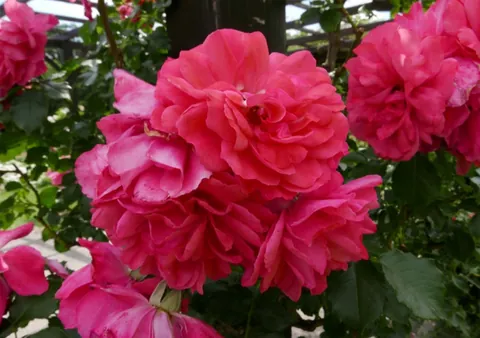
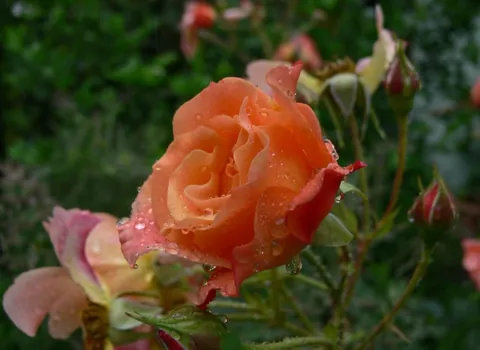
Angela, close-up of the flower
Back to catalogue
Shrub; HeckenzauberKordes, 1984Pink

Angela

Heckenzauber series; a Kordes classic, ADR 1982 winner — over 40 years in the catalogue.

Suitable as a hedge

Variety profile

Flowering

Repeat flowering

Abundant, continuous from June to the first frosts. Months are approximate, for the climate of Ukraine.

Awards

ADR

1982

Winter hardiness

−28 °C

USDA zone 5b–9. All of Ukraine, no winter protection needed.

Compare reference temperatures

Plant size

100–150 × 80–100 cm
person 170 cm100–150 cm
Habit
Round, domed, dense
Dimensions
100–150 cm tall × 80–100 cm wide; in a warm climate up to 2–3 m
Support
No support needed — the bush is free-standing and keeps its shape without a trellis (support is needed only for climbing varieties)
Shoots
Flexible, arching
Branching
Very branched, bushy

Flower

4–5 cm
Bud shape
Rounded, short
Open flower
Cupped; diameter 4–5 cm
Centre
Lighter, with yellow stamens visible
Fullness
Semi-double, 25–35 petals
Flower carriage
In dense clusters of 5–15 flowers

Fragrance

Light

Light, fruity, with a hint of cinnamon.

Disease resistance

4 out of 5
Powdery mildewresistantRustresistant

High; ADR-variety.

Sun

Sun + partial shade

Tolerates partial shade but flowers more abundantly in full sun.

Thorns

Moderate
thornlessfewmoderatemanyvery many

. Prickles are moderate, evenly spaced along the cane.

Foliage

Dark green, small, dense — good for hedging.

Other names

Breeder's code KORday.

All characteristics in a table
Group
Shrub; Heckenzauber
Breeder
Kordes, 1984
Bud shape
Rounded, short
Open flower
Cupped; diameter 4–5 cm
Centre
Lighter, with yellow stamens visible
Colour
Pinkish-red outside, paler pink inside, with a distinct light eye
Fullness
Semi-double, 25–35 petals
Flower carriage
In dense clusters of 5–15 flowers
Flowering
Abundant, continuous from June to the first frosts
Fragrance
Light, fruity, with a hint of cinnamon
Hips
Forms small red hips if spent flowers are not removed
Habit
Round, domed, dense
Branching
Very branched, bushy
Shoots
Flexible, arching
Thorns
. Prickles are moderate, evenly spaced along the cane.
Dimensions
100–150 cm tall × 80–100 cm wide; in a warm climate up to 2–3 m
Support
No support needed — the bush is free-standing and keeps its shape without a trellis (support is needed only for climbing varieties)
Foliage
Dark green, small, dense — good for hedging
Resistance
High; ADR-variety
Variations of the variety
No common mutations recorded

Colour scheme

Pinkish-red outside, paler pink inside, with a distinct light eye

Rose neighbours

Perennials to plant nearby

Neighbouring roses

Hardy shrub roses and landscape roses in a pink-raspberry palette keep one rich tone around Angela.

Perennial companions

A purple-grey framework that adds depth to the rich pink of Angela:

woodland sagelady's mantle (Alchemilla)catmint (Nepeta)hosta

Contrasting accents

For play of tones, light and dark neighbouring varieties:

More about the variety

Hips
Forms small red hips if spent flowers are not removed
Variations of the variety
No common mutations recorded

How to grow

Where to plant. Ideal for hedges, group plantings, woodland edges and park compositions; tolerates dense planting.

Climate. Hardy to −28 °C — suitable for the whole of Ukraine without winter protection, from Zakarpattia to Sumy and Chernihiv regions.

Care. Undemanding — spring sanitary pruning is enough; disease treatments are almost never needed.

About the name

Name. The female name Angela, from Latin angelus (‘angel’).

Breeding. Bred by Reimer Kordes in 1975, introduced in 1984. Parentage: Yesterday × Peter Frankenfeld. Patent code: KORday (working number KO 75/0578-01).

Meaning. A Kordes classic of the 1980s; the ADR 1982 award — the German ‘mark of quality’ for exceptional toughness and health. Over 40 years in the Kordes catalogue — one of the longest-lived shrub roses of modern breeding.

Frequently asked questions about Angela

Does Angela need winter protection?

The cultivar’s reference temperature is −28 °C (USDA zone 5b–9). Overwintering depends on the conditions.

How many times a season does Angela flower?

Abundant, continuous from June to the first frosts.

How big does Angela grow?

100–150 cm tall, 80–100 cm wide.

Which diseases affect Angela?

Overall resistance: 4 out of 5. ADR-variety; resistant to powdery mildew and rust.

How much sun does Angela need?

Sun + partial shade; tolerates partial shade but flowers more abundantly in full sun.

What does Angela smell like?

Light, fruity, with a hint of cinnamon.

Gardeners' photos and reviews

My climate

Choose a reference temperature to compare with the cultivar’s data. This is not an overwintering forecast or advice on winter protection; consider wind, moisture and the duration of frost.

Regional data are generalised. USDA describes average annual extreme minima, not a forecast; the values in the list are rounded. Check the conditions at your site. More information: Roses in Ukraine's climate.