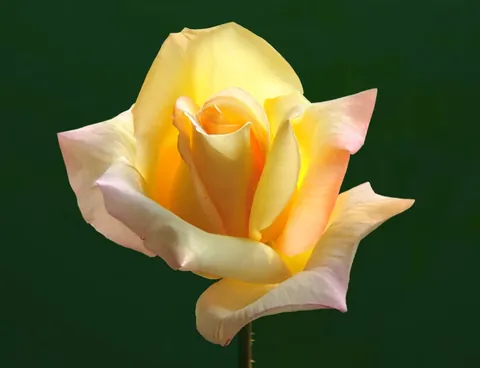
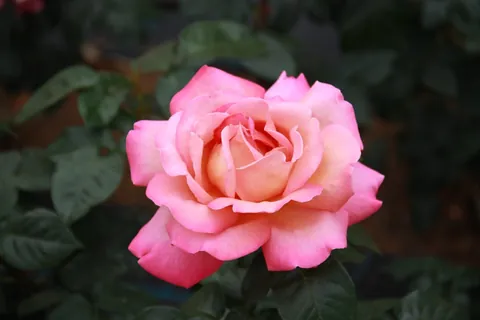
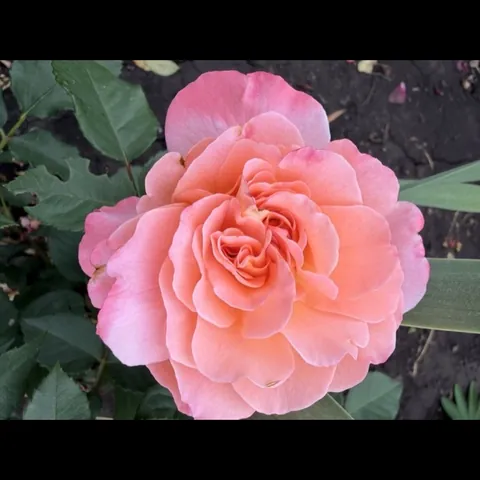
Aquarell, close-up of the flower
Back to catalogue
Hybrid Tea; NostalgieTantau, 2006Apricot and orange

Aquarell

TANellqua · Rosen Tantau 2006 · large fragrant Nostalgie® Hybrid Tea rose.

Variety profile

Flowering

Abundant, in flushes — good repeat-flowering

Plant size

70–100 cm
person 170 cm70–100 cm
Habit
Compact, upright
Dimensions
70–100 cm tall; a compact upright bush with sturdy stems for cutting
Shoots
Sturdy and straight, good for cutting
Branching
Moderate

Flower

10–12 cm
Bud shape
Elongated, conical, with pink edges
Open flower
At first a tall goblet with a raised centre; later the flower opens into a wide cup; diameter 10–12 cm
Centre
Dense, golden-peach
Fullness
Very full, 50–60 petals
How it flowers on the shoot
Mostly one flower per long, sturdy stem

Fragrance

Strong

Strong, citrus-fruity, slightly sweet.

Sun

A well-ventilated spot

In strong heat, keep an eye on soil moisture.

Foliage

Dark green, glossy, healthy.

Other names

Perfect Harmony
All characteristics in a table
Group
Hybrid Tea; Nostalgie
Breeder
Tantau, 2006
Bud shape
Elongated, conical, with pink edges
Open flower
At first a tall goblet with a raised centre; later the flower opens into a wide cup; diameter 10–12 cm
Centre
Dense, golden-peach
Colour
The base of the petal is soft yellow-peach; the edges gradually change to pink-crimson; each flower is unique in its colour distribution — hence the name ‘watercolour’
Fullness
Very full, 50–60 petals
How it flowers on the shoot
Mostly one flower per long, sturdy stem
Flowering
Abundant, in flushes — good repeat-flowering
Fragrance
Strong, citrus-fruity, slightly sweet
Habit
Compact, upright
Branching
Moderate
Shoots
Sturdy and straight, good for cutting
Dimensions
70–100 cm tall; a compact upright bush with sturdy stems for cutting
Foliage
Dark green, glossy, healthy
Names of the variety
Registration name: TANellqua; in the UK the variety is also sold as Perfect Harmony
Colour scheme

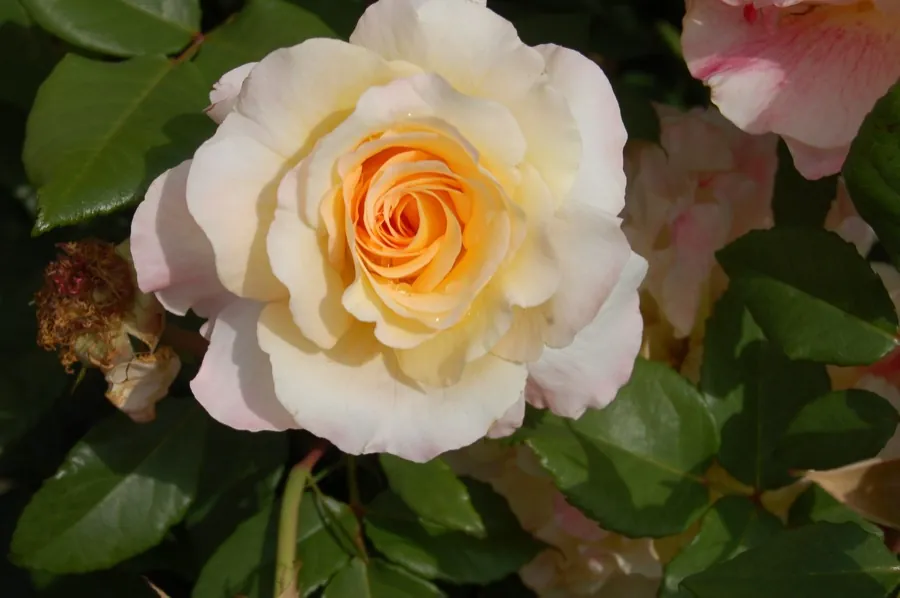
The base of the petal is soft yellow-peach, and the edges gradually change to pink-crimson; each flower is unique in its colour distribution — hence the name ‘watercolour’

Rose neighbours

Perennials to plant nearby

Not a ready-made scheme, but directions

How to combine Aquarell in the garden

Aquarell itself combines peach, yellow and pink tones. A neighbouring rose works best as a calm extension of one tone, or as a single cool contrast.

Calm warm extension

Choose a cream-apricot base or a lighter echo of the watercolour yellow-pink transition.

Cool depth

A silvery-lilac tone brings out the peach-pink palette and does not create a heavy dark patch.

Airy foreground

Small single pink-white flowers create a light rhythm and clearly differ in scale from Aquarell.

Companion perennials

All four partners work on a sunny, well-drained edge and give a purple-silver contrast.

  • Salvia 'Caradonna'. Dark stems and purple spikes outline the warm flower; they need sun and drainage.
  • Catmint. A soft blue cloud does not repeat the shape of the rose and works well on a sunny front edge.
  • Perovskia. A taller, see-through blue vertical adds depth; leave air between it and the bush.
  • Lamb’s ear. Silvery leaves support the light edges of the petals; it does not tolerate waterlogging.

What to avoid

Do not place several large bright two-tone roses with yellow-orange-pink blends nearby: they will start competing with Aquarell.

More about the variety

Names of the variety
Registration name: TANellqua; in the UK the variety is also sold as Perfect Harmony
How to grow

Where to plant. In a formal bed, near a seating area, or in a cut-flower bed, where the transition from peach-yellow to pink can be admired. Conditions: sun, rich well-drained soil, and 45–50 cm between bushes. Winter in Ukraine: in the south and in sheltered places the base is earthed up; in central, northern and eastern regions the Hybrid Tea bush is best covered with breathable material after a sustained cold spell.

About the name

The name Aquarell refers to the smooth colour transitions, like a watercolour painting. Rosen Tantau introduced the variety in 2006; the registration name is TANellqua, and in the UK it is sold as Perfect Harmony. Older claims about the variety's origin and a list of bronze medals are not confirmed by the current official record, so they have been removed.

Frequently asked questions about Aquarell

How many times a season does Aquarell flower?

Abundant, in flushes — good repeat-flowering.

How big does Aquarell grow?

70–100 cm tall.

How much sun does Aquarell need?

Sun; a well-ventilated spot; in strong heat, keep an eye on soil moisture.

What does Aquarell smell like?

Strong, citrus-fruity, slightly sweet.

Gardeners' photos and reviews

My climate

Choose a reference temperature to compare with the cultivar’s data. This is not an overwintering forecast or advice on winter protection; consider wind, moisture and the duration of frost.

Regional data are generalised. USDA describes average annual extreme minima, not a forecast; the values in the list are rounded. Check the conditions at your site. More information: Roses in Ukraine's climate.