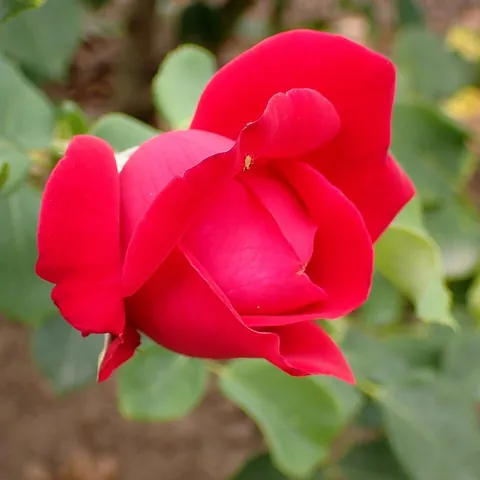
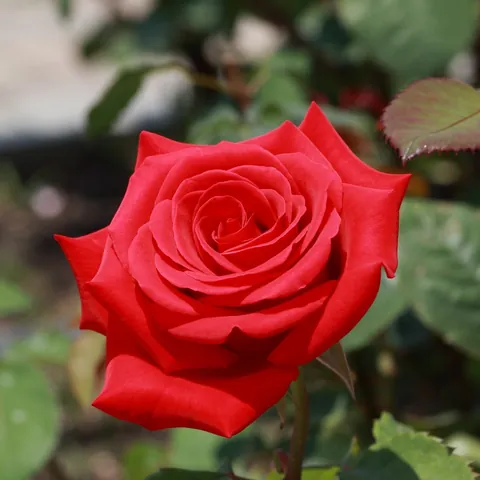
Champlain, close-up of the flower
Photo: Salicyna, CC BY-SA 4.0
Back to catalogue
Shrub rose (kordesii hybrid), Explorer seriesFelicitas Svejda, 1982Red

Champlain

Hardy to −37 °C without any cover; Canadian Explorer series; abundant remontant flowering; synonym Samuel Champlain.

Variety profile

Flowering

Repeat flowering

Abundant, remontant — from May to the first frosts. Months are approximate, for the climate of Ukraine.

Awards

ARS (local)

Classic Shrub Rose · ARS shows 1999–2001

Plant size

90–120 × 90–120 cm
person 170 cm90–120 cm
Habit
Spreading, compact shrub.
Dimensions
90–120 × 90–120 cm.
Support
Not needed.
Shoots
Sturdy, arching.
Branching
Dense, from the very base of the bush.

Flower

6–7,5 cm
Bud shape
Oval, classic for Explorer series shrubs.
Open flower
Cupped; sources differ on doubleness — from 'semi-double' to 'very double'.
Fullness
About 30 petals.
Flower carriage
Flowers in small clusters on the stem, as is typical of the Explorer series.

Fragrance

Light

Sun

Full sun

Tolerates light partial shade.

Thorns

Many
thornlessfewmoderatemanyvery many

Foliage

Bronze-green, glossy.

Other names

Samuel Champlain
All characteristics in a table
Group
Shrub rose (kordesii hybrid), Explorer series
Breeder
Felicitas Svejda, Canada, 1982
Bud shape
Oval, classic for Explorer series shrubs.
Open flower
Cupped; sources differ on doubleness — from 'semi-double' to 'very double'.
Colour
Bright to cherry-red, with clearly visible yellow stamens at the centre; petal tips darker, with a wine tinge. No data on sun fading.
Fullness
About 30 petals.
Flower carriage
Flowers in small clusters on the stem, as is typical of the Explorer series.
Flowering
Abundant, remontant — from May to the first frosts.
Fragrance
Light.
Hips
Round orange hips, decorative in autumn.
Habit
Spreading, compact shrub.
Branching
Dense, from the very base of the bush.
Shoots
Sturdy, arching.
Dimensions
90–120 × 90–120 cm.
Support
Not needed.
Foliage
Bronze-green, glossy.
Resistance
Sources differ: some describe the variety as 'very resistant', others as 'susceptible to black spot and powdery mildew'; overall one of the sturdiest in the Explorer series.
Variations of the variety
Code U04, synonym Samuel Champlain; parents — (R. kordesii × tetraploid seedling of Max Graf) × (Red Dawn × Suzanne, open pollination).
Colour scheme

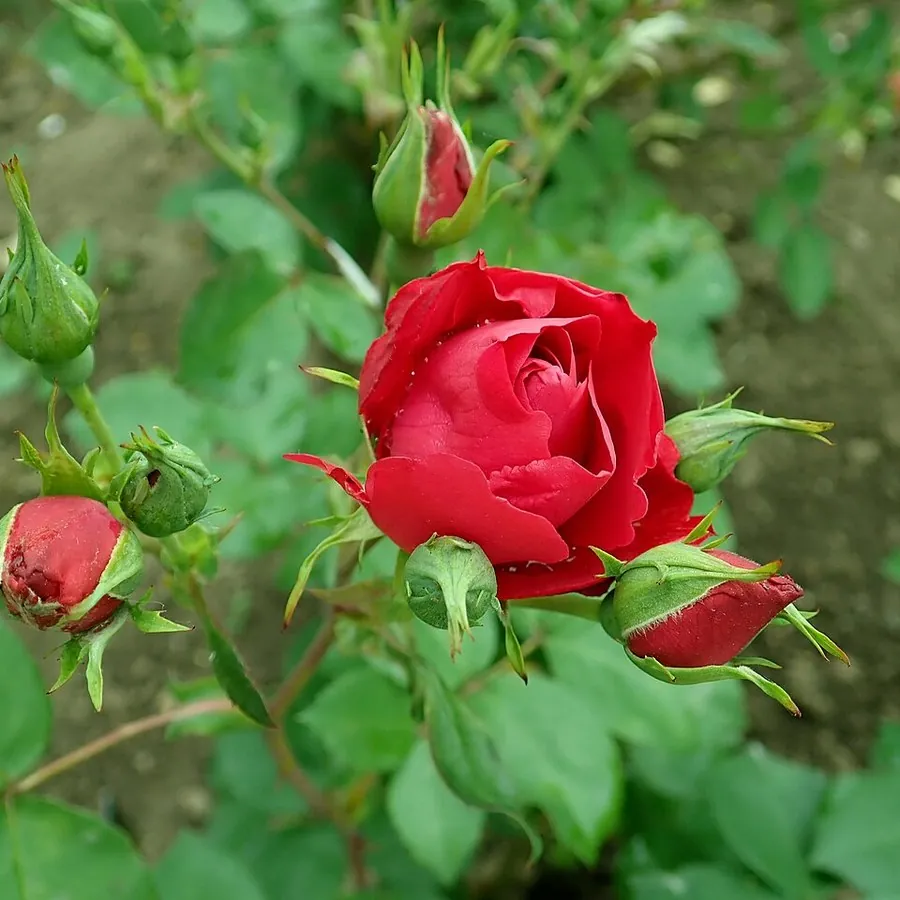
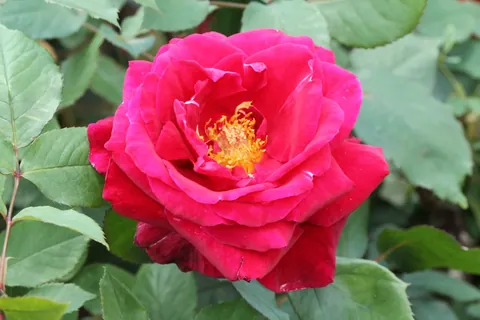
Bright to cherry-red, with clearly visible yellow stamens at the centre; petal tips darker, with a wine tinge. No data on sun fading.

Rose neighbours

Perennials to plant nearby

Neighbouring roses

Together with Champlain, these varieties form one colour family — from dark to bright red, giving the composition depth and contrast.

Companion perennials

Blue, lilac and silver neighbours set off the red:

lavendercatmint (Nepeta)betonygypsophila

Variety features

The key features of Champlain as a representative of Canadian breeding of winter-hardy roses:

Explorer seriesto −37 °C without winter protectionrepeat-floweringorange hips

More about the variety

Hips
Round orange hips, decorative in autumn.
Variations of the variety
Code U04, synonym Samuel Champlain; parents — (R. kordesii × tetraploid seedling of Max Graf) × (Red Dawn × Suzanne, open pollination).
How to grow

Where to plant. As a specimen or in a group, in a mixed border or hedge — where maximum winter hardiness is needed without the hassle of winter cover.

Climate. USDA zone 3b and warmer (≈ −34…−37 °C); in Ukraine the shrub flowers without cover, even under snow. In zones 3–4 partial dieback of shoots is possible, which is easily corrected by spring pruning.

Care. Regular spring pruning to shape the bush and remove winter-killed shoots; removing spent flowers encourages repeat flowering. Overall undemanding, although in a wet summer it is worth watching for black spot.

About the name

Name. Named after Samuel de Champlain, the founder of the city of Quebec.

Breeding. Bred by Dr Felicitas Svejda at Agriculture Canada (Ottawa) in 1973 and introduced in 1982. The Explorer series was created specifically for harsh Canadian winters — so that roses would bloom without cover even in the coldest regions.

Significance. Champlain is among the most reliable hardy roses in the world, and it symbolises the success of the Canadian breeding programme, which gave gardeners in cold climates fully flowering shrub roses.

Frequently asked questions about Champlain

How many times a season does Champlain flower?

Abundant, remontant — from May to the first frosts.

How big does Champlain grow?

90–120 cm tall, 90–120 cm wide.

How much sun does Champlain need?

Full sun; tolerates light partial shade.

What does Champlain smell like?

Light.

Gardeners' photos and reviews

My climate

Choose a reference temperature to compare with the cultivar’s data. This is not an overwintering forecast or advice on winter protection; consider wind, moisture and the duration of frost.

Regional data are generalised. USDA describes average annual extreme minima, not a forecast; the values in the list are rounded. Check the conditions at your site. More information: Roses in Ukraine's climate.