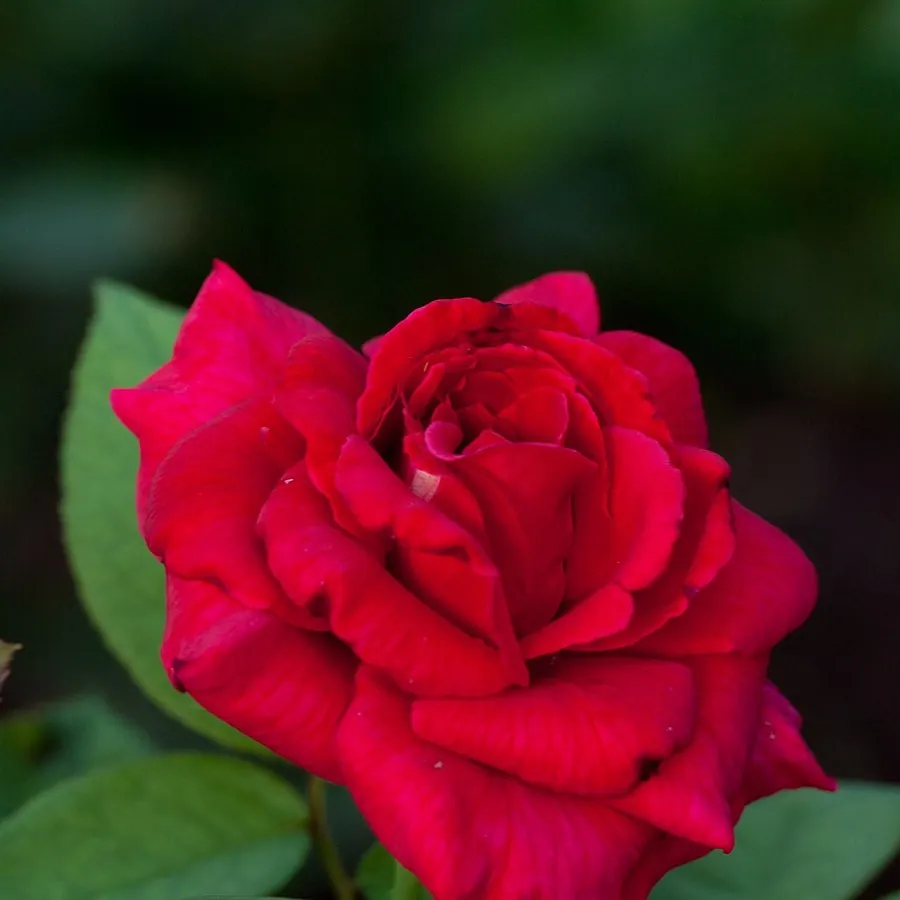
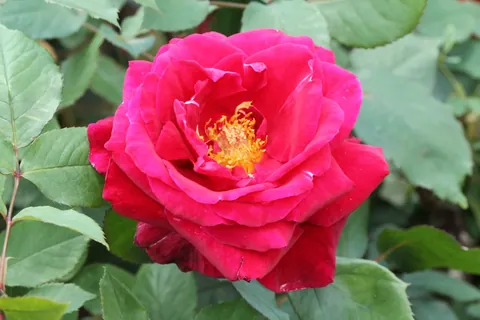
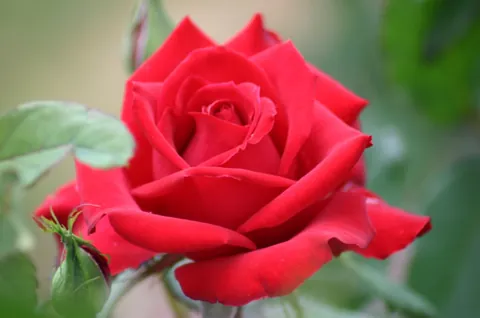
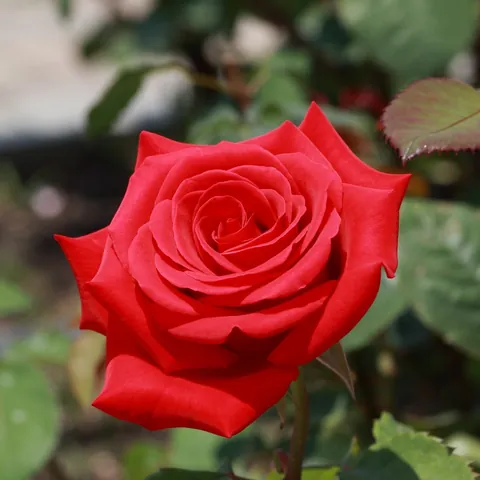



Christian Dior, close-up of the flower
Photo: Yoko Sasagawa, CC BY 2.0
Back to catalogue
Hybrid TeaFrancis Meilland; Meilland, 1958Red

Christian Dior

Classic Hybrid Tea — bright red with a raspberry-cherry tint and a paler reverse to the petals; a high exhibition form; almost thornless; named after the fashion designer Christian Dior.

Patent PP1943 · cut-flower show rose

Variety profile

Flowering

Repeat, in flushes

Repeat-flowering in flushes through summer and autumn. Months are approximate, for the climate of Ukraine.

Awards

AARS 1962

Widely reported, but not confirmed by the primary source (HelpMeFind); the gold medals are contested

Plant size

90–150 × 120 cm
person 170 cm90–150 cm
Habit
Upright, bushy
Dimensions
90–150 × up to 120 cm
Support
Not needed — an upright, self-supporting bush
Shoots
Long stems — convenient for cutting
Branching
Well-branched bush

Flower

12–13 cm
Bud shape
Pointed, elongated bud, classic for Hybrid Teas
Open flower
Tall, high-centred exhibition form — large, diameter 12–13 cm
Centre
Tightly wound high centre — the typical 'exhibition' spiral
Fullness
35–50 petals — a dense, very double flower
Flower carriage
Borne singly or in small sprays on long stems — suitable for cutting

Fragrance

Light; delicate spicy notes

Moderate to light — delicate spicy notes.

Disease resistance

3 out of 5
Powdery mildewsusceptible

Prone to powdery mildew — needs preventive treatments.

Sun

Full sun

No data on colour fading.

Thorns

Thornless
thornlessfewmoderatemanyvery many

Almost thornless — a rare and welcome feature for a Hybrid Tea.

Foliage

No data.

All characteristics in a table
Group
Hybrid Tea
Breeder
Francis Meilland; Meilland, France, 1958
Bud shape
Pointed, elongated bud, classic for Hybrid Teas
Open flower
Tall, high-centred exhibition form — large, diameter 12–13 cm
Centre
Tightly wound high centre — the typical 'exhibition' spiral
Colour
Bright red, raspberry-red (crimson/scarlet) with a cherry tint; the reverse of the petal is paler, giving a play of tones in the open flower. No data on fading in sun
Fullness
35–50 petals — a dense, very double flower
Flower carriage
Borne singly or in small sprays on long stems — suitable for cutting
Flowering
Repeat-flowering in flushes through summer and autumn
Fragrance
Moderate to light — delicate spicy notes
Hips
No data
Habit
Upright, bushy
Branching
Well-branched bush
Shoots
Long stems — convenient for cutting
Thorns
Almost thornless — a rare and welcome feature for a Hybrid Tea.
Dimensions
90–150 × up to 120 cm
Support
Not needed — an upright, self-supporting bush
Foliage
No data
Resistance
Prone to powdery mildew — needs preventive treatments
Variations of the variety
Variety code MEIlie; patent PP1943

Colour scheme

Bright red, raspberry-red (crimson/scarlet) with a cherry tint; the reverse of the petal is paler, giving a play of tones in the open flower. No data on fading in sun

Rose neighbours

Perennials to plant nearby

Neighbouring roses

Other bright and dark red Hybrid Teas — the classic red family:

Companion perennials

Silver foliage and cool blue tones best set off the bright red flower:

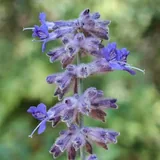
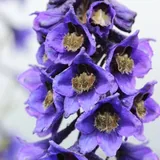
catmint (Nepeta)perovskia (Russian sage)woundwortdelphinium

Breeding and patent

French classic from the Meilland family:

🇫🇷 Meilland · Francis Meilland · 1958code MEIlie · patent PP1943(Independence × Happiness) × (Peace × Happiness)

More about the variety

Hips
No data
Variations of the variety
Variety code MEIlie; patent PP1943

How to grow

Where to plant. A classic Hybrid Tea for a sunny spot and fertile soil. An upright, bushy shrub 90–150 cm tall and up to 120 cm wide, it needs no support. An almost complete absence of thorns makes it easy to care for and good for cutting — flowers borne singly or in small sprays on long stems.

Climate. USDA 7b–9b, RHS H6 (tolerates roughly −20…−15 °C). In Ukraine it needs winter protection — cover in the Forest-Steppe and Steppe, and full protection further north.

Care. The variety is prone to powdery mildew — preventive treatments and good air circulation are needed. Repeat-flowering in flushes through summer and autumn.

About the name

Name. Named after Christian Dior (1905), the French fashion designer and founder of the Dior house. A red exhibition rose in the spirit of the fashion house's elegance.

Breeding. Bred by Francis Meilland at the French house Meilland; introduced in 1958. Variety code MEIlie, patent PP1943. Parentage: (Independence × Happiness) × (Peace × Happiness). Awards: according to widely quoted sources — AARS 1962, but the primary source (HelpMeFind) does not confirm this award. References to gold medals are contradictory, so specific awards are not listed here. We state this openly: the widely quoted AARS status has no confirmation from a primary source.

Frequently asked questions about Christian Dior

How many times a season does Christian Dior flower?

Repeat-flowering in flushes through summer and autumn.

How big does Christian Dior grow?

90–150 cm tall, about 120 cm wide.

Which diseases affect Christian Dior?

Overall resistance: 3 out of 5. Prone to powdery mildew; needs preventive care.

How much sun does Christian Dior need?

Sun; full sun; no data on colour fading.

What does Christian Dior smell like?

Moderate to light — delicate spicy notes.

Gardeners' photos and reviews

My climate

Choose a reference temperature to compare with the cultivar’s data. This is not an overwintering forecast or advice on winter protection; consider wind, moisture and the duration of frost.

Regional data are generalised. USDA describes average annual extreme minima, not a forecast; the values in the list are rounded. Check the conditions at your site. More information: Roses in Ukraine's climate.