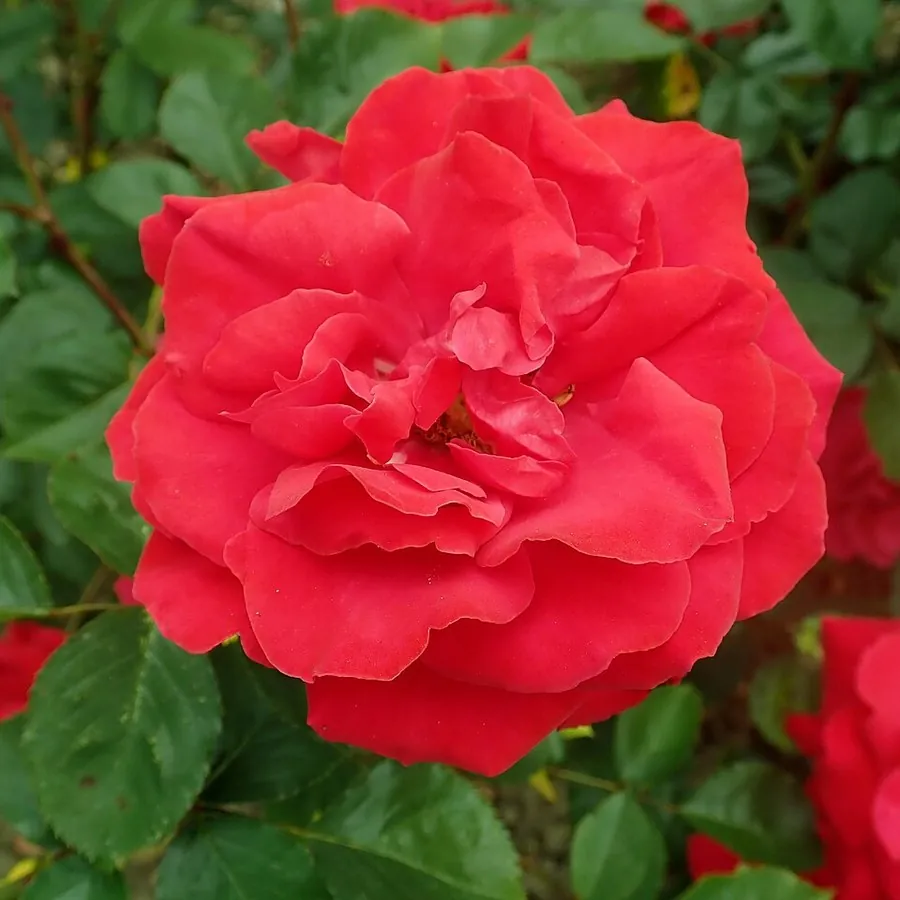
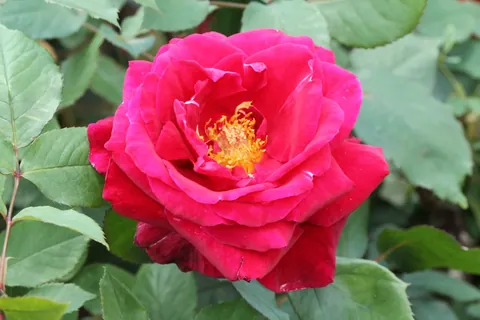
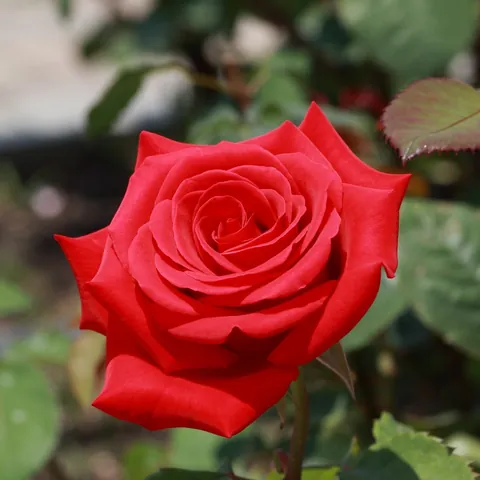
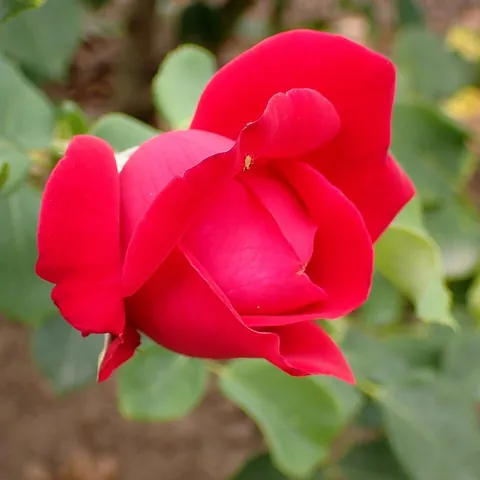





Gruß an Heidelberg, close-up of the flower
Photo: Salicyna, CC BY-SA 4.0
Back to catalogue
Shrub climber / climbing floribundaReimer Kordes; Kordes, 1959Red

Gruß an Heidelberg

Large carmine-red climbing shrub with abundant repeat flushes of bloom; ADR award winner; can be trained either as a pillar or as a free-standing shrub.

Variety profile

Flowering

Repeat flowering

Repeat, from June to October. Months are approximate, for the climate of Ukraine.

Awards

ADR

German garden-quality award

Winter hardiness

−20 °C

USDA zone 6b. ≈ −20 °C; Ukraine: cover the roots with mulch / winter cover. ≈ −20 °C · Ukraine: winter protection / root mulch.

Compare reference temperatures

Plant size

185–245 × 150 cm
person 170 cmon a supportup to 1.5 m185–245 cm
Habit
Bushy climbing habit — a large upright shrub or climber
Dimensions
185–245 cm tall (some sources give up to 300 cm) × up to 150 cm wide
Support
Needs support: as a climber or pillar it is trained along a wall, arch or fence
Shoots
Long, strong, suitable for a pillar, wall, arch or fence
Branching
Spreading, well suited to training on a support

Flower

≈ 10 cm

32 petals.

Bud shape
Round, dense, carmine red
Open flower
Large hybrid tea-type flower, full, borne in clusters
Fullness
~32 petals, full
Flower carriage
In clusters (trusses), typical of a climbing floribunda

Fragrance

Light, with a note of wild rose

Light, with a note of wild rose; opens best on warm sunny days.

Sun

Full sun

The scent opens best on warm sunny days.

Thorns

Many
thornlessfewmoderatemanyvery many

Densely prickly.

Foliage

Glossy dark green, leathery.

Other names

Heidelberg
All characteristics in a table
Group
Shrub climber / climbing floribunda
Breeder
Reimer Kordes; Kordes, Germany, 1959
Bud shape
Round, dense, carmine red
Open flower
Large hybrid tea-type flower, full, borne in clusters
Colour
Carmine red / bright warm red, with a lighter pinkish-red reverse to the petals
Fullness
~32 petals, full
Flower carriage
In clusters (trusses), typical of a climbing floribunda
Flowering
Repeat, from June to October
Fragrance
Light, with a note of wild rose; opens best on warm sunny days
Hips
No data
Habit
Bushy climbing habit — a large upright shrub or climber
Branching
Spreading, well suited to training on a support
Shoots
Long, strong, suitable for a pillar, wall, arch or fence
Thorns
Densely prickly.
Dimensions
185–245 cm tall (some sources give up to 300 cm) × up to 150 cm wide
Support
Needs support: as a climber or pillar it is trained along a wall, arch or fence
Foliage
Glossy dark green, leathery
Resistance
Vigorous, frost-hardy; slight tendency to sooty mould; watch for aphids and rust
Variations of the variety
Code KORbe, synonym Heidelberg. Parents: World's Fair × Floradora. This is NOT Rosa kordesii, despite errors in some sources

Colour scheme

Carmine red, bright warm red, with a lighter pinkish-red reverse to the petals

Rose neighbours

Perennials to plant nearby

Neighbouring roses

Together with Gruß an Heidelberg, these varieties form one colour family: warm reds that hold their shape well in a bed or beside a support.

Companion perennials

Blue, lilac and silver neighbours bring out the red:

lavendercatmintstachysgypsophila

Variety features

Key traits to know before buying:

KORbeHeidelberg synonymclimber/pillarADR

More about the variety

Hips
No data
Variations of the variety
Code KORbe, synonym Heidelberg. Parents: World's Fair × Floradora. This is NOT Rosa kordesii, despite errors in some sources

How to grow

Where to plant. Against a wall, arch, fence or on a pillar. The variety is meant to be a large, healthy climber that can cover a big vertical surface; if you prefer, it can also be grown as a free-standing, spreading shrub without support.

Climate. USDA 6b–9b, hardy to about −20 °C; in harsh winters mulch the roots, and in the colder regions of Ukraine give it extra winter cover.

Care. Full sun, as the scent opens better on warm sunny days; regular repeat watering and feeding keep the flushes of bloom going from June to October; keep an eye on aphids and rust, and note that it has a slight tendency to sooty mould.

About the name

Name. "Gruß an Heidelberg" translates as "Greetings to Heidelberg", in honour of the German city of Heidelberg.

Breeding. The variety was bred by Reimer Kordes (nursery W. Kordes' Söhne, Germany) in 1959, from a cross of World's Fair × Floradora; its official code is KORbe, and it is also known by the synonym Heidelberg.

Significance. A large, healthy climber suitable for walls, arches and fences, yet compact enough to be trained as a shrub; awarded the German ADR prize for garden qualities. Despite some confusion in certain sources, this is not Rosa kordesii.

Frequently asked questions about Gruß an Heidelberg

Does Gruß an Heidelberg need winter protection?

The cultivar’s reference temperature is −20 °C (USDA zone 6b). Overwintering depends on the conditions. ≈ −20 °C; Ukraine: cover the roots with mulch / winter cover.

How many times a season does Gruß an Heidelberg flower?

Repeat, from June to October.

How big does Gruß an Heidelberg grow?

185–245 cm tall, about 150 cm wide. On a support — up to 150 cm.

How much sun does Gruß an Heidelberg need?

Full sun; the scent opens best on warm sunny days.

What does Gruß an Heidelberg smell like?

Light, with a note of wild rose; opens best on warm sunny days.

Gardeners' photos and reviews

My climate

Choose a reference temperature to compare with the cultivar’s data. This is not an overwintering forecast or advice on winter protection; consider wind, moisture and the duration of frost.

Regional data are generalised. USDA describes average annual extreme minima, not a forecast; the values in the list are rounded. Check the conditions at your site. More information: Roses in Ukraine's climate.