



Back to catalogue
FloribundaHans Jürgen Evers; Rosen Tantau, 2004Yellow

Hansestadt Rostock

4 gold medals (Baden-Baden + Paris + Monza 2011, Orléans 2012); Rose of the Year 2020 (a popular vote run by the Verein Deutscher Rosenfreunde); named after the Hanseatic city of Rostock.

Evers dynasty · Tantau

Variety profile

Flowering

Repeat, in flushes through the season

Awards

4 Gold + RotY 2020

Baden-Baden + Paris + Monza 2011 · Orléans 2012 · Silver Tokyo 2013

Winter hardiness

−23 °C

USDA zone 6. In Ukraine with moderate cover in the northern regions.

Compare reference temperatures

Plant size

60–80 × 50 cm
person 170 cm60–80 cm
Habit
Compact and upright — typical modern Tantau-floribunda
Dimensions
60–80 cm tall × ~50 cm wide (compact)
Support
No support needed
Shoots
Strong, straight; they hold the double clusters well
Branching
Good, even

Flower

≈ 8 cm

26–40 petals.

Bud shape
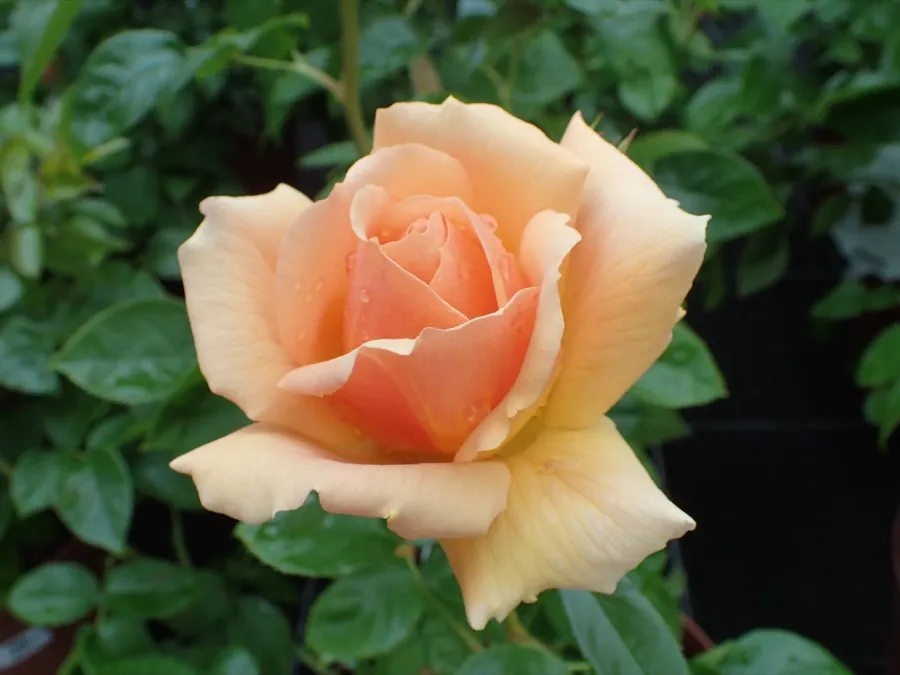
Round-conical, rich apricot
Open flower
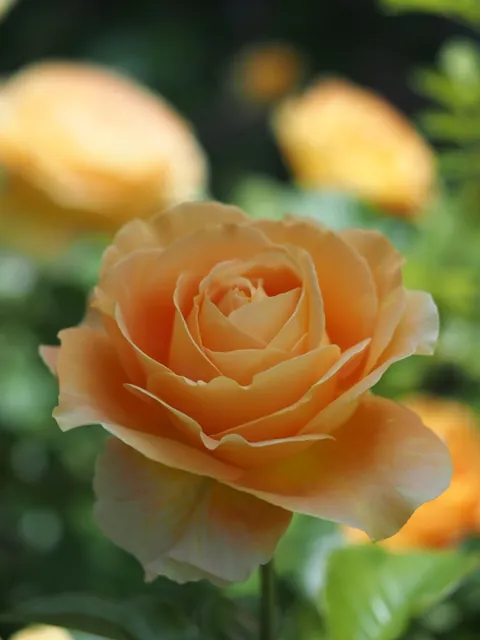
Cupped, very double, with delicate petal curls; diameter ~8 cm
Centre
Warm amber-apricot, gradually lightening towards the edge
Fullness
Very double, 26–40 petals
Flower carriage
In small clusters of 3–5 per stem

Fragrance

Moderate

Moderate — characteristic notes of honey and lemon.

Disease resistance

4 out of 5

Good — a mention of an ADR seal in Schmid/Horstmann, but the exact year is not recorded in one source.

Sun

Full sun to bring out the amber-apricot tone

Thorns

Moderate
thornlessfewmoderatemanyvery many

Average number, typical of modern Tantau-floribundas.

Foliage

Dark green, glossy, healthy.

Other names

Hansestadt Rostock
All characteristics in a table
Group
Floribunda
Breeder
Hans Jürgen Evers; Rosen Tantau, Germany, 2004
Bud shape
Round-conical, rich apricot
Open flower
Cupped, very double, with delicate petal curls; diameter ~8 cm
Centre
Warm amber-apricot, gradually lightening towards the edge
Colour
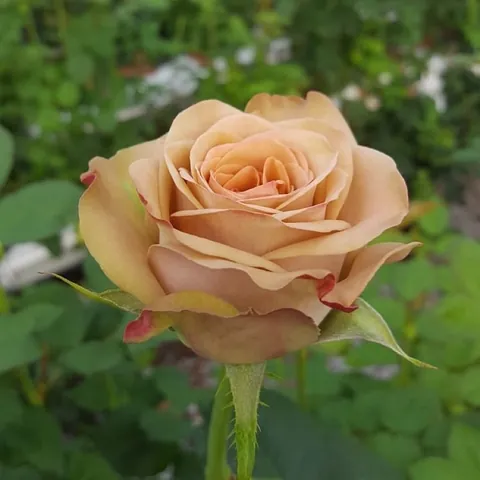
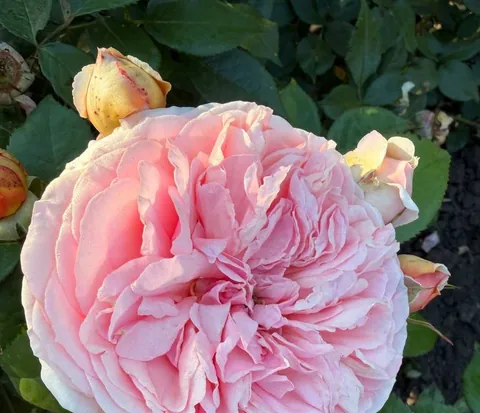
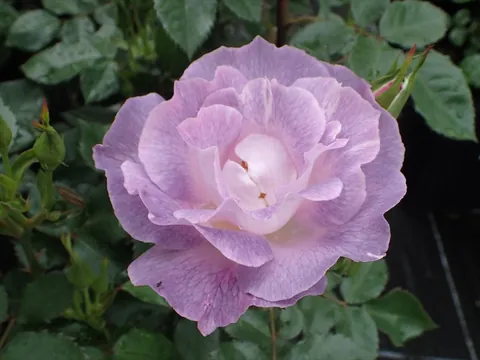
Amber-apricot in the centre, light apricot-yellow towards the edges of the outer petals; as the flower fades it turns salmon-pink, so one bush shows a play of colours at the same time. NOT pink and not red (a common mistake)
Fullness
Very double, 26–40 petals
Flower carriage
In small clusters of 3–5 per stem
Flowering
Repeat, in flushes through the season
Fragrance
Moderate — characteristic notes of honey and lemon
Hips
Not documented as decorative
Habit
Compact and upright — typical modern Tantau-floribunda
Branching
Good, even
Shoots
Strong, straight; they hold the double clusters well
Thorns
Average number, typical of modern Tantau-floribundas.
Dimensions
60–80 cm tall × ~50 cm wide (compact)
Support
No support needed
Foliage
Dark green, glossy, healthy
Resistance
Good — a mention of an ADR seal in Schmid/Horstmann, but the exact year is not recorded in one source
Variations of the variety
Code TAN04603; synonym Hansestadt Rostock®; parentage not published

Colour scheme

Amber-apricot in the centre, light apricot-yellow towards the edges of the outer petals; as the flower fades it turns salmon-pink, so one bush shows a play of colours at the same time. NOT pink and not red (a common mistake)

Rose neighbours

Perennials to plant nearby

Neighbouring roses

The Hans Jürgen Evers family at Tantau — warm, nostalgic varieties:

Companion perennials

Violet-silver accents for the amber tones:

lavender 'Munstead'catmint (Nepeta) 'Walker's Low'Stachys byzantina (lamb's ear)lady's mantle (Alchemilla)

Availability worldwide

A modern German premium variety with international awards:

  • 🇪🇺 Europe: HIGH · Tantau classic · Rose of the Year 2020 in Germany
  • 🇺🇸 USA: moderate · Tantau dealers
  • 🇯🇵 Asia: high · Silver Tokyo 2013
  • 🇺🇦 Ukraine: moderate · available from Tantau dealers

More about the variety

Hips
Not documented as decorative
Variations of the variety
Code TAN04603; synonym Hansestadt Rostock®; parentage not published

How to grow

Where to plant. Sunny bedding groups of 3–5 bushes, containers on a terrace, borders in warm colours. It looks lovely paired with purple perennials (lavender, catmint), a classic 'amber and violet' contrast; its compact size (70×50 cm) makes it ideal for small plots.

Climate. Down to −23 °C — in Ukraine with moderate cover in the northern regions; in the south, no cover needed.

Care. Classic floribunda — prune in spring by ⅓; removing spent blooms encourages new flushes; standard seasonal disease prevention.

About the name

Name. 'Hansestadt Rostock' is German for 'the Hanseatic city of Rostock'. The variety is dedicated to Rostock, an old Baltic port (Mecklenburg-Vorpommern, Germany), which belonged to the Hanseatic League, the trading league of Northern Europe in the XIII–XVII centuries, for 700 years. In 2004 Rostock celebrated the 500th anniversary of its university (founded in 1419), a likely occasion for naming the variety.

Breeding. MAJOR CORRECTION: bred by Hans Jürgen Evers at Rosen Tantau (Uetersen, Germany), in 2004; on the market in 2010. Code TAN04603. Hans Jürgen Evers (~1942–2008) was Tantau's chief breeder from the 1970s to the 2000s and bred the legendary Tantau varieties. The parentage is not published (standard Tantau-practice).

Significance. The 8th variety of the 'Evers dynasty' in our catalogue. Together with Candlelight (1994), Cappuccino (2005), Andre Le Notre, Chippendale (2005), Elfe (2000), Dukat (2010) and Friedenslicht (2010), it forms a broad group of warm, nostalgic roses from the Evers family (Hans Jürgen and his son Christian). 4 gold medals in 2 years: Baden-Baden 2011 (Gold Rose + Gold Medal Best Floribunda), Paris 2011 (Gold), Monza 2011 (Gold), Orléans 2012 (Gold), plus Silver Tokyo 2013. In 2020 the variety received the 'Rose of the Year 2020' from the Verein Deutscher Rosenfreunde (the German Rose Friends' association), a prize based on the results of a popular vote of amateurs, not a jury. It is a special form of recognition: the variety was acknowledged not by professionals but by practising gardeners.

Frequently asked questions about Hansestadt Rostock

Does Hansestadt Rostock need winter protection?

The cultivar’s reference temperature is −23 °C (USDA zone 6). Overwintering depends on the conditions. In Ukraine with moderate cover in the northern regions.

How many times a season does Hansestadt Rostock flower?

Repeat, in flushes through the season.

How big does Hansestadt Rostock grow?

60–80 cm tall, about 50 cm wide.

Which diseases affect Hansestadt Rostock?

Overall resistance: 4 out of 5. Good; typical modern Tantau-quality.

How much sun does Hansestadt Rostock need?

Sun; full sun to bring out the amber-apricot tone.

What does Hansestadt Rostock smell like?

Moderate — characteristic notes of honey and lemon.

Gardeners' photos and reviews

My climate

Choose a reference temperature to compare with the cultivar’s data. This is not an overwintering forecast or advice on winter protection; consider wind, moisture and the duration of frost.

Regional data are generalised. USDA describes average annual extreme minima, not a forecast; the values in the list are rounded. Check the conditions at your site. More information: Roses in Ukraine's climate.