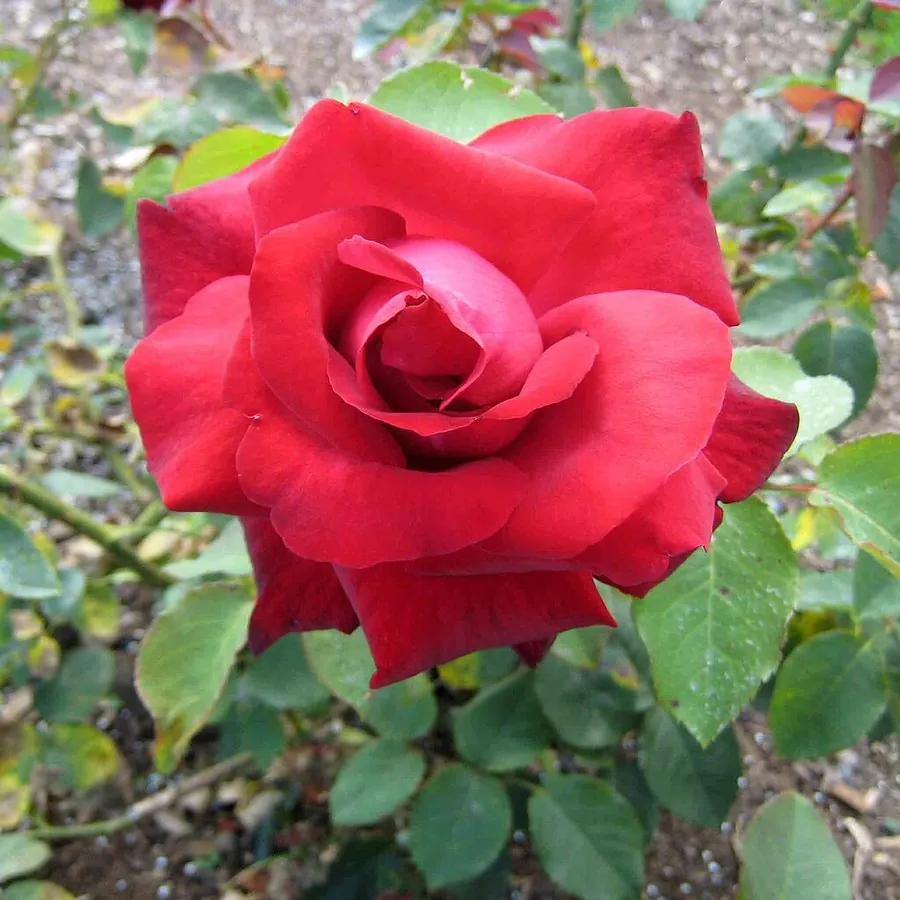
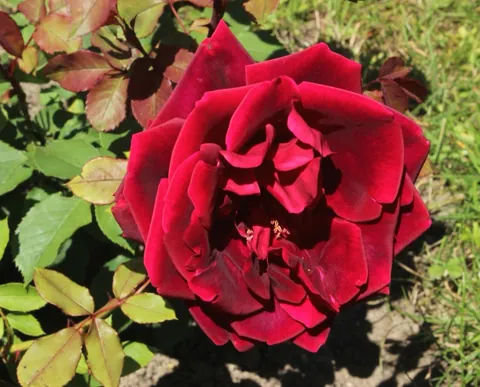
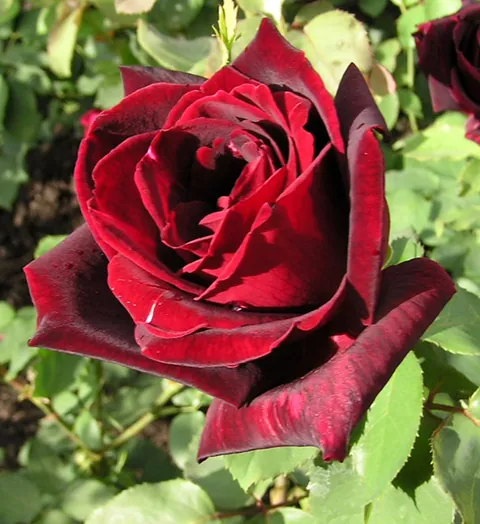
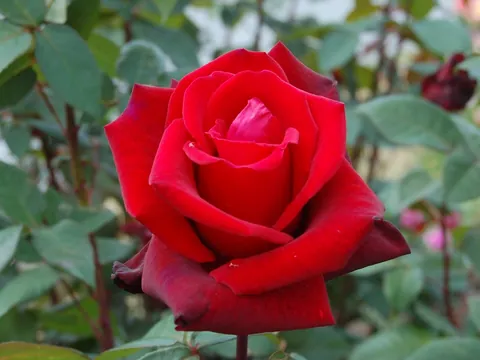




Josephine Bruce, close-up of the flower
Photo: 阿橋 HQ, CC BY-SA 2.0
Back to catalogue
Hybrid TeaA.J. Fraser; Bees LtdRed

Josephine Bruce

A deep velvety dark red classic of the 1950s; very large flowers, about 14 cm, with golden stamens; rich damask scent; a spreading, prickly bush prone to powdery mildew.

Crimson Glory × Madge Whipp · patent PP1294 · no code name

Variety profile

Flowering

Repeat, in flushes

Repeat-flowering, in flushes from June to September. Months are approximate, for the climate of Ukraine.

Plant size

60–120 × 60–80 cm
person 170 cm60–120 cm
Habit
Spreading, sprawling bush: not compact, branches spread outward
Dimensions
60–120 × 60–80 cm (typically ~75 × 70 cm)
Support
Not needed: a bush Hybrid Tea
Shoots
Sturdy; height from 60 to 120 cm (typically about 75 cm)
Branching
Wide, spreading

Flower

≈ 14 cm

24–25 petals.

Bud shape
Elongated, high-centred, dark red
Open flower
Very large, about 14 cm across, a classic high-centred Hybrid Tea form; golden stamens open in the centre, contrasting with the dark petals
Centre
Golden stamens against deep dark red
Fullness
About 24–25 petals
Flower carriage
Solitary (one per stem)
Flower durability
Some accounts say the plant tends to droopy flowers ('weak neck'), but reliable sources do not confirm this

Fragrance

Strong; classic damask

Strong, rich classic damask rose scent: deep, sweet, velvety. One of the most fragrant dark red Hybrid Teas of its time.

Disease resistance

3 out of 5
Powdery mildewsusceptible

2–3/5: main fault: tendency to powdery mildew late in the season (confirmed by all sources); spot and rust are also possible.

Sun

No data

There is no reliable information about colour fastness to fading.

Thorns

Very many
thornlessfewmoderatemanyvery many

Very prickly bush: abundant prickles.

Foliage

Dark green.

All characteristics in a table
Group
Hybrid Tea
Breeder
A.J. Fraser; Bees Ltd, United Kingdom
Bud shape
Elongated, high-centred, dark red
Open flower
Very large, about 14 cm across, a classic high-centred Hybrid Tea form; golden stamens open in the centre, contrasting with the dark petals
Centre
Golden stamens against deep dark red
Colour
Deep velvety dark red / dark crimson (crimson) with an inky tint. There is no reliable data on fading in the sun
Fullness
About 24–25 petals
Flower carriage
Solitary (one per stem)
Flowering
Repeat-flowering, in flushes from June to September
Fragrance
Strong, rich classic damask rose scent: deep, sweet, velvety. One of the most fragrant dark red Hybrid Teas of its time
Flower durability
Some accounts say the plant tends to droopy flowers ('weak neck'), but reliable sources do not confirm this
Hips
Not documented
Habit
Spreading, sprawling bush: not compact, branches spread outward
Branching
Wide, spreading
Shoots
Sturdy; height from 60 to 120 cm (typically about 75 cm)
Thorns
Very prickly bush: abundant prickles.
Dimensions
60–120 × 60–80 cm (typically ~75 × 70 cm)
Support
Not needed: a bush Hybrid Tea
Foliage
Dark green
Resistance
2–3/5: main fault: tendency to powdery mildew late in the season (confirmed by all sources); spot and rust are also possible
Variations of the variety
A climbing sport exists: 'Climbing Josephine Bruce'; here the bush (standard) form is described

Colour scheme

deep velvety dark red / dark crimson (crimson) with an inky tint. There is no reliable data on fading in the sun

Rose neighbours

Perennials to plant nearby

Rose neighbours

Classic dark red Hybrid Teas — the deep crimson family:

Companion perennials

Cool blue-lilac and silver tones set off the deep dark red:

catmintsagestachyswormwood

Availability worldwide

A British classic from the mid-XX century; today a rare collector's variety:

  • 🇬🇧 United Kingdom: in old-rose collections
  • 🌍 Overall: rare, in specialist nurseries
  • 🌿 There is a climbing sport, 'Climbing Josephine Bruce'

More about the variety

Hips
Not documented
Variations of the variety
A climbing sport exists: 'Climbing Josephine Bruce'; here the bush (standard) form is described

How to grow

Where to plant. The bush is spreading and sprawling (not compact) and very prickly, so it needs more room; choose a spot away from paths. No support needed. Its strong damask scent and very large dark red flowers make it a good specimen plant or a group member among dark red Hybrid Teas.

Climate. USDA 7b+, RHS H6 (roughly −20…−15 °C). In Ukraine it needs winter protection.

Care. The main problem is a tendency to powdery mildew late in the season (all sources note this); spot and rust are also possible. It needs a sunny, airy site and preventive spraying. Repeat flowering, in flushes from June to September.

About the name

Name. The variety is named after Josephine Bruce; no biographical details about her have survived.

Breeding. Bred by A.J. Fraser, introduced by Bees Ltd (Great Britain), around 1949–1952 (per HelpMeFind: 1950). Parentage: Crimson Glory × Madge Whipp. Protected by patent PP1294. It has no breeder's code name. A climbing sport, 'Climbing Josephine Bruce', exists; here the original bush form is described.

Significance. One of the classic dark red Hybrid Teas of the mid-twentieth century: valued for very large velvety dark red flowers with golden stamens and a strong classic damask scent. Its kinship with Crimson Glory (its father) places it in a direct line of legendary fragrant crimson roses, alongside Papa Meilland, Mister Lincoln and Barkarole. Its main fault, which made it lose ground to newer varieties, is its tendency to powdery mildew.

Frequently asked questions about Josephine Bruce

How many times a season does Josephine Bruce flower?

Repeat-flowering, in flushes from June to September.

How big does Josephine Bruce grow?

60–120 cm tall, 60–80 cm wide.

Which diseases affect Josephine Bruce?

Overall resistance: 3 out of 5. 2–3 / 5; its main fault is a tendency to powdery mildew late in the season; spot and rust are possible.

How much sun does Josephine Bruce need?

No data; there is no reliable information about colour fastness to fading.

What does Josephine Bruce smell like?

Strong, rich classic damask rose scent: deep, sweet, velvety. One of the most fragrant dark red Hybrid Teas of its time.

Gardeners' photos and reviews

My climate

Choose a reference temperature to compare with the cultivar’s data. This is not an overwintering forecast or advice on winter protection; consider wind, moisture and the duration of frost.

Regional data are generalised. USDA describes average annual extreme minima, not a forecast; the values in the list are rounded. Check the conditions at your site. More information: Roses in Ukraine's climate.