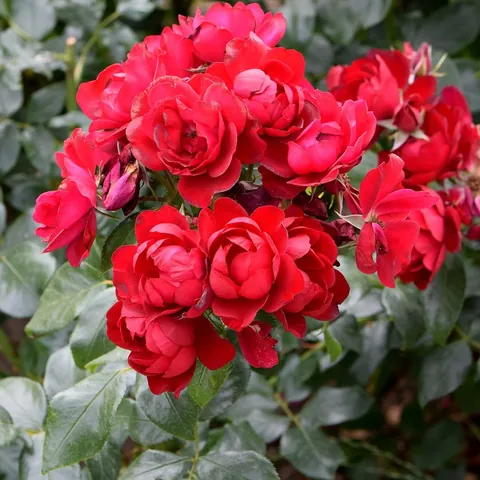
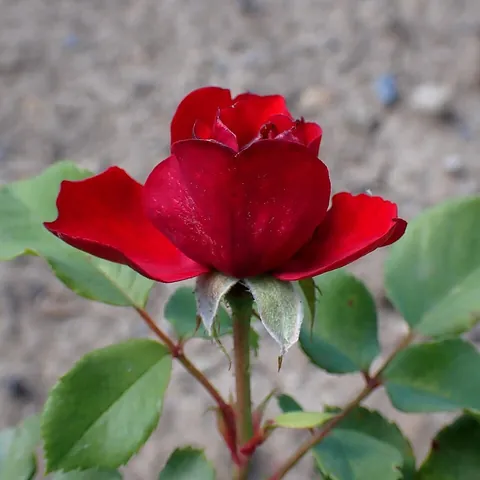
Morsdag Red, close-up of the flower
Photo: Salicyna, CC BY-SA 4.0
Back to catalogue
PolyanthaF.J. Grootendorst, 1949Red

Morsdag Red

A historic pot polyantha grown for Mother's Day; a sport of 'Dick Koster'; a low, compact bush; abundant, wavy flowering from May to the frosts.

Variety profile

Flowering

Repeat, in flushes

Abundant, in waves, from May to the first frosts. Months are approximate, for the climate of Ukraine.

Winter hardiness

−29 °C

USDA zone 5–6. About −29 °C; Ukraine: light protection. ≈ −29 °C · Ukraine: light cover.

Compare reference temperatures

Plant size

30–70 cm
person 170 cm30–70 cm
Habit
Low, compact, rounded bush.
Dimensions
About 30–70 cm tall: a low border or pot bush.
Support
Needs none.
Shoots
Thin, flexible, covered with small glossy leaves.
Branching
Dense, with many thin shoots from the base.

Flower

≈ 3 cm

17–25 petals.

Bud shape
Small, round; it opens quickly from a dense bud.
Open flower
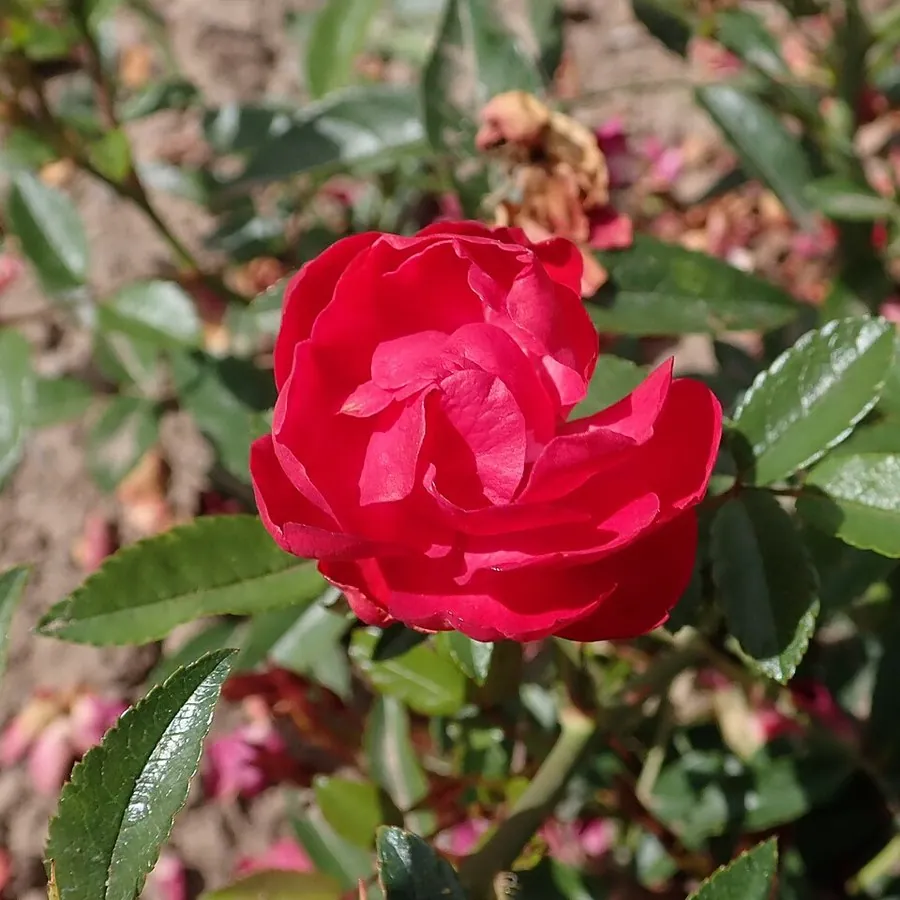
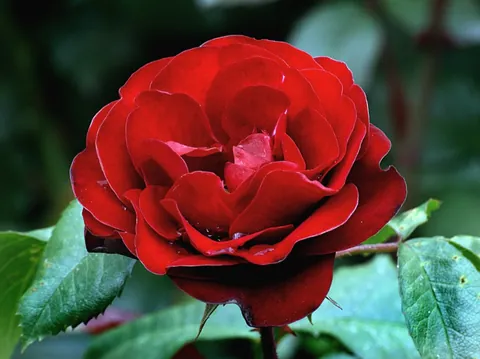
Flat, rounded, globular, pompon-shaped: it resembles a miniature peony.
Fullness
Semi-double to double, 17–25 petals.
Flower carriage
In dense clusters of 5–20 flowers per shoot.

Fragrance

Light to moderate

Sources differ in their assessment, from light to more noticeable; roughly light to moderate.

Sun

No data

Typically full sun.

Thorns

Moderate
thornlessfewmoderatemanyvery many

No data on the number of thorns; the mark has been set at a middle level as a convention.

Foliage

Small, glossy, dark green.

Other names

Mothersday, Muttertag, Mother's Day, Fête des Mères, Paree Red
All characteristics in a table
Group
Polyantha
Breeder
F.J. Grootendorst, Netherlands, 1949
Bud shape
Small, round; it opens quickly from a dense bud.
Open flower
Flat, rounded, globular, pompon-shaped: it resembles a miniature peony.
Colour
Dark red with a raspberry tint; no data on fading in the sun.
Fullness
Semi-double to double, 17–25 petals.
Flower carriage
In dense clusters of 5–20 flowers per shoot.
Flowering
Abundant, in waves, from May to the first frosts.
Fragrance
Sources differ in their assessment, from light to more noticeable; roughly light to moderate.
Hips
No data.
Habit
Low, compact, rounded bush.
Branching
Dense, with many thin shoots from the base.
Shoots
Thin, flexible, covered with small glossy leaves.
Thorns
No data on the number of thorns; the mark has been set at a middle level as a convention.
Dimensions
About 30–70 cm tall: a low border or pot bush.
Support
Needs none.
Foliage
Small, glossy, dark green.
Resistance
Few garden data; susceptibility to spider mites during greenhouse forcing is mentioned.
Variations of the variety
A sport (mutation) of the polyantha 'Dick Koster'; synonyms Mothersday, Muttertag, Mother's Day, Fête des Mères, Paree Red. Morsdag Alba (white), Orange Morsdag and Pink Mothersday later split off from this red variety. Do not confuse it with the variety 'F.J. Grootendorst' (Hybrid Rugosa, 1918), which is a different variety from the same nursery.
Colour scheme

Dark red with a raspberry tint; no data on fading in the sun.

Rose neighbours

Perennials to plant nearby

Neighbouring roses

Red varieties in different shades and flower forms — one colour family.

Companion perennials

Blue, lilac and silver neighbours highlight the red:

lavendercatmintstachysgypsophila

Names in different countries

The variety was forced in pots for Mother's Day, so almost literal names took hold in different languages:

🇩🇰 Morsdag🇩🇪 Muttertag🇬🇧 Mother's Day🇫🇷 Fête des Mères

More about the variety

Hips
No data.
Variations of the variety
A sport (mutation) of the polyantha 'Dick Koster'; synonyms Mothersday, Muttertag, Mother's Day, Fête des Mères, Paree Red. Morsdag Alba (white), Orange Morsdag and Pink Mothersday later split off from this red variety. Do not confuse it with the variety 'F.J. Grootendorst' (Hybrid Rugosa, 1918), which is a different variety from the same nursery.
How to grow

Where to plant. The low, compact bush suits borders, the front of a mixed border, pots and containers, which is exactly how it was traditionally grown and sold for Mother's Day.

Climate. Roughly USDA zone 5–6 (about −29 °C); polyanthas are generally hardy, but in Ukraine light winter protection would be safer.

Care. Standard care for polyantha roses. There are few garden data on disease resistance; the only known weakness is susceptibility to spider mites during greenhouse forcing.

About the name

Name. 'Mother's Day' (Danish 'Morsdag', German 'Muttertag'). The variety was traditionally forced in pots for this holiday, hence the name.

Breeding. Bred by the nursery F.J. Grootendorst (the Netherlands) in 1949 as a sport (mutation) of the polyantha rose 'Dick Koster'.

Significance. A historic pot and border polyantha rose with small red pompom flowers. The red form is the original; the white, orange and pink sports later arose from it.

Frequently asked questions about Morsdag Red

Does Morsdag Red need winter protection?

The cultivar’s reference temperature is −29 °C (USDA zone 5–6). Overwintering depends on the conditions. About −29 °C; Ukraine: light protection.

How many times a season does Morsdag Red flower?

Abundant, in waves, from May to the first frosts.

How big does Morsdag Red grow?

30–70 cm tall.

How much sun does Morsdag Red need?

No data; typically full sun.

What does Morsdag Red smell like?

Sources differ in their assessment, from light to more noticeable; roughly light to moderate.

Gardeners' photos and reviews

My climate

Choose a reference temperature to compare with the cultivar’s data. This is not an overwintering forecast or advice on winter protection; consider wind, moisture and the duration of frost.

Regional data are generalised. USDA describes average annual extreme minima, not a forecast; the values in the list are rounded. Check the conditions at your site. More information: Roses in Ukraine's climate.