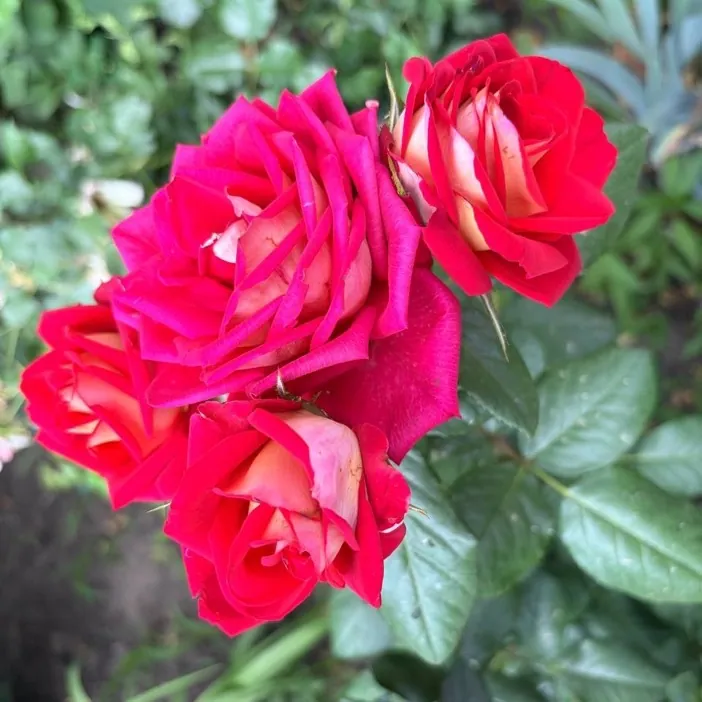
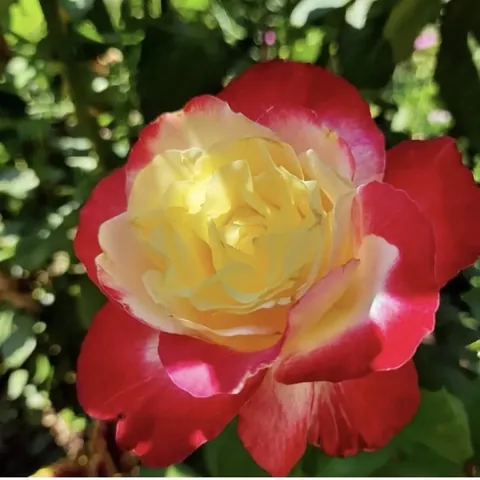
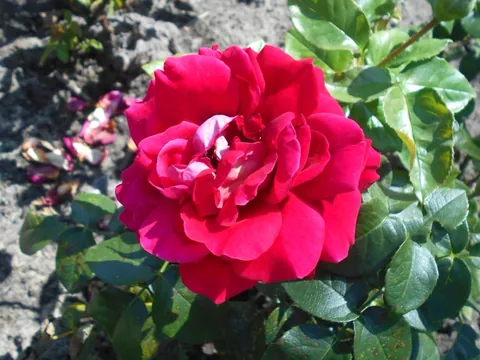
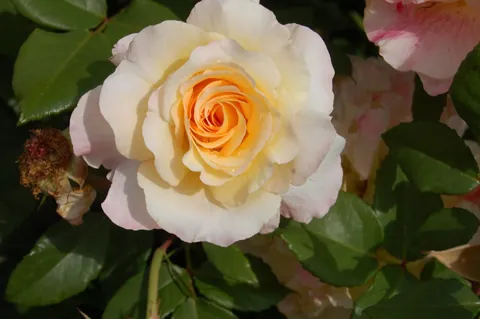
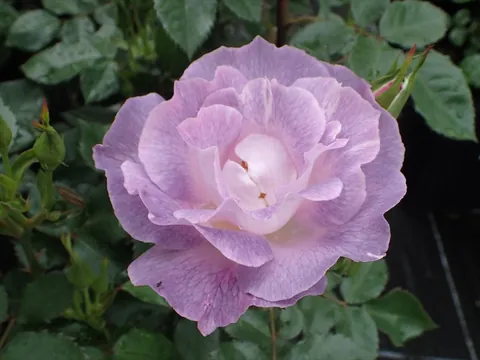



New Fashion, close-up of the flower
Back to catalogue
Hybrid Tea; Large FlowerNIRP International; Antibes, 2000Bicolour

New Fashion

Two-tone Hybrid Tea: rich red with a creamy reverse; one of the notable varieties from NIRP International (Antibes, France), a commercial cut-flower house; 🇺🇦 widely grown in Ukraine; not to be confused with 'Fashion' Boerner 1949 (AARS 1950), which is a different variety.

Nirpbredy (bred by NIRP) · not to be confused with 'Fashion' (Boerner, 1949; AARS 1950) — this is a separate, later variety

Variety profile

Flowering

Repeat, in flushes

Repeat-flowering from June to October, with pronounced flushes. Months are approximate, for the climate of Ukraine.

Use

Garden + cut flowers

Striking HT for borders and cutting

Winter hardiness

−20 °C

USDA zone 6. In Ukraine, with winter protection.

Compare reference temperatures

Plant size

100–120 × 80–100 cm
person 170 cm100–120 cm
Habit
Upright, tall, well branched
Dimensions
100–120 cm × 80–100 cm — typical HT
Support
Not needed — self-supporting
Shoots
Sturdy, straight — good for cutting
Branching
Well branched, with sturdy stems

Flower

10–12 cm
Bud shape
Elongated and elegant, rich red
Open flower
Classic HT form with a pointed centre that opens slowly
Centre
Closely packed, with hidden stamens
Fullness
About 40 petals — standard for HT
Flower carriage
Mostly borne singly, sometimes in small clusters — typical of HT

Fragrance

Light; delicate

Disease resistance

3 out of 5
Black spotmoderatePowdery mildewresistant

High against powdery mildew and rain; moderate against black spot; in Ukraine it needs winter protection.

Sun

Full sun

The contrast is brighter in cool weather.

Thorns

Moderate
thornlessfewmoderatemanyvery many

Medium number of thorns — standard for HT.

Foliage

Dark green, semi-glossy.

All characteristics in a table
Group
Hybrid Tea; Large Flower
Breeder
NIRP International; Antibes, France, 2000
Bud shape
Elongated and elegant, rich red
Open flower
Classic HT form with a pointed centre that opens slowly
Centre
Closely packed, with hidden stamens
Colour
Two-tone contrast: the front of the petal is rich red; the reverse is creamy white. Striking as it opens, similar in principle to Double Delight, but with a different palette. The contrast is stronger in cool weather
Fullness
About 40 petals — standard for HT
Flower carriage
Mostly borne singly, sometimes in small clusters — typical of HT
Flowering
Repeat-flowering from June to October, with pronounced flushes
Fragrance
Light, delicate
Hips
Not documented — cut for repeat flowering
Habit
Upright, tall, well branched
Branching
Well branched, with sturdy stems
Shoots
Sturdy, straight — good for cutting
Thorns
Medium number of thorns — standard for HT.
Dimensions
100–120 cm × 80–100 cm — typical HT
Support
Not needed — self-supporting
Foliage
Dark green, semi-glossy
Resistance
High against powdery mildew and rain; moderate against black spot; in Ukraine it needs winter protection
Variations of the variety
Code Nirpbredy; VBN-code 17902; introduced around 2000 through NIRP International. Parentage not published (typical NIRP practice). 'Fashion' Boerner 1949 (AARS 1950) is a different, separate variety; 'New Fashion' is a later one with no connection to it

Colour scheme

Two-tone contrast: the front of the petal is rich red; the reverse is creamy white. Striking as it opens, similar in principle to Double Delight, but with a different palette. The contrast is stronger in cool weather

Rose neighbours

Perennials to plant nearby

Neighbouring roses

Bicolour and vivid warm Hybrid Teas carry on the play of contrasting colours:

Perennial companions

Neutral purple-silver perennials soften the bright red:

lavenderlamb's ear (Stachys)gypsophilacatmint (Nepeta)

Availability worldwide

European commercial variety from NIRP:

  • 🇫🇷🇮🇹: high · via NIRP
  • 🇺🇦 Ukraine: high · Biosad, Tetyanin Sad, Faynyi Sad, Flora Yug
  • 🇪🇺 Europe: high · as a cut-flower rose
  • 🇺🇸 USA/🇨🇦: limited

More about the variety

Hips
Not documented — cut for repeat flowering
Variations of the variety
Code Nirpbredy; VBN-code 17902; introduced around 2000 through NIRP International. Parentage not published (typical NIRP practice). 'Fashion' Boerner 1949 (AARS 1950) is a different, separate variety; 'New Fashion' is a later one with no connection to it

How to grow

Where to plant. In mixed beds as an accent HT, at the front of borders, or as a cut-flower shrub for home bouquets. Lovely as a solo accent among neutral perennials.

Climate. Central and eastern Ukraine with winter protection (USDA 6); in western and southern Ukraine no protection is needed. The colour contrast is stronger in cool weather.

Care. Full sun, a well-ventilated spot; preventive care against black spot (moderate susceptibility); feed 2–3 times a season; prune ~⅓ in spring; cut for home bouquets — it lasts well in a vase.

About the name

Name. 'New Fashion' — 'new fashion' — a marketing name by NIRP in the spirit of fashionable-sounding English words. Not a commemoration, but purely a commercially striking name. An important warning: there is a separate historic variety called 'Fashion' (Eugene S. Boerner / J&P 1949, AARS 1950) — a pink-coral Floribunda. The NIRP 'New Fashion' has no connection with it.

Breeding. Bred at NIRP International (Antibes, France), a specialist house for cut-flower and decorative roses. Code Nirpbredy. On the market around 2000. Parentage not published (typical NIRP practice). NIRP is smaller than Meilland or Kordes, but active in cut-flower and Mediterranean markets.

Significance. One of the notable NIRP-varieties that has taken root well in Ukrainian nurseries. A classic two-tone contrast in the HT format is rare today (most modern HTs are single-colour or gradient). No internationally recognised awards (AARS and ADR not given). Valued for its striking look and reliability in borders.

Frequently asked questions about New Fashion

Does New Fashion need winter protection?

The cultivar’s reference temperature is −20 °C (USDA zone 6). Overwintering depends on the conditions. In Ukraine, with winter protection.

How many times a season does New Fashion flower?

Repeat-flowering from June to October, with pronounced flushes.

How big does New Fashion grow?

100–120 cm tall, 80–100 cm wide.

Which diseases affect New Fashion?

Overall resistance: 3 out of 5. High against powdery mildew and rain; moderate against black spot.

How much sun does New Fashion need?

Sun; full sun; the contrast is brighter in cool weather.

What does New Fashion smell like?

Light, delicate.

Gardeners' photos and reviews

My climate

Choose a reference temperature to compare with the cultivar’s data. This is not an overwintering forecast or advice on winter protection; consider wind, moisture and the duration of frost.

Regional data are generalised. USDA describes average annual extreme minima, not a forecast; the values in the list are rounded. Check the conditions at your site. More information: Roses in Ukraine's climate.