


Back to catalogue
Hybrid TeaHans Jürgen Evers; Rosen-TantauBicolour

Nostalgie

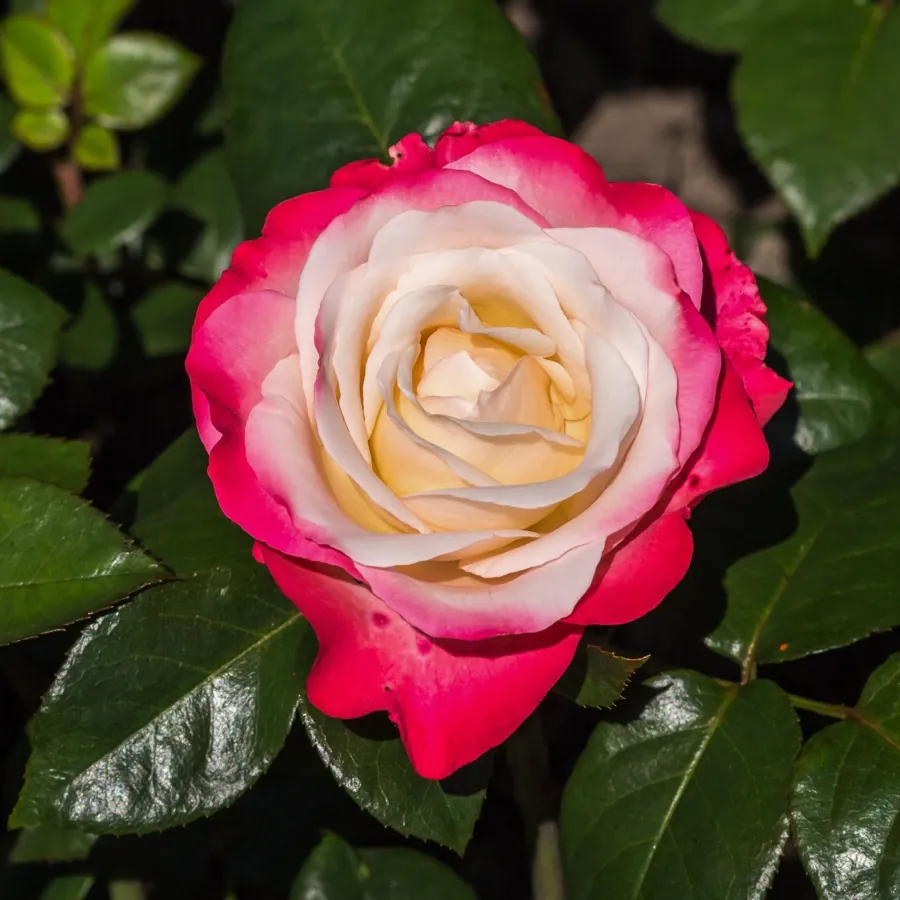
RHS AGM + Gold Glasgow 2002 + Top Rose Hague 2000; the first variety of Tantau's 'Nostalgic Roses' series — it opened a whole new line for the house; the 12th work of the Evers dynasty in the catalogue; bicolour, creamy white + cherry-raspberry edge.

Tantau's first 'nostalgic' rose

Variety profile

Flowering

Repeat-flowering

Awards

RHS AGM

+ Gold Glasgow 2002 · Top Rose Hague 2000

Winter hardiness

−23 °C

USDA zone 6b. RHS H6; all of Ukraine with moderate winter protection.

Compare reference temperatures

Plant size

80–120 × 50–80 cm
person 170 cm80–120 cm
Habit
Upright, compact — a typical modern Tantau HT
Dimensions
80–120 × 50–80 cm
Support
Needs no support
Shoots
Sturdy, straight
Branching
Good

Flower

8–10 cm
Bud shape
Round, with the cherry edge already visible
Open flower
Globular, cup-shaped — the typical nostalgic form of Tantau Evers; reminiscent of nineteenth-century Hybrid Teas
Centre
Creamy white, with no visible stamens
Fullness
26–40 petals (about 40 when fully open)
Flower carriage
One flower per stem

Fragrance

Moderate; sweet tea scent

Disease resistance

5 out of 5

5/5 'excellent' — good tolerance of rain and heat.

Sun

Full sun

The edge is brighter in the sun.

Thorns

Moderate
thornlessfewmoderatemanyvery many

Moderate number, typical of Tantau HTs.

Foliage

Dark green, leathery, very healthy.

Other names

Nostalgia, La Garçonne
All characteristics in a table
Group
Hybrid Tea
Breeder
Hans Jürgen Evers; Rosen-Tantau, Germany
Bud shape
Round, with the cherry edge already visible
Open flower
Globular, cup-shaped — the typical nostalgic form of Tantau Evers; reminiscent of nineteenth-century Hybrid Teas
Centre
Creamy white, with no visible stamens
Colour
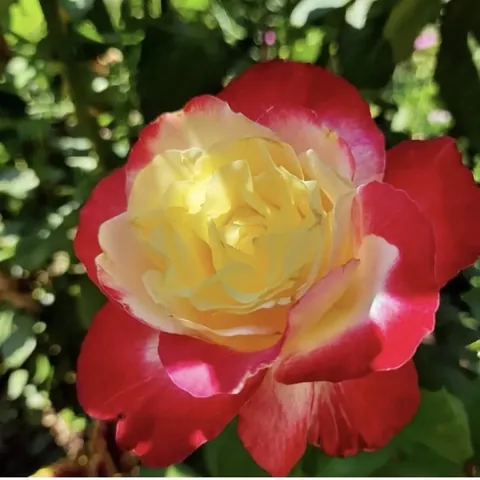
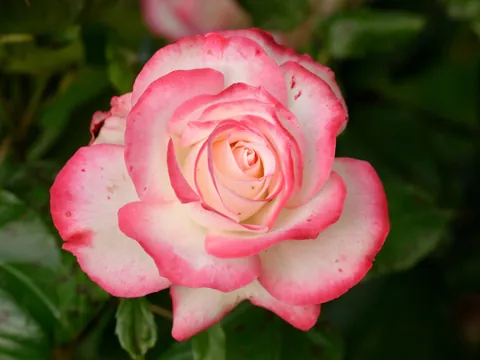
A unique bicolour: a creamy-white centre with a rich cherry-raspberry edge; the outer petals can be dark red. The edge is brighter in the sun
Fullness
26–40 petals (about 40 when fully open)
Flower carriage
One flower per stem
Flowering
Repeat-flowering
Fragrance
Moderate — sweet tea scent
Hips
Not documented
Habit
Upright, compact — a typical modern Tantau HT
Branching
Good
Shoots
Sturdy, straight
Thorns
Moderate number, typical of Tantau HTs.
Dimensions
80–120 × 50–80 cm
Support
Needs no support
Foliage
Dark green, leathery, very healthy
Resistance
5/5 'excellent' — good tolerance of rain and heat
Variations of the variety
Code TANeiglat; parentage not published (typical Tantau practice); synonyms Nostalgia (English-language) and La Garçonne® (rare); an ADR-award is a common myth, not officially confirmed; often wrongly credited to Mathias Tantau Jr.; the breeder is Hans Jürgen Evers

Colour scheme

A unique bicolour: a creamy-white centre with a rich cherry-raspberry edge; the outer petals can be dark red. The edge is brighter in the sun

Rose neighbours

Perennials to plant nearby

Neighbouring roses

Bicolour WFRS HoF roses plus varieties from the Evers dynasty — the 'warm nostalgic' family:

Perennial companions

Purple-silver accents bring out the cherry edging:

lavender 'Hidcote'Byzantine lamb's ear (Stachys)gypsophilacatmint (Nepeta)

Availability worldwide

One of the best-known Tantau varieties of the modern era:

🇩🇪 Germany: very high · official Tantau🇬🇧 UK: high · RHS AGM🇪🇺 Europe: high · as Nostalgia🇺🇦 Ukraine: high · 'Nostalgie' is popular

More about the variety

Hips
Not documented
Variations of the variety
Code TANeiglat; parentage not published (typical Tantau practice); synonyms Nostalgia (English-language) and La Garçonne® (rare); an ADR-award is a common myth, not officially confirmed; often wrongly credited to Mathias Tantau Jr.; the breeder is Hans Jürgen Evers

How to grow

Where to plant. Formal borders, groups of a single bicolour, containers on a terrace, at an entrance; ideal in a group with Double Delight as 'two iconic bicolours' (Double Delight + Nostalgie).

Climate. Down to −23 °C — all of Ukraine with moderate winter protection; in the south no protection is needed.

Care. Classic HT — prune in spring to 3–5 buds; removing spent flowers encourages new flushes; needs almost no preventive care (health 5/5).

About the name

Name. 'Nostalgie' (German/French for 'nostalgia') refers to classic Hybrid Teas and old roses of the nineteenth century. The variety opened Tantau's 'Nostalgic Roses' series, a line that brings back the globular, cup-shaped flower.

Breeding. Bred by Hans Jürgen Evers (1942–2008) at the Rosen-Tantau house (Uetersen, Germany), bred in 1995, on the market in 1996. Code TANeiglat. Parentage not published (typical Tantau practice). It is often wrongly credited to Mathias Tantau Jr.; the breeder is Hans Jürgen Evers.

Significance. Top Rose Den Haag 2000 + Gold Medal Glasgow 2002 + RHS Award of Garden Merit (UK). ADR is not confirmed in open sources; it is a common myth. The first 'Nostalgic' Tantau opened a whole new line for the house: later followed by Augusta Luise, Eliza, Aphrodite, Anna Pavlova. The 12th work of the 'Evers dynasty' in our catalogue, alongside Candlelight + Cappuccino + Andre Le Notre + Chippendale + Elfe + Dukat + Friedenslicht + Hansestadt Rostock + Heimatmelodie + Irina + Lemon Piano. The largest breeding dynasty in the catalogue.

Frequently asked questions about Nostalgie

Does Nostalgie need winter protection?

The cultivar’s reference temperature is −23 °C (USDA zone 6b). Overwintering depends on the conditions. RHS H6; all of Ukraine with moderate winter protection.

How many times a season does Nostalgie flower?

Repeat-flowering.

How big does Nostalgie grow?

80–120 cm tall, 50–80 cm wide.

Which diseases affect Nostalgie?

Overall resistance: 5 out of 5. 'Excellent'; good tolerance of rain and heat.

How much sun does Nostalgie need?

Sun; full sun; the edge is brighter in the sun.

What does Nostalgie smell like?

Moderate — sweet tea scent.

Gardeners' photos and reviews

My climate

Choose a reference temperature to compare with the cultivar’s data. This is not an overwintering forecast or advice on winter protection; consider wind, moisture and the duration of frost.

Regional data are generalised. USDA describes average annual extreme minima, not a forecast; the values in the list are rounded. Check the conditions at your site. More information: Roses in Ukraine's climate.