

Back to catalogue
Hybrid Tea; red blendReimer Kordes; W. Kordes' Söhne, 1978Bicolour

Osiria

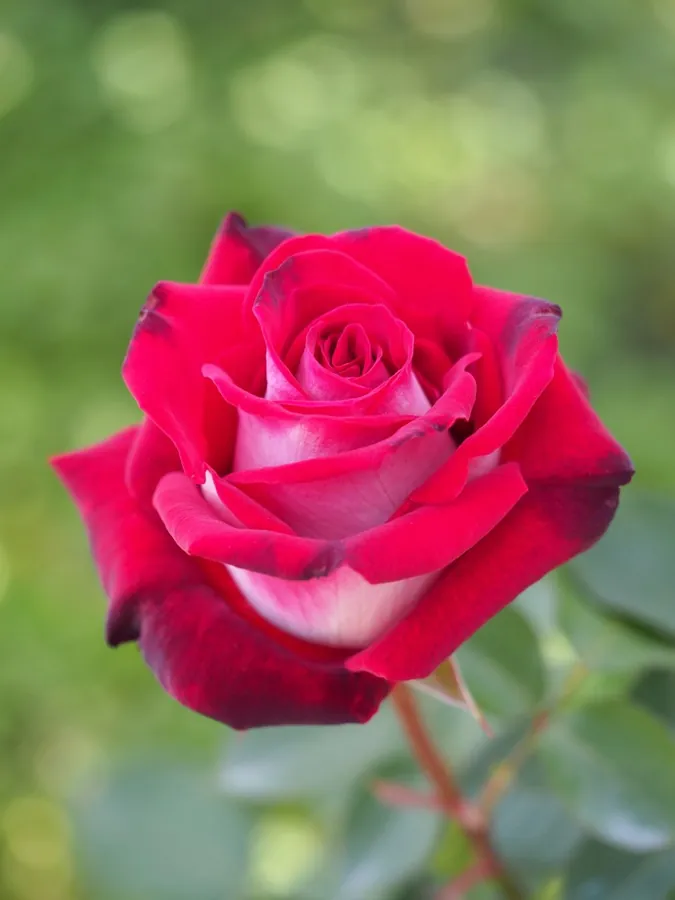
A two-tone Hybrid Tea: fiery red front and silvery-white reverse; an internet sensation because of its dramatic contrast; named after Osiris, the Egyptian god of resurrection (a symbol of 'fire and silver'); difficult to grow: weak disease resistance, sensitive to frost.

A cult bicolour — internet-viral for its contrast of 'fire and silver'

Variety profile

Flowering

Repeat, in flushes

Repeat flowering from June to October, with pronounced flushes. Months are approximate, for the climate of Ukraine.

Legacy

Kordes 1978

Parentage Snowfire × seedling

Winter hardiness

−15 °C

USDA zone 7b. Sensitive to spring frosts; southern Ukraine without winter protection. Sensitive to spring frosts · South of Ukraine without winter protection.

Compare reference temperatures

Plant size

80–100 × 60–80 cm
person 170 cm80–100 cm
Habit
Upright, medium-tall Hybrid Tea
Dimensions
80–100 cm tall × 60–80 cm wide; a medium Hybrid Tea
Support
Not needed; self-supporting
Shoots
Strong and straight; good for cutting on long stems
Branching
Moderately branched, with sturdy stems

Flower

10–12 cm
Bud shape
Elongated and elegant, dark red
Open flower
'huge show blooms': 10–12 cm, classic Hybrid Tea form that opens slowly
Centre
Tightly packed, with hidden stamens; a dramatic contrast of red and silver on the petals
Fullness
About 35 petals (full)
Flower carriage
Mostly singly; typical Hybrid Tea, ideal for solo cutting

Fragrance

Strong

Strong, rare for two-tone Hybrid Teas.

Disease resistance

2 out of 5
Black spotsusceptiblePowdery mildewsusceptible

Low, 2/5: susceptible to powdery mildew, black spot and rust; needs constant prevention. USDA 7b+: weak winter hardiness, sensitive to spring frosts.

Sun

Full sun

The contrast is brighter in cool weather.

Thorns

Moderate
thornlessfewmoderatemanyvery many

Average number of thorns; typical of late-1970s Hybrid Teas.

Foliage

Dark green, semi-glossy.

All characteristics in a table
Group
Hybrid Tea; red blend
Breeder
Reimer Kordes; W. Kordes' Söhne, Germany, 1978
Bud shape
Elongated and elegant, dark red
Open flower
'huge show blooms': 10–12 cm, classic Hybrid Tea form that opens slowly
Centre
Tightly packed, with hidden stamens; a dramatic contrast of red and silver on the petals
Colour
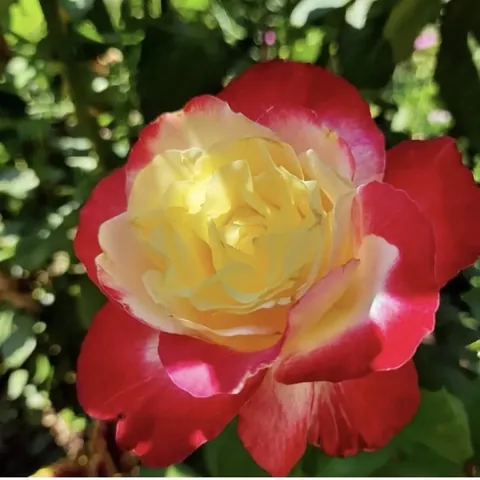
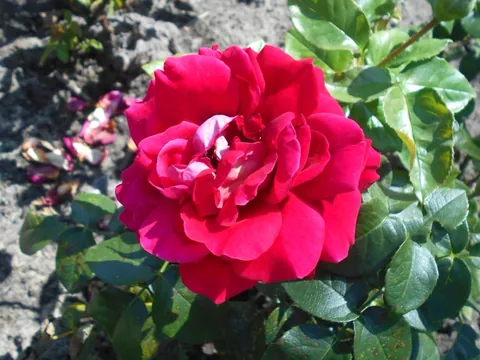
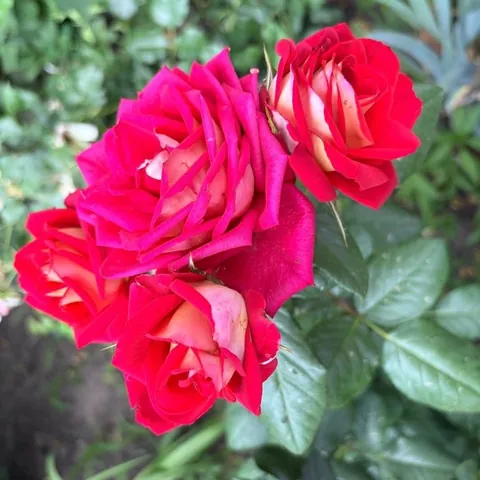
Two-tone, dramatic contrast: the front of each petal is cherry / fire-engine red; the reverse is silvery-white. An internet sensation, it spreads widely on social media for its dramatic colour play. Photos online are often oversaturated: the real colour is brighter in cool weather; in midsummer heat the contrast weakens
Fullness
About 35 petals (full)
Flower carriage
Mostly singly; typical Hybrid Tea, ideal for solo cutting
Flowering
Repeat flowering from June to October, with pronounced flushes
Fragrance
Strong, rare for two-tone Hybrid Teas
Hips
Not documented; cut for repeat flowering
Habit
Upright, medium-tall Hybrid Tea
Branching
Moderately branched, with sturdy stems
Shoots
Strong and straight; good for cutting on long stems
Thorns
Average number of thorns; typical of late-1970s Hybrid Teas.
Dimensions
80–100 cm tall × 60–80 cm wide; a medium Hybrid Tea
Support
Not needed; self-supporting
Foliage
Dark green, semi-glossy
Resistance
Low, 2/5: susceptible to powdery mildew, black spot and rust; needs constant prevention. USDA 7b+: weak winter hardiness, sensitive to spring frosts
Variations of the variety
Kordes code not publicly released (various sources give KORmirror and KORsir, unconfirmed); introduced 1978. Parentage: 'Snowfire' × Unnamed Seedling. Commercially offered in France by Willemse (1978), and in Australia by Roy H. Rumsey (1981)

Colour scheme

A two-tone, dramatic contrast: the front of each petal is cherry / fire-engine red; the reverse is silvery-white. An internet sensation, it spreads widely on social media for its dramatic colour play. Photos online are often oversaturated: the real colour is brighter in cool weather; in midsummer heat the contrast weakens

Rose neighbours

Perennials to plant nearby

Rose neighbours

Bicolour and bright HTs — they continue the play of contrasts:

Perennial companions

Silver-neutral perennials heighten the contrast as much as possible:

stachysgypsophilaartemisiaperovskia

Availability worldwide

A cult favourite on social media, but hard to grow:

  • 🇩🇪 Germany: moderate · Kordes
  • 🇪🇺 Europe: moderate · collector demand
  • 🇺🇸 USA: moderate · market of 'viral' varieties
  • 🇺🇦 Ukraine: high (demand) · South in open ground

More about the variety

Hips
Not documented; cut for repeat flowering
Variations of the variety
Kordes code not publicly released (various sources give KORmirror and KORsir, unconfirmed); introduced 1978. Parentage: 'Snowfire' × Unnamed Seedling. Commercially offered in France by Willemse (1978), and in Australia by Roy H. Rumsey (1981)

How to grow

Where to plant. As a dramatic solo accent in borders in front of silver foliage; in collections of enthusiasts of unusual varieties; as a cutting shrub for bright bouquets. Not for mass plantings: the drama gets lost in a group.

Climate. USDA 7b+; in southern Ukraine it can grow in open ground, while in Central/Eastern Ukraine winter protection is essential. Sensitive to spring frosts, so it is advisable to remove the winter protection late. In midsummer heat the colour contrast weakens.

Care. Full sun, a well-ventilated site; constant prevention against black spot, powdery mildew and rust; feed 3 times per season; prune one third in spring; winter protection is essential in a continental climate.

About the name

Name. 'Osiria', from Osiris, the Egyptian god of resurrection and the underworld. Kordes chose this name for the image of 'fire and silver', a symbol of resurrection through death, like the dramatic contrast of fiery red and silvery night light in the bloom. A poetic German tradition of naming Hybrid Teas after mythological and epic figures (Schwarze Madonna, Black Magic, Black Baccara).

Breeding. Bred by Reimer Kordes (1922–1997, son of Wilhelm Kordes II) at W. Kordes' Söhne (Sparrieshoop, Germany). Introduced 1978. Parentage: 'Snowfire' × Unnamed Seedling. Commercially offered in France by Willemse France (1978), and in Australia by Roy H. Rumsey (1981). The Kordes code is not publicly released (various sources give KORmirror and KORsir, without confirmation).

Significance. A cult rose through its internet fame, spreading widely on social media and Pinterest for its dramatic contrast. Difficult agronomy: it is really hard to grow because of weak disease resistance and sensitivity to frost, so many buyers are disappointed. No official awards: AARS, ADR and RHS AGM were not given. Photos on social media are often oversaturated: the real contrast is more visible in cool weather and weakens in heat. A variety for experienced collectors who are ready for constant horticultural attention.

Frequently asked questions about Osiria

Does Osiria need winter protection?

The cultivar’s reference temperature is −15 °C (USDA zone 7b). Overwintering depends on the conditions. Sensitive to spring frosts; southern Ukraine without winter protection.

How many times a season does Osiria flower?

Repeat flowering from June to October, with pronounced flushes.

How big does Osiria grow?

80–100 cm tall, 60–80 cm wide.

Which diseases affect Osiria?

Overall resistance: 2 out of 5. Below average; needs constant disease prevention.

How much sun does Osiria need?

Sun; full sun; the contrast is brighter in cool weather.

What does Osiria smell like?

Strong, rare for two-tone Hybrid Teas.

Gardeners' photos and reviews

My climate

Choose a reference temperature to compare with the cultivar’s data. This is not an overwintering forecast or advice on winter protection; consider wind, moisture and the duration of frost.

Regional data are generalised. USDA describes average annual extreme minima, not a forecast; the values in the list are rounded. Check the conditions at your site. More information: Roses in Ukraine's climate.