



About the name
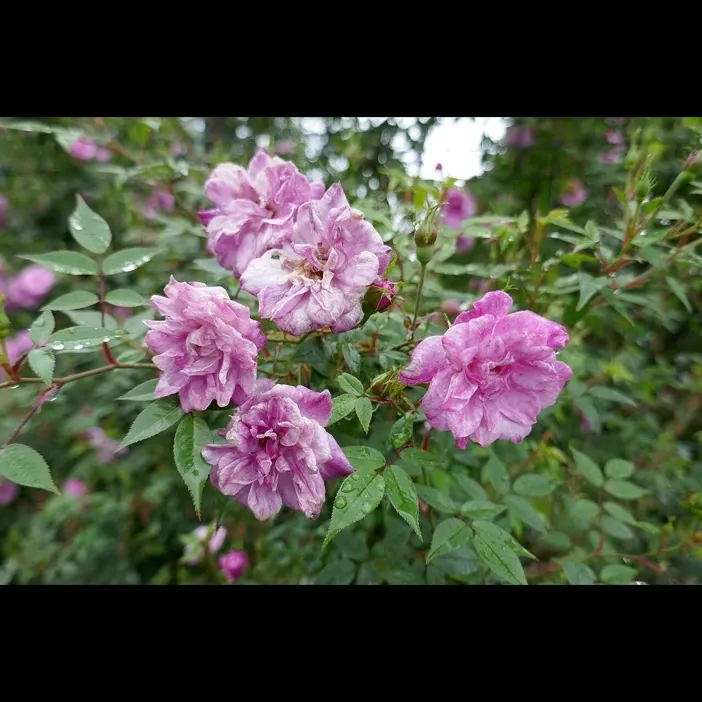
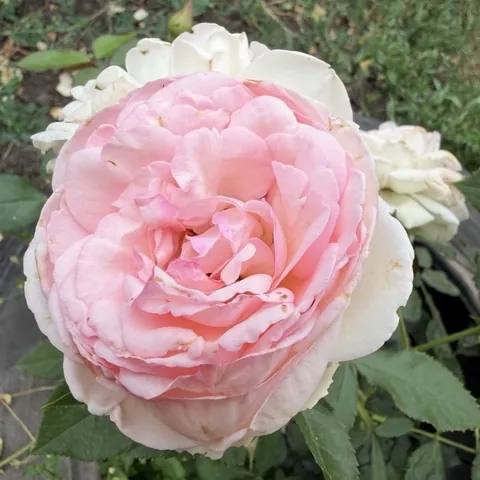
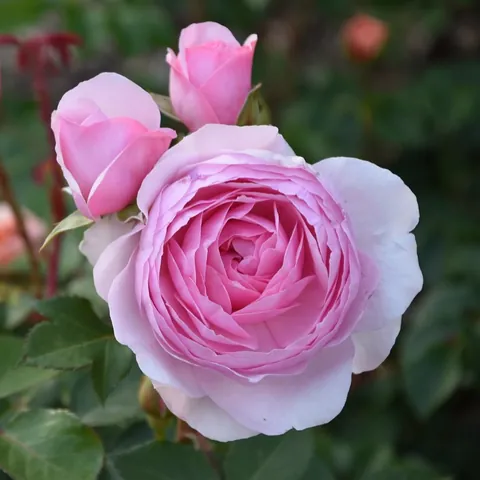
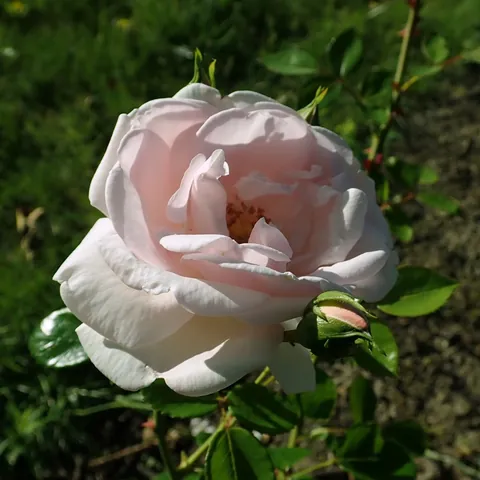
Name. 'Old Blush' — English 'old blush': 'old' for the variety's ancient origin, 'blush' for its pearly silvery-pink colour. 'Parsons' Pink China' is named after Mr. Parsons, a Briton who put the variety into commercial circulation in 1793. Many historic synonyms: 'Common Monthly' (because it flowers 'monthly'), 'Old Pink Daily', 'Pallida', 'Rosa × odorata 'Pallida''.
Breeding. An unknown Chinese breeder; cultivated in China for ~1000 years. Brought to Europe by Peter Osbeck from Canton in 1751; recorded in Sweden in 1752 and in England by 1759. Derived from Rosa chinensis (the Chinese cultivated form). Introduced commercially in Britain by Mr. Parsons in 1793.
Significance. One of the most important roses in breeding history, the foundation of modern roses. Old Blush is one of the 'Four Stud Chinas' (4 Chinese roses that brought repeat flowering to Europe). Before 1751, European roses flowered only 1 time per season. It gave rise to the Bourbon, Noisette and Hybrid Perpetual classes, and further on to modern garden roses (Hybrid Tea, Floribunda, Shrub). WFRS Old Rose Hall of Fame 1988: one of the first four roses chosen for the World Federation of Rose Societies' Old Rose Hall of Fame when it was founded. It probably inspired Thomas Moore's song 'The Last Rose of Summer' (1805), one of the best-known Irish ballads. Without Old Blush there would be no modern roses.