




Back to catalogue
Large-Flowered Climber; one of Tantau's best red climbersHans Jürgen Evers; Rosen Tantau, 1985Red

Santana

Fiery red climber that does not fade; named after the American band Santana (Carlos Santana): the Caribbean-Latin temperament is rendered as the fiery red colour; 40+ years among Tantau's top sellers; for Ukraine, winter protection needed north of Kyiv.

40+ years among Tantau's top sellers · named after the band Santana

Variety profile

Flowering

Repeat, in flushes

Repeat flowering in flushes from June to October. Months are approximate, for the climate of Ukraine.

Legacy

Tantau bestseller, 40+ years

One of the best red climbers

Winter hardiness

−23 °C

USDA zone 6b-9b. Winter protection needed north of Kyiv.

Compare reference temperatures

Plant size

250–350 × 150–200 cm
person 170 cm250–350 cm
Habit
Upright climber with stiff canes that holds its shape well
Dimensions
250-350 cm tall × 150-200 cm wide: a full-sized climber for arches, pergolas and pillars
Support
Essential: pillar, arch, pergola or tall trellis; thanks to its stiff canes it can be trained without effort
Shoots
Sturdy; holds its shape excellently on pillars and vertical supports
Branching
Well branched, with sturdy main canes

Flower

8-10 cm
Bud shape
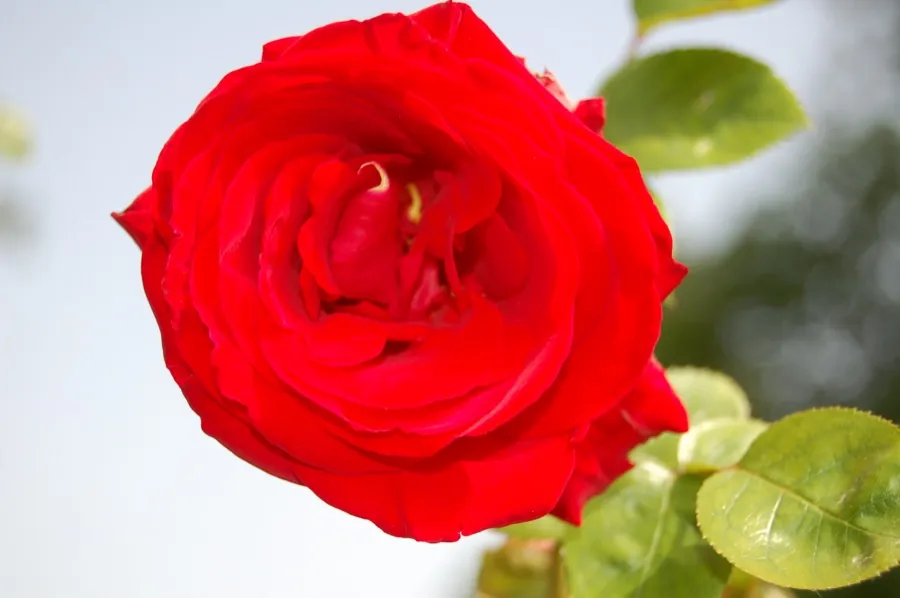
Elongated, classic dark red
Open flower
Double, cupped: 8-10 cm, 17-25 petals
Centre
Tightly packed; the petals hide the stamens
Fullness
17-25 petals (semi-double to full)
Flower carriage
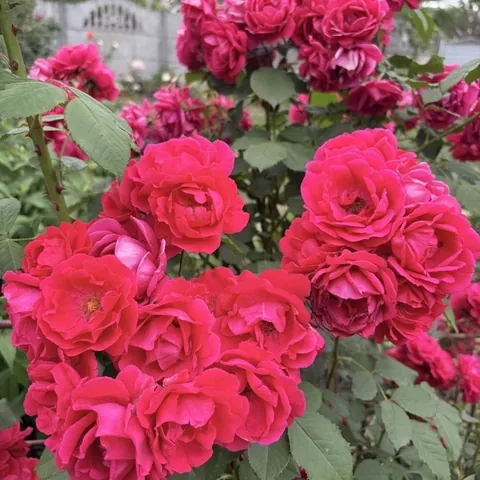
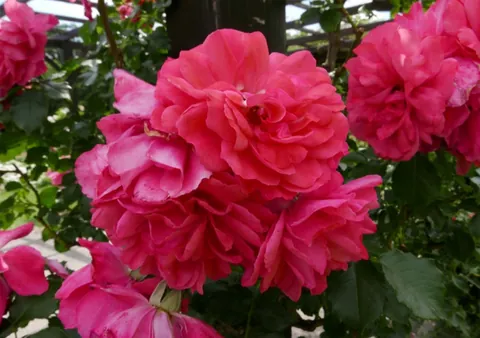
In clusters of 3-7 flowers

Fragrance

Light; 1/5 on the Tantau scale

Light (1/5 on the Tantau scale): the breeder's priority was the bush's shape and colour.

Disease resistance

3 out of 5
Black spotmoderatePowdery mildewmoderate

Moderate, 3/5: 2/5 for black spot, 4/5 for powdery mildew (Tantau data). Needs moderate disease prevention. USDA 6b-9b; in Ukraine, winter protection north of Kyiv.

Sun

Full sun

Holds its shape well on pillars.

Thorns

Moderate
thornlessfewmoderatemanyvery many

Moderate number of thorns, typical for climbers.

Foliage

Dark green, glossy.

All characteristics in a table
Group
Large-Flowered Climber; one of Tantau's best red climbers
Breeder
Hans Jürgen Evers; Rosen Tantau, Germany, 1985
Bud shape
Elongated, classic dark red
Open flower
Double, cupped: 8-10 cm, 17-25 petals
Centre
Tightly packed; the petals hide the stamens
Colour
Fiery red / dark blood-red: does not fade in the sun, keeps its intensity all season
Fullness
17-25 petals (semi-double to full)
Flower carriage
In clusters of 3-7 flowers
Flowering
Repeat flowering in flushes from June to October
Fragrance
Light (1/5 on the Tantau scale): the breeder's priority was the bush's shape and colour
Hips
Not documented; typically cut off
Habit
Upright climber with stiff canes that holds its shape well
Branching
Well branched, with sturdy main canes
Shoots
Sturdy; holds its shape excellently on pillars and vertical supports
Thorns
Moderate number of thorns, typical for climbers.
Dimensions
250-350 cm tall × 150-200 cm wide: a full-sized climber for arches, pergolas and pillars
Support
Essential: pillar, arch, pergola or tall trellis; thanks to its stiff canes it can be trained without effort
Foliage
Dark green, glossy
Resistance
Moderate, 3/5: 2/5 for black spot, 4/5 for powdery mildew (Tantau data). Needs moderate disease prevention. USDA 6b-9b; in Ukraine, winter protection north of Kyiv
Variations of the variety
Code TANklesant. Introduced 1985 through Rosen Tantau. Breeder: Hans Jürgen Evers at Tantau. Parentage according to Tantau's catalogue: Max Graf × R. wichurana seedlings. A widespread internet myth, 'ADR 1985', is not confirmed: the variety is absent from Tantau's official list of ADR-roses

Colour scheme

Fiery red / dark blood-red: does not fade in the sun and keeps its intensity all season

Rose neighbours

Perennials to plant nearby

Neighbouring roses

Architectural climbers — for arches, pergolas and pillars:

Perennial companions

Cool purple-silver tones — a soft contrast to the fiery red:

lavenderlamb's ear (Stachys)lady's mantle (Alchemilla)catmint (Nepeta)

Availability worldwide

⭐ One of the best-known Tantau climbers:

  • 🇩🇪 Germany: very high · country of origin
  • 🇪🇺 Europe: very high · 40+ years among the top sellers
  • 🇺🇸 USA: moderate
  • 🇺🇦 Ukraine: high · a classic choice for arches

More about the variety

Hips
Not documented; typically cut off
Variations of the variety
Code TANklesant. Introduced 1985 through Rosen Tantau. Breeder: Hans Jürgen Evers at Tantau. Parentage according to Tantau's catalogue: Max Graf × R. wichurana seedlings. A widespread internet myth, 'ADR 1985', is not confirmed: the variety is absent from Tantau's official list of ADR-roses

How to grow

Where to plant. On a pillar or pergola as a bold vertical accent; on a south-facing wall; as a “fiery column” in the garden; works well on its own thanks to its intense colour.

Climate. USDA 6b-9b; in Ukraine it needs winter protection north of Kyiv, while in the south and centre it needs none; copes well with summer heat without fading.

Care. Full sun; disease prevention against black spot is essential; feed 2-3 times per season; in spring prune weak shoots and keep the main framework canes for 3-5 years.

About the name

Name. 'Santana', after the American rock band Santana (Carlos Santana). The band's Caribbean-Latin temperament is rendered as the flower's fiery red colour. One of the few varieties named after a modern music group, a typical Tantau marketing move of the 1980s to make it memorable.

Breeding. Bred by Hans Jürgen Evers at Rosen Tantau (Uetersen, Germany). Code TANklesant. Introduced 1985. Parentage according to Tantau's catalogue: Max Graf × R. wichurana seedlings, the inheritance of wild rambler root lines, which gives exceptional vigour and sturdy canes.

Significance. Over 40 years among Tantau's top sellers, a rare longevity for a red climber. It does not fade in the sun, the standard against which new red climbers are compared. Sturdy, stiff canes make it the benchmark for the pillar form (a vertical column). It holds its shape well thanks to its upright habit and does not 'flop' like many other climbers. A myth that circulates online, 'ADR 1985', is not confirmed: the variety is absent from Tantau's official list of ADR-roses, so be careful with sources that claim it. Moderate resistance to black spot (2/5): needs moderate disease prevention, especially in wet seasons.

Frequently asked questions about Santana

Does Santana need winter protection?

The cultivar’s reference temperature is −23 °C (USDA zone 6b−9b). Overwintering depends on the conditions. Winter protection needed north of Kyiv.

How many times a season does Santana flower?

Repeat flowering in flushes from June to October.

How big does Santana grow?

250–350 cm tall, 150–200 cm wide.

Which diseases affect Santana?

Overall resistance: 3 out of 5. 2/5 black spot; 4/5 powdery mildew.

How much sun does Santana need?

Sun; full sun; holds its shape well on pillars.

What does Santana smell like?

Light (1/5 on the Tantau scale): the breeder's priority was the bush's shape and colour.

Gardeners' photos and reviews

My climate

Choose a reference temperature to compare with the cultivar’s data. This is not an overwintering forecast or advice on winter protection; consider wind, moisture and the duration of frost.

Regional data are generalised. USDA describes average annual extreme minima, not a forecast; the values in the list are rounded. Check the conditions at your site. More information: Roses in Ukraine's climate.