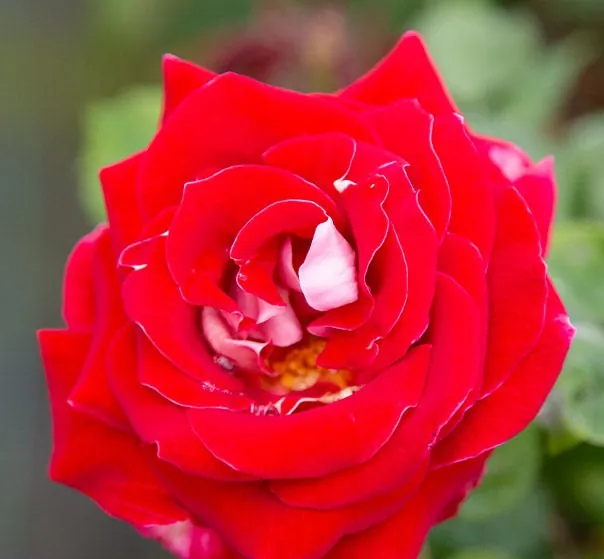
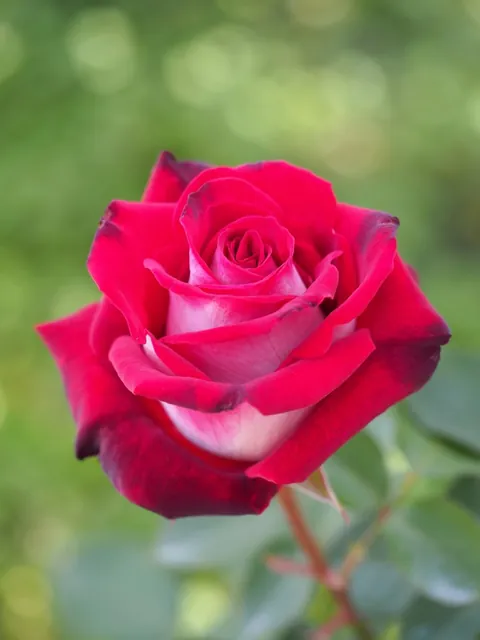
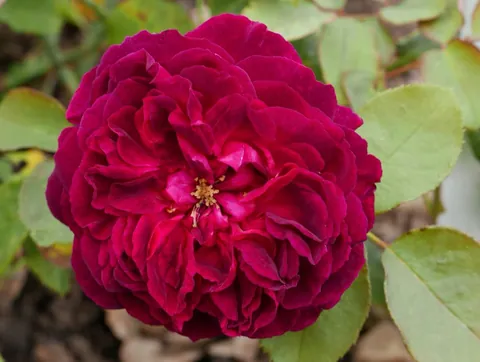




Snowfire, close-up of the flower
Back to catalogue
Hybrid Tea; a dramatic red-and-white bicolourReimer Kordes; W. Kordes' Söhne, 1970Red

Snowfire

Crimson-red top with a snow-white reverse: a dramatic bicolour from Kordes; the parent of the legendary Osiria (Kordes 1978); Osiria inherited her famous 'red-and-white character' from Snowfire Osiria; 🇩🇪 bred by Reimer Kordes, introduced to the US through Jackson & Perkins; US Patent PP 3,014, dated 12.01.1971.

Parent of the legendary Osiria (Kordes 1978) — a legacy of the “red-and-white character”

Variety profile

Flowering

Repeat flowering

Repeat flowering from June to October. Months are approximate, for the climate of Ukraine.

Legacy

Parent of Osiria

Passed on the “red-and-white character”

Winter hardiness

−23 °C

USDA zone 6b-9b. South and West without winter protection.

Compare reference temperatures

Plant size

90–120 × 60–80 cm
person 170 cm90–120 cm
Habit
Upright, typical of Hybrid Teas of the 1970s
Dimensions
90-120 cm tall × 60-80 cm wide: a typical Hybrid Tea for cutting and beds
Support
Not needed; the upright shoots stand on their own
Shoots
Sturdy and straight, ideal for cutting
Branching
Moderately branched

Flower

30-35 petals
Bud shape
Long, pointed, classic HT outline
Open flower
Tall classic Hybrid Tea with a high centre, 30-35 petals
Centre
Tightly packed, goblet-like centre
Fullness
30-35 petals (medium-full)
Flower carriage
Singly on a long stem, ideal for cutting

Fragrance

Light

Light; the breeder's priority was the colour contrast.

Disease resistance

3 out of 5
Black spotmoderate

Moderate, 3/5: typical of Hybrid Teas of the 1970s; needs moderate prevention against black spot. USDA 6b-9b: in Ukraine, reliably the South and West (zones 6-7); over most of the country, winter protection is needed.

Sun

Full sun

Thorns

Moderate
thornlessfewmoderatemanyvery many

Moderate number of thorns, typical of Hybrid Teas of the 1970s.

Foliage

Dark green, semi-matt.

All characteristics in a table
Group
Hybrid Tea; a dramatic red-and-white bicolour
Breeder
Reimer Kordes; W. Kordes' Söhne, Germany, 1970
Bud shape
Long, pointed, classic HT outline
Open flower
Tall classic Hybrid Tea with a high centre, 30-35 petals
Centre
Tightly packed, goblet-like centre
Colour
Crimson-red top of the petal with a snow-white reverse: a dramatic contrast. When the flower opens, both colours are visible at the same time
Fullness
30-35 petals (medium-full)
Flower carriage
Singly on a long stem, ideal for cutting
Flowering
Repeat flowering from June to October
Fragrance
Light; the breeder's priority was the colour contrast
Hips
Not documented; typically cut off
Habit
Upright, typical of Hybrid Teas of the 1970s
Branching
Moderately branched
Shoots
Sturdy and straight, ideal for cutting
Thorns
Moderate number of thorns, typical of Hybrid Teas of the 1970s.
Dimensions
90-120 cm tall × 60-80 cm wide: a typical Hybrid Tea for cutting and beds
Support
Not needed; the upright shoots stand on their own
Foliage
Dark green, semi-matt
Resistance
Moderate, 3/5: typical of Hybrid Teas of the 1970s; needs moderate prevention against black spot. USDA 6b-9b: in Ukraine, reliably the South and West (zones 6-7); over most of the country, winter protection is needed
Variations of the variety
Kordes code not documented in open sources. US Patent PP 3,014, dated 12.01.1971. Introduced 1970 through W. Kordes' Söhne (Germany), and in the US through Jackson & Perkins. Breeder: Reimer Kordes. Parentage: 'Detroiter' (HT, Kordes 1952) × 'Liberty Bell™' (HT, Kordes 1955/63). Used as a parent in breeding the legendary 'Osiria' (Kordes 1978); Osiria inherited her famous red-and-white contrast from Snowfire Osiria

Colour scheme

Crimson-red top of the petal with a snow-white reverse: a dramatic contrast. When the flower opens, both colours are visible at the same time

Rose neighbours

Perennials to plant nearby

Neighbouring roses

Bicolour and red HTs — a “genealogical” group:

Perennial companions

Cool tones emphasise the dramatic red-and-white contrast:

lavenderlamb's ear (Stachys)lady's mantle (Alchemilla)sage (Salvia)

Availability worldwide

A classic Kordes HT from the 1970s:

🇩🇪 Germany: high · country of origin🇺🇸 USA: high · via J&P🇪🇺 Europe: moderate🇺🇦 Ukraine: rare

More about the variety

Hips
Not documented; typically cut off
Variations of the variety
Kordes code not documented in open sources. US Patent PP 3,014, dated 12.01.1971. Introduced 1970 through W. Kordes' Söhne (Germany), and in the US through Jackson & Perkins. Breeder: Reimer Kordes. Parentage: 'Detroiter' (HT, Kordes 1952) × 'Liberty Bell™' (HT, Kordes 1955/63). Used as a parent in breeding the legendary 'Osiria' (Kordes 1978); Osiria inherited her famous red-and-white contrast from Snowfire Osiria

How to grow

Where to plant. As a solo accent in a bed, thanks to its dramatic bicolour; in 'genealogical' collections next to Osiria; in a fragrance corner, despite its light scent, for the visual effect; for cutting, thanks to its long stems and tall classic flower form.

Climate. Ukraine South / West without winter protection (USDA 6b-9b); in the East / Centre, winter protection is needed.

Care. Full sun; prevention against black spot; feed 3 times per season; prune ⅓ in spring; water at the root, not on the foliage.

About the name

Name. 'Snowfire' = 'snow fire' (English). For the contrast of the snow-white petal reverse (snow) and the flame-red top (fire): a dramatic, poetic name for a bicolour flower. Typical Kordes poetics of the 1970s: contrasting Anglo-German images for easy recognition.

Breeding. Bred by Reimer Kordes at W. Kordes' Söhne (Sparrieshoop, Germany). Introduced 1970, in the US through Jackson & Perkins. US Patent PP 3,014, dated 12.01.1971. Parentage: 'Detroiter' (HT, Kordes 1952) × 'Liberty Bell™' (HT, Kordes 1955/63).

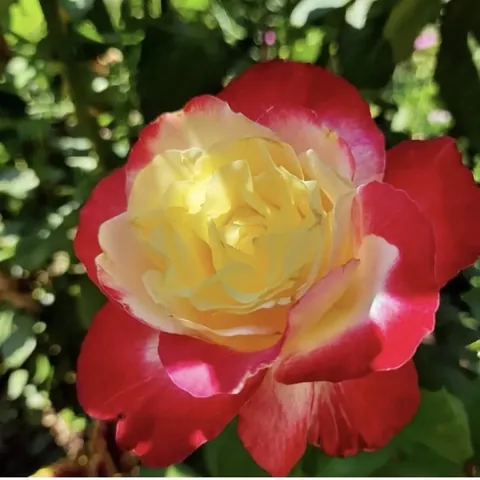
Significance. Parent of the legendary Osiria (Kordes 1978). It was from Snowfire Osiria that Osiria inherited her famous red-and-white character, which made her one of the most recognisable HT roses of the HT XX century. Without Snowfire, Osiria would not exist. A classic example of the 1970s bicolour Hybrid Teas, a period when breeders actively experimented with contrasting two-tone varieties (Double Delight, Granada and Osiria all appeared within one decade). A dramatic contrast: when the flower opens, two opposing colours are visible on one petal, white inside and red outside. Long stems make it good for cutting. There are no major international awards (ADR/AARS): Snowfire is known above all as the 'genetic father' of Osiria, not as an independent competition winner.

Frequently asked questions about Snowfire

Does Snowfire need winter protection?

The cultivar’s reference temperature is −23 °C (USDA zone 6b−9b). Overwintering depends on the conditions. South and West without winter protection.

How many times a season does Snowfire flower?

Repeat flowering from June to October.

How big does Snowfire grow?

90–120 cm tall, 60–80 cm wide.

Which diseases affect Snowfire?

Overall resistance: 3 out of 5. Typical of Hybrid Teas of the 1970s; needs prevention.

How much sun does Snowfire need?

Sun; full sun.

What does Snowfire smell like?

Light; the breeder's priority was the colour contrast.

Gardeners' photos and reviews

My climate

Choose a reference temperature to compare with the cultivar’s data. This is not an overwintering forecast or advice on winter protection; consider wind, moisture and the duration of frost.

Regional data are generalised. USDA describes average annual extreme minima, not a forecast; the values in the list are rounded. Check the conditions at your site. More information: Roses in Ukraine's climate.