Back to catalogue
Floribunda (old-fashioned)Rosen-Tantau (Christian Evers), 2011White and cream

Stephanie Baronin zu Guttenberg

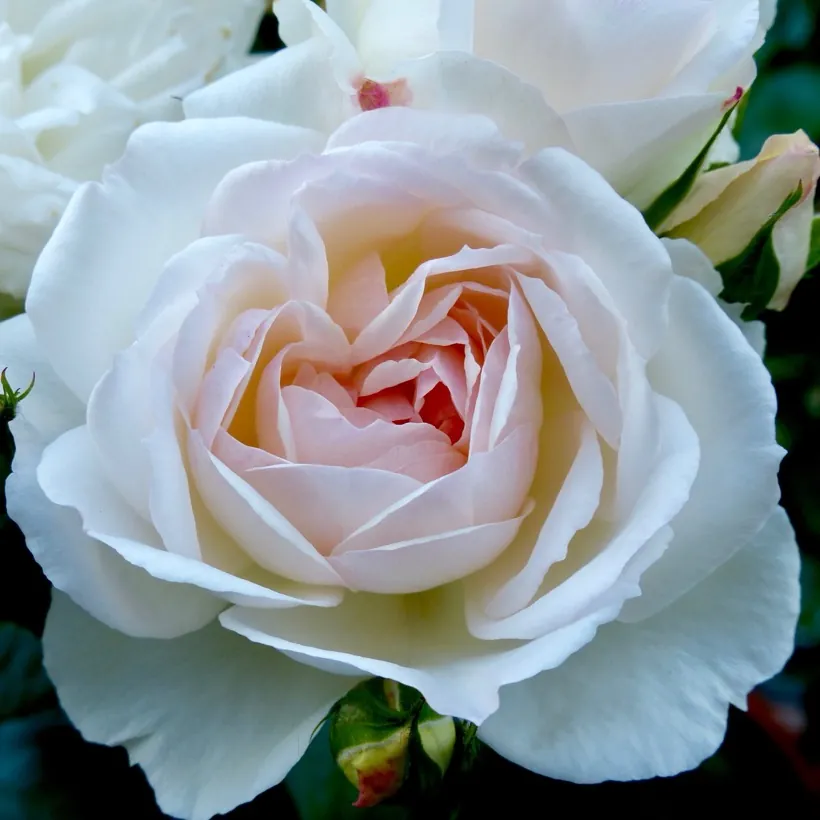
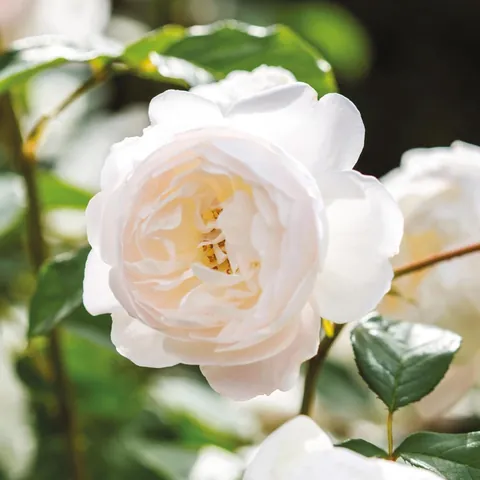
Creamy-white flower with a delicate pink heart that fades to white with age; almost thornless; dark green glossy foliage; holds its shape well in rain.

Named and christened by Stephanie zu Guttenberg (2010) · almost thornless

Variety profile

Flowering

Repeat flowering

Repeat flowering with a short pause, from late June until the autumn frosts; holds its form and colour well in bad weather. Months are approximate, for the climate of Ukraine.

Legacy

Nostalgic Tantau

Named after the writer and activist Stephanie zu Guttenberg

Winter hardiness

−23 °C

USDA zone 6. Southern and central Ukraine; in the north, with winter protection. South and centre of Ukraine · in the north — with winter protection.

Compare reference temperatures

Plant size

60–70 × 40–70 cm
person 170 cm60–70 cm
Habit
Round, dense, neat, bushy
Dimensions
60–70 cm tall × 40–70 cm wide
Support
Not needed — a self-supporting bedding rose
Shoots
Vigorous, upright
Branching
Vigorous, with strong, upright shoots

Flower

6–8 cm
Bud shape
Large, cupped
Open flower
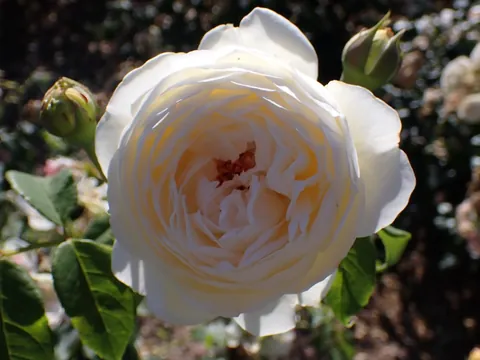
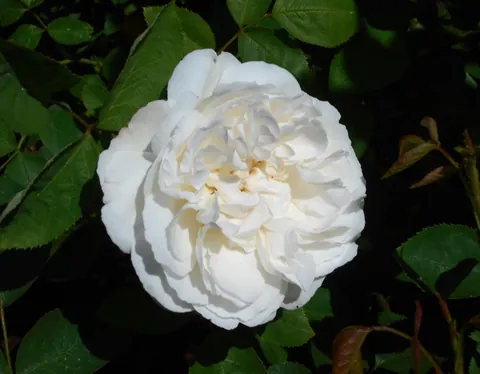
Cupped, old-fashioned, fully double rosette; diameter 6–8 cm
Centre
A soft pink (rosé) heart
Fullness
Full (26–40 petals)
Flower carriage
In small clusters of 3–5 (typical of floribundas)

Fragrance

Light; delicate, soft

Light — delicate, soft, pleasant.

Disease resistance

4 out of 5
Black spotresistantPowdery mildewresistant

Good against black spot and powdery mildew; good tolerance of rain.

Sun

Full sun

Holds its colour and form well even in rain.

Thorns

Thornless
thornlessfewmoderatemanyvery many

Shoots almost thornless — easy to care for.

Foliage

Dark green, glossy, healthy, medium-sized.

All characteristics in a table
Group
Floribunda (old-fashioned)
Breeder
Rosen-Tantau (Christian Evers), Germany, 2011
Bud shape
Large, cupped
Open flower
Cupped, old-fashioned, fully double rosette; diameter 6–8 cm
Centre
A soft pink (rosé) heart
Colour
Creamy white with a soft pink heart that fades with age to creamy white — the bush bears both warm and white flowers at once
Fullness
Full (26–40 petals)
Flower carriage
In small clusters of 3–5 (typical of floribundas)
Flowering
Repeat flowering with a short pause, from late June until the autumn frosts; holds its form and colour well in bad weather
Fragrance
Light — delicate, soft, pleasant
Hips
Usually not left on the bush — spent flowers are cut off
Habit
Round, dense, neat, bushy
Branching
Vigorous, with strong, upright shoots
Shoots
Vigorous, upright
Thorns
Shoots almost thornless — easy to care for.
Dimensions
60–70 cm tall × 40–70 cm wide
Support
Not needed — a self-supporting bedding rose
Foliage
Dark green, glossy, healthy, medium-sized
Resistance
Good against black spot and powdery mildew; good tolerance of rain
Variations of the variety
No sports recorded

Colour scheme

Creamy white with a soft pink heart that fades with age to creamy white — the bush bears both warm and white flowers at once

Rose neighbours

Perennials to plant nearby

Neighbouring roses

White and cream varieties with a soft pink tint keep the same clean, elegant mood around Stephanie.

Perennial companions

Blue, lavender and silver plants highlight the purity of the white flower:

catmint (Nepeta)salvia 'Caradonna'lavender 'Munstead'Stachys

Contrast accents

Blue spires and silver foliage add depth to the white palette:

DelphiniumNepeta Six Hills GiantStachys byzantina

More about the variety

Hips
Usually not left on the bush — spent flowers are cut off
Variations of the variety
No sports recorded

How to grow

Where to plant. In a white or pastel bed, a formal bed, a border, near places to sit; almost thornless — easy to plant along paths. Good for cutting.

Climate. Southern and central Ukraine — no protection needed; in the north, winter protection (USDA zone 6).

Care. Moderate; full sun, rich soil; holds its shape and colour well even in rain; moderate disease prevention.

About the name

Name. After Stephanie, Baroness zu Guttenberg — a German writer and activist for protecting children from violence; she personally named the rose in July 2010.

Breeding. Bred by Christian Evers for Rosen-Tantau (Uetersen, Germany), introduced in 2011. No public patent code has been registered; parent varieties are not disclosed.

Significance. A nostalgic Tantau floribunda — a combination of a classic cupped form, an almost complete absence of prickles and good health; valued for light-coloured beds and cutting.

Frequently asked questions about Stephanie Baronin zu Guttenberg

Does Stephanie Baronin zu Guttenberg need winter protection?

The cultivar’s reference temperature is −23 °C (USDA zone 6). Overwintering depends on the conditions. Southern and central Ukraine; in the north, with winter protection.

How many times a season does Stephanie Baronin zu Guttenberg flower?

Repeat flowering with a short pause, from late June until the autumn frosts; holds its form and colour well in bad weather.

How big does Stephanie Baronin zu Guttenberg grow?

60–70 cm tall, 40–70 cm wide.

Which diseases affect Stephanie Baronin zu Guttenberg?

Overall resistance: 4 out of 5. Good — against black spot and powdery mildew.

How much sun does Stephanie Baronin zu Guttenberg need?

Full sun; holds its colour and form well even in rain.

What does Stephanie Baronin zu Guttenberg smell like?

Light — delicate, soft, pleasant.

Gardeners' photos and reviews

My climate

Choose a reference temperature to compare with the cultivar’s data. This is not an overwintering forecast or advice on winter protection; consider wind, moisture and the duration of frost.

Regional data are generalised. USDA describes average annual extreme minima, not a forecast; the values in the list are rounded. Check the conditions at your site. More information: Roses in Ukraine's climate.