- Group
- Hybrid Musk
- Breeder
- Lambert, 1904
- Bud shape
- Small, golden yellow
- Open flower
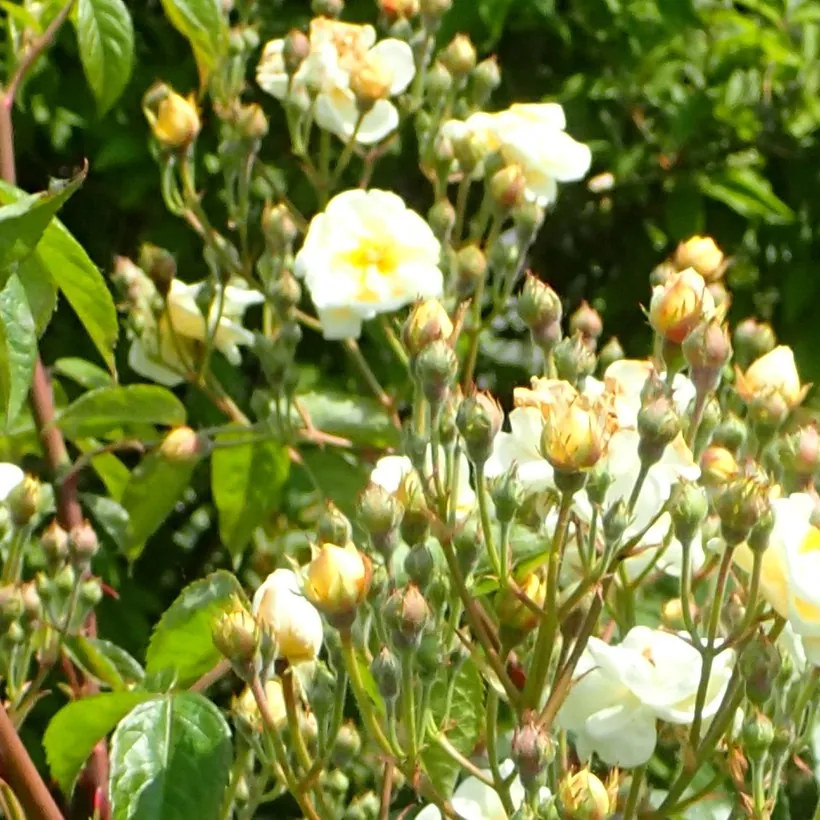
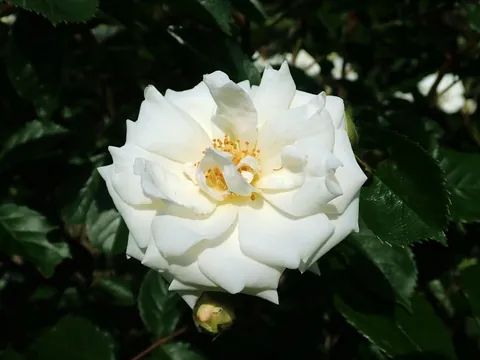
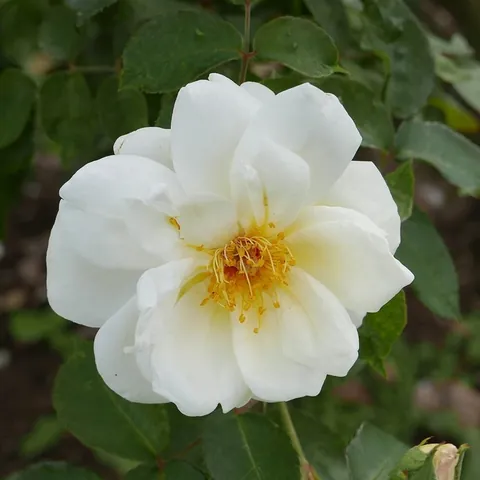
- Small, semi-double, flat cupped; open yellow stamens; about 3–4 cm across
- Centre
- Open, with a cluster of bright yellow stamens
- Colour
- Creamy white, often yellowish from the bud; occasionally a light pink blush
- Fullness
- Semi-double, about 10–20 petals
- Flower carriage
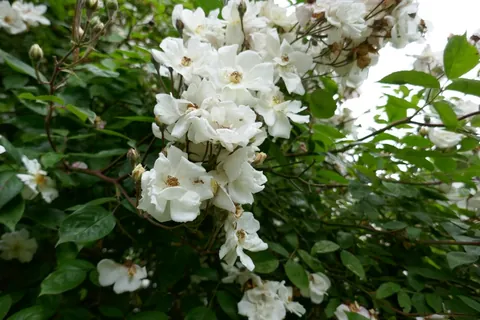
- In large pyramidal trusses (panicles) at the tips of the shoots
- Flowering
- Repeat-flowering through the season; rare for 1904, and this is exactly what made Trier key for breeding
- Fragrance
- Pronounced, sweet, with a note of clove; the characteristic musky scent
- Hips
- Small and reddish, if spent blooms are not removed
- Habit
- Tall and spreading; can be trained as a large shrub or as a small climber on a support
- Branching
- Vigorous; many flexible shoots
- Shoots
- Long, arching
- Thorns
- Few thorns, an inheritance from the multiflora line.
- Dimensions
- 150–250 cm; on a support up to about 300 cm as a small climber
- Support
- Not essential; it holds up as a free-standing bush, and if wished it can be trained along a low support or wall
- Foliage
- Light green, healthy, with many leaflets (multiflora type)
- Resistance
- Good; clean, healthy foliage, the same trait that made its descendants famous
- Historical role
- Progenitor of the Lambertiana and Hybrid Musk lines