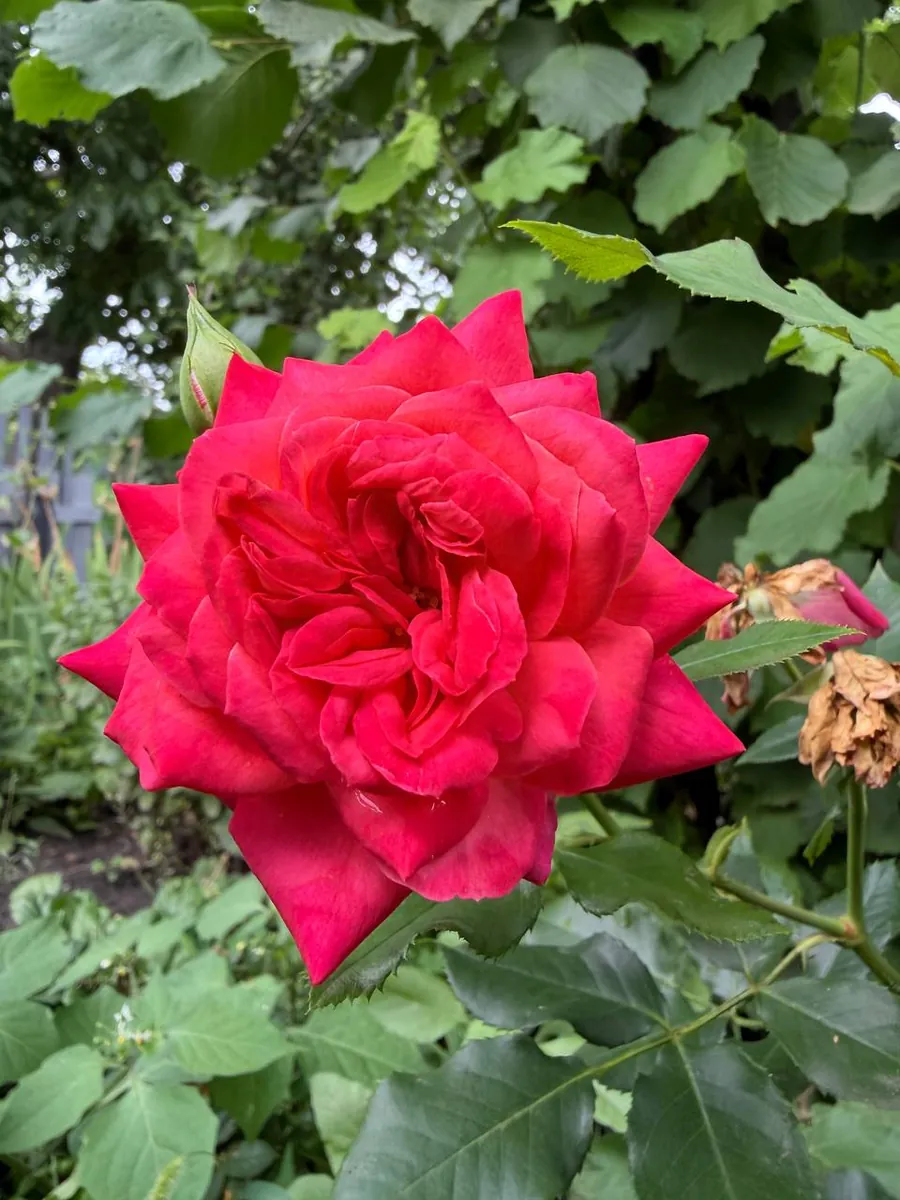
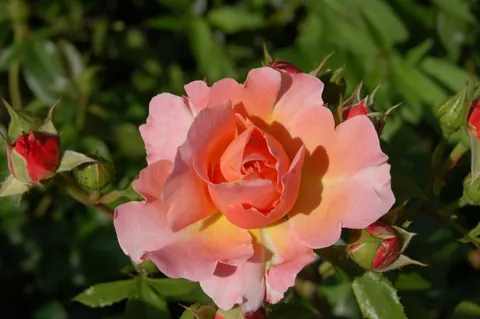
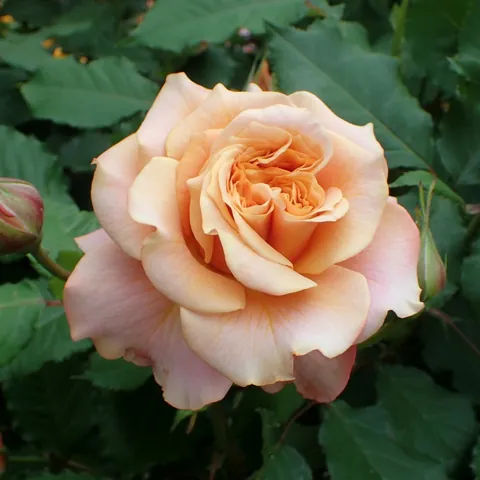
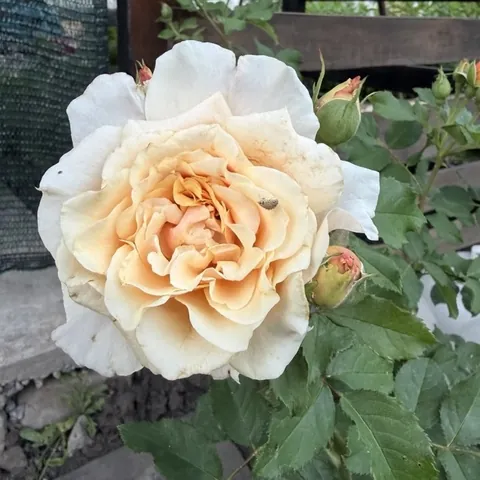
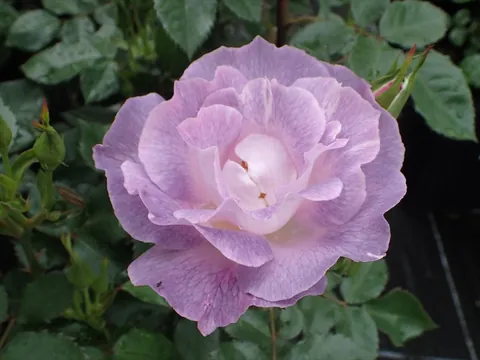



Midsummer, close-up of the flower
Back to catalogue
Floribunda; NostalgicTantau, 2008Bicolour

Midsummer

TAN02280; Hans Jürgen Evers; 'Sunset' among Floribundas.

Nostalgic® series · bred by Evers

Variety profile

Flowering

Repeat, in flushes

Abundant repeat flowering in flushes, all summer – autumn. Months are approximate, for the climate of Ukraine.

Awards

Baden-Baden

Golden Rose + silver, 2008 · Barcelona · Dublin · Hamilton

Plant size

70–100 × 60–70 cm
person 170 cm70–100 cm
Habit
Upright, compact, bushy; tidy shape
Dimensions
70–100 cm tall × 60–70 cm wide; a compact bush for a flower bed or container
Support
Does not need support — the upright bush holds its shape on its own (support is needed only for climbing varieties, which Midsummer is not)
Shoots
Sturdy, straight — they confidently hold the flower clusters
Branching
Good; the bush is dense and even

Flower

6–8 cm
Bud shape
Round, dense; orange-red with a golden glow
Open flower
Nostalgic, slightly quartered, globular; diameter 6–8 cm
Centre
Densely filled with petals, high; a golden centre shows as the flower opens
Fullness
Full, 26–40 petals
Flower carriage
In clusters of several flowers on sturdy stems
Flower durability
Holds its form for a long time; excellent in cut arrangements — the flowers last long

Fragrance

Light

Light, fresh (2).

Disease resistance

4 out of 5
Black spotmoderatePowdery mildewresistant

Good against powdery mildew; against black spot — moderate; preventive care advisable in wet summers.

Sun

Full sun

In strong heat the bright yellow tones fade faster and the flower turns redder.

Thorns

Moderate
thornlessfewmoderatemanyvery many

Moderate number of thorns.

Foliage

Large, glossy, dark green, healthy.

All characteristics in a table
Group
Floribunda; Nostalgic
Breeder
Tantau, 2008
Bud shape
Round, dense; orange-red with a golden glow
Open flower
Nostalgic, slightly quartered, globular; diameter 6–8 cm
Centre
Densely filled with petals, high; a golden centre shows as the flower opens
Colour
Bicolour: orange-red upper side of the petal, golden-yellow reverse; in cool weather the red tone is richer, in warm weather coral-golden
Fullness
Full, 26–40 petals
Flower carriage
In clusters of several flowers on sturdy stems
Flowering
Abundant repeat flowering in flushes, all summer – autumn
Fragrance
Light, fresh (2)
Flower durability
Holds its form for a long time; excellent in cut arrangements — the flowers last long
Habit
Upright, compact, bushy; tidy shape
Branching
Good; the bush is dense and even
Shoots
Sturdy, straight — they confidently hold the flower clusters
Thorns
Moderate number of thorns.
Dimensions
70–100 cm tall × 60–70 cm wide; a compact bush for a flower bed or container
Support
Does not need support — the upright bush holds its shape on its own (support is needed only for climbing varieties, which Midsummer is not)
Foliage
Large, glossy, dark green, healthy
Resistance
Good against powdery mildew; against black spot — moderate; preventive care advisable in wet summers
Use
Flower beds, borders, containers, cut flowers for bouquets

Colour scheme

Bicolour: orange-red upper side of the petal, golden-yellow reverse; in cool weather the red tone is richer, in warm weather it is coral-golden

Rose neighbours

Perennials to plant nearby

Neighbouring roses

Warm 'sunset' shades — orange, apricot, terracotta — keep a single sunny mood around Midsummer.

Companion perennials

A cool blue-silver framework that sets off the fiery, warm colour of Midsummer:

catmintperovskiasage (Salvia)betony (Stachys)lavender

Contrasting accents

For depth beside warm Midsummer — deep blue and purple tones, or dark green:

delphiniumcatmintdark-leaved hosta

More about the variety

Use
Flower beds, borders, containers, cut flowers for bouquets

How to grow

Where to plant. Flower beds, the front and middle of a border, containers, places to sit, and along paths — a bright sunny accent. The compact bush holds its shape well.

Climate. Moderately hardy (zones 6–9). In most of Ukraine it needs winter protection — earthing up the base of the bush and a covering material; it overwinters more easily in the south.

Care. Moderate. Removing spent flower heads encourages new flushes of bloom; in wet summers — prevention of black spot. The flowers stand beautifully in a vase.

About the name

Name. 'Midsummer' — 'the middle of summer', the summer solstice. The name reflects the warm sunny colour of the flower — orange-red with gold, which glows at the height of summer.

Breeding. Bred by Hans Jürgen Evers at the German nursery Rosen Tantau, patent code TAN02280; introduced around 2008. Belongs to the signature Nostalgic® series — modern roses with an old-fashioned, fully double quartered flower form.

Significance. Midsummer won the Golden Rose and the silver medal of Baden-Baden (Germany, 2008), awards in Barcelona (2008) and Dublin (2010), and 'Best Hybrid Tea' at the Hamilton festival (New Zealand, 2015). It combines a striking nostalgic bloom with abundant repeat flowering and long vase life.

Frequently asked questions about Midsummer

How many times a season does Midsummer flower?

Abundant repeat flowering in flushes, all summer – autumn.

How big does Midsummer grow?

70–100 cm tall, 60–70 cm wide.

Which diseases affect Midsummer?

Overall resistance: 4 out of 5. Good against powdery mildew; against black spot — moderate; preventive care advisable in wet summers.

How much sun does Midsummer need?

Sun; full sun; in strong heat the bright yellow tones fade faster and the flower turns redder.

What does Midsummer smell like?

Light, fresh (2).

Gardeners' photos and reviews

My climate

Choose a reference temperature to compare with the cultivar’s data. This is not an overwintering forecast or advice on winter protection; consider wind, moisture and the duration of frost.

Regional data are generalised. USDA describes average annual extreme minima, not a forecast; the values in the list are rounded. Check the conditions at your site. More information: Roses in Ukraine's climate.