


About the name
Name. 'Wartburg', after Wartburg Castle in Thuringia (Eisenach, Germany). One of the best-known castles in Europe, built in 1067, it entered the UNESCO World Heritage List in 1999. In 1521-1522 Martin Luther hid at the Wartburg from persecution after the Edict of Worms and translated the New Testament into German, which laid the foundations of the modern German literary language. A poetic tribute to one of the symbols of German culture.
Breeding. Bred by Hermann Kiese (Germany). Introduced 1910. Parentage: seedling of 'Tausendschön' (Schmidt 1906). Commercial synonym: 'Ola Fiskare'.
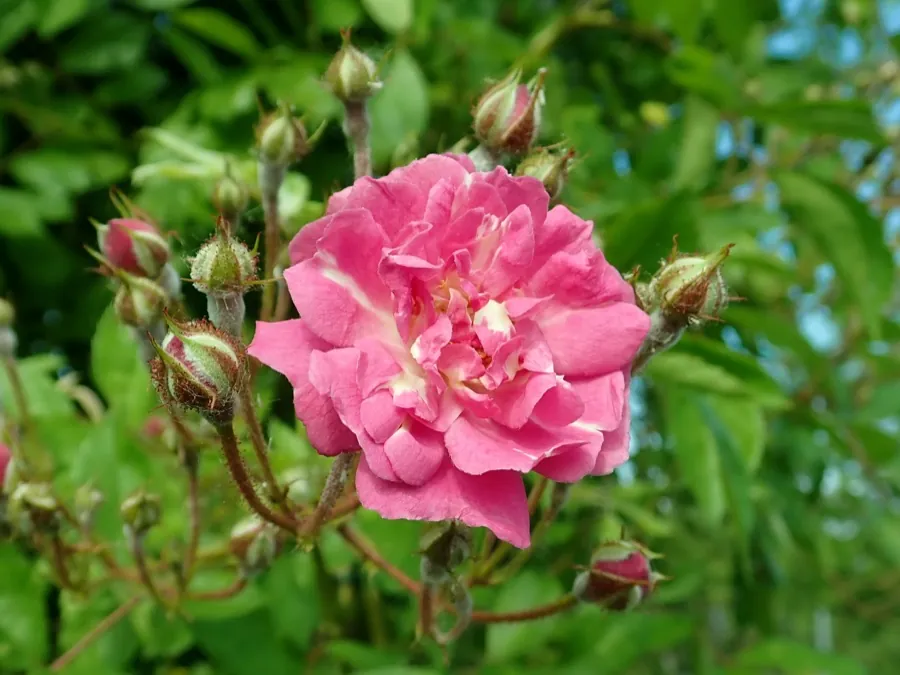
Significance. A classic German rambler of the 1910s, from the era of Tausendschön and Veilchenblau (1906-1909), when German breeders were actively developing Multiflora ramblers. Almost thornless, a rarity among ramblers; this important trait was inherited from Tausendschön. Curled petals are a characteristic decorative feature. USDA 4b: all of Ukraine without cover. Tolerates part shade, a rarity for roses. A 'living window' into the era of Luther and the Reformation: a rose as a cultural bridge to the 1500s. Once-flowering, typical of Multiflora-ramblers of the time (repeat flowering came later). Often misattributed to Geschwind; the true breeder is Hermann Kiese. No major international awards; Wartburg is valued above all as a historic collection rambler.