




Back to catalogue
Floribunda; bicolour, velvety red and silveryTim Hermann Kordes; W. Kordes' SöhneBicolour

Schöne Koblenzerin

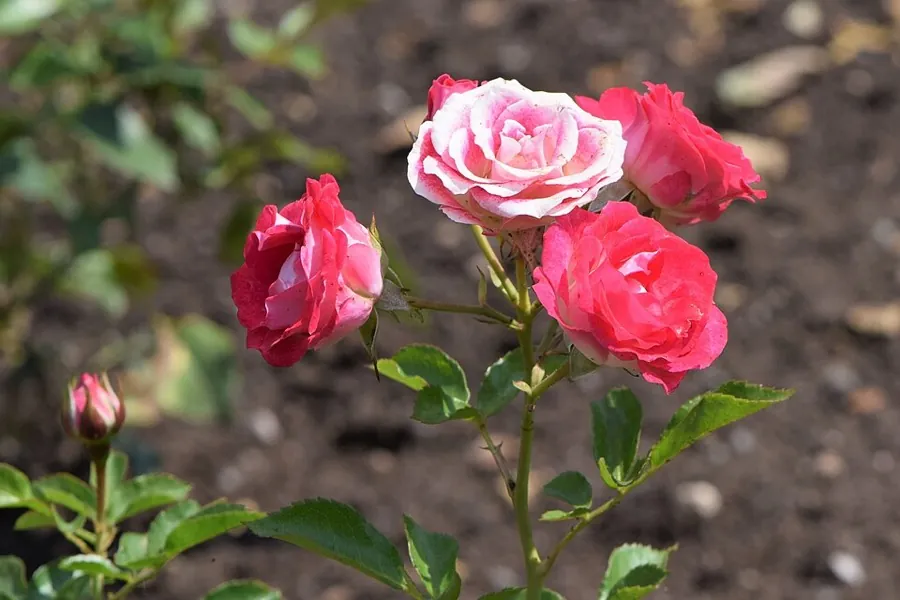
Velvety red with a silvery-white reverse to the petals; ADR 2009; named after the city of Koblenz (where the Rhine and Moselle meet); christened in Koblenz itself in 2011; an unusually large number of names: Anne Roumanoff (France), Ruby Ice, Marie Rottrová (Czech Republic, after the singer), Gaku no Yume (Japan).

ADR 2009 · sold in 4+ countries under different names (Anne Roumanoff, Ruby Ice, Marie Rottrová)

Variety profile

Flowering

Repeat flowering

Generous repeat flowering from June to October. Months are approximate, for the climate of Ukraine.

Legacy

ADR 2009

Symbol of Koblenz

Winter hardiness

−23 °C

USDA zone 6b. Ukraine Centre, without winter protection or with light mulch.

Compare reference temperatures

Plant size

60 × 50 cm
person 170 cm60 cm
Habit
Compact, dense and low-growing: a typical modern Beetrose Kordes
Dimensions
60 × 50 cm: compact, for small beds, borders and pots
Support
Not needed; self-supporting
Shoots
Medium stiffness
Branching
Well branched, abundant

Flower

≈ 4 cm

25-35 petals.

Bud shape
Round, dark red
Open flower
Semi-double and open: around 4 cm (small for a floribunda), 25-35 petals
Centre
When open, yellow stamens are visible against the dark red background
Fullness
25-35 petals (semi-double to full)
Flower carriage
In dense clusters of 5-10 flowers

Fragrance

Light

Light; the priority was the two-tone effect and resilience.

Disease resistance

3.5 out of 5

Moderate, 3.5/5; susceptible to rust (noted by HMF); despite this, the ADR-committee approved it in 2009. USDA 6b: Ukraine Centre, without winter protection or with light mulching.

Sun

A well-ventilated spot

Thorns

Few
thornlessfewmoderatemanyvery many

Few thorns, typical of modern Kordes-Beetrose roses.

Foliage

Dark green, semi-glossy.

Other names

Anne Roumanoff, Ruby Ice, Marie Rottrová, Gaku no Yume
All characteristics in a table
Group
Floribunda; bicolour, velvety red and silvery
Breeder
Tim Hermann Kordes; W. Kordes' Söhne, Germany
Bud shape
Round, dark red
Open flower
Semi-double and open: around 4 cm (small for a floribunda), 25-35 petals
Centre
When open, yellow stamens are visible against the dark red background
Colour
Velvety red in the centre with a silvery-white (or light pink) reverse to the petals: a characteristic two-tone contrast. It 'plays' silver in different light
Fullness
25-35 petals (semi-double to full)
Flower carriage
In dense clusters of 5-10 flowers
Flowering
Generous repeat flowering from June to October
Fragrance
Light; the priority was the two-tone effect and resilience
Hips
Not documented
Habit
Compact, dense and low-growing: a typical modern Beetrose Kordes
Branching
Well branched, abundant
Shoots
Medium stiffness
Thorns
Few thorns, typical of modern Kordes-Beetrose roses.
Dimensions
60 × 50 cm: compact, for small beds, borders and pots
Support
Not needed; self-supporting
Foliage
Dark green, semi-glossy
Resistance
Moderate, 3.5/5; susceptible to rust (noted by HMF); despite this, the ADR-committee approved it in 2009. USDA 6b: Ukraine Centre, without winter protection or with light mulching
Variations of the variety
No official alphanumeric code of the KORxxx type has been announced; the main name is Schöne Koblenzerin. Breeding 1999, introduced 2011 through W. Kordes' Söhne. Breeder: Tim Hermann Kordes. Parentage not published. US Patent PP 23,121, dated 23.10.2012. Synonyms: Anne Roumanoff (France), Ruby Ice, Marie Rottrová (Czech Republic, after the singer), Gaku no Yume (Japan)

Colour scheme

Velvety red in the centre with a silvery-white (or light pink) reverse to the petals: a characteristic two-tone contrast. It 'plays' silver in different light

Rose neighbours

Perennials to plant nearby

Neighbouring roses

Kordes Beetrose and two-tone floribundas — a stylish modern mixed border:

Perennial companions

Silver perennials echo the reverse of the petals:

lavenderlamb's ear (Stachys)lady's mantle (Alchemilla)catmint (Nepeta)

Availability worldwide

A modern Kordes Beetrose with ADR certification — the standard for modern borders:

🇩🇪 Germany: very high · country of origin🇫🇷 France: high · sold as Anne Roumanoff🇪🇺 Europe: high🇺🇦 Ukraine: moderate · via modern nurseries

More about the variety

Hips
Not documented
Variations of the variety
No official alphanumeric code of the KORxxx type has been announced; the main name is Schöne Koblenzerin. Breeding 1999, introduced 2011 through W. Kordes' Söhne. Breeder: Tim Hermann Kordes. Parentage not published. US Patent PP 23,121, dated 23.10.2012. Synonyms: Anne Roumanoff (France), Ruby Ice, Marie Rottrová (Czech Republic, after the singer), Gaku no Yume (Japan)

How to grow

Where to plant. In low borders along paths; in small beds; in containers on a terrace thanks to its compact size; as the front of a mixed border; do not plant too densely, as it needs air circulation to prevent rust.

Climate. Ukraine Centre, without winter protection or with light mulching (USDA 6b); copes well with summer heat.

Care. Full sun in a well-ventilated spot (to prevent rust); moderate disease prevention; feed 2-3 times per season; prune ⅓ in spring.

About the name

Name. 'Schöne Koblenzerin' = 'Beautiful Woman from Koblenz' (German). Named after the city of Koblenz, where the Rhine and Moselle meet: a typical 'city' naming, like Sourire du Havre for Le Havre. The christening took place in Koblenz itself in 2011.

Breeding. Bred by Tim Hermann Kordes at W. Kordes' Söhne (Sparrieshoop, Germany). Breeding began in 1999, introduced 2011. Parentage not published. US Patent PP 23,121, dated 23.10.2012. An important correction: this variety is not Hetzel (as is often wrongly stated in secondary catalogues) but Kordes, a modern Beetrose from the 2010s.

Significance. ADR 2009, a prestigious German award for resilience, granted on 09.09.2009, before the commercial release in 2011 (a rare speed). Two-tone contrast: velvety red centre plus a silvery-white reverse to the petals, a play of light. An unusually large number of names in different countries: sold under different international labels as Anne Roumanoff (France), Ruby Ice, Marie Rottrová (Czech Republic, after the Czech singer) and Gaku no Yume (Japan), an unusually high number of renamings for one variety. Its compact size makes it ideal for small gardens, pots and balcony arrangements. It is susceptible to rust and needs a well-ventilated spot.

Frequently asked questions about Schöne Koblenzerin

Does Schöne Koblenzerin need winter protection?

The cultivar’s reference temperature is −23 °C (USDA zone 6b). Overwintering depends on the conditions. Ukraine Centre, without winter protection or with light mulch.

How many times a season does Schöne Koblenzerin flower?

Generous repeat flowering from June to October.

How big does Schöne Koblenzerin grow?

About 60 cm tall, about 50 cm wide.

Which diseases affect Schöne Koblenzerin?

Overall resistance: 3.5 out of 5. 3.5 / 5; rust is possible; overall moderate.

How much sun does Schöne Koblenzerin need?

Sun; a well-ventilated spot.

What does Schöne Koblenzerin smell like?

Light; the priority was the two-tone effect and resilience.

Gardeners' photos and reviews

My climate

Choose a reference temperature to compare with the cultivar’s data. This is not an overwintering forecast or advice on winter protection; consider wind, moisture and the duration of frost.

Regional data are generalised. USDA describes average annual extreme minima, not a forecast; the values in the list are rounded. Check the conditions at your site. More information: Roses in Ukraine's climate.