

Back to catalogue
Shrub rose; Japanese florist typeTakunori Kimura, 2011Pink

Cécile de Volanges

On HMF as 'Cecil de Volanges'; a flower with a green eye, named after the heroine of 'Les Liaisons dangereuses'.

Japan · Wabara style

Variety profile

Flowering

Repeat flowering, abundant

Awards

Wabara style

Iconic Japanese soft pink

Winter hardiness

−23 °C

USDA zone 6–9. Sold in Ukraine (EDROSES) as winter-hardy.

Compare reference temperatures

Plant size

70–125 × 70–90 cm
person 170 cm70–125 cm
Habit
Compact — the typical Japanese 'florist' form
Dimensions
70–125 cm high; width approximately 70–90 cm — a compact bush
Support
Does not need support
Shoots
Medium stiffness
Branching
Good; the bush looks rounded

Flower

≈ 8 cm

41+ petals.

Bud shape
Round-oval, pale pink
Open flower
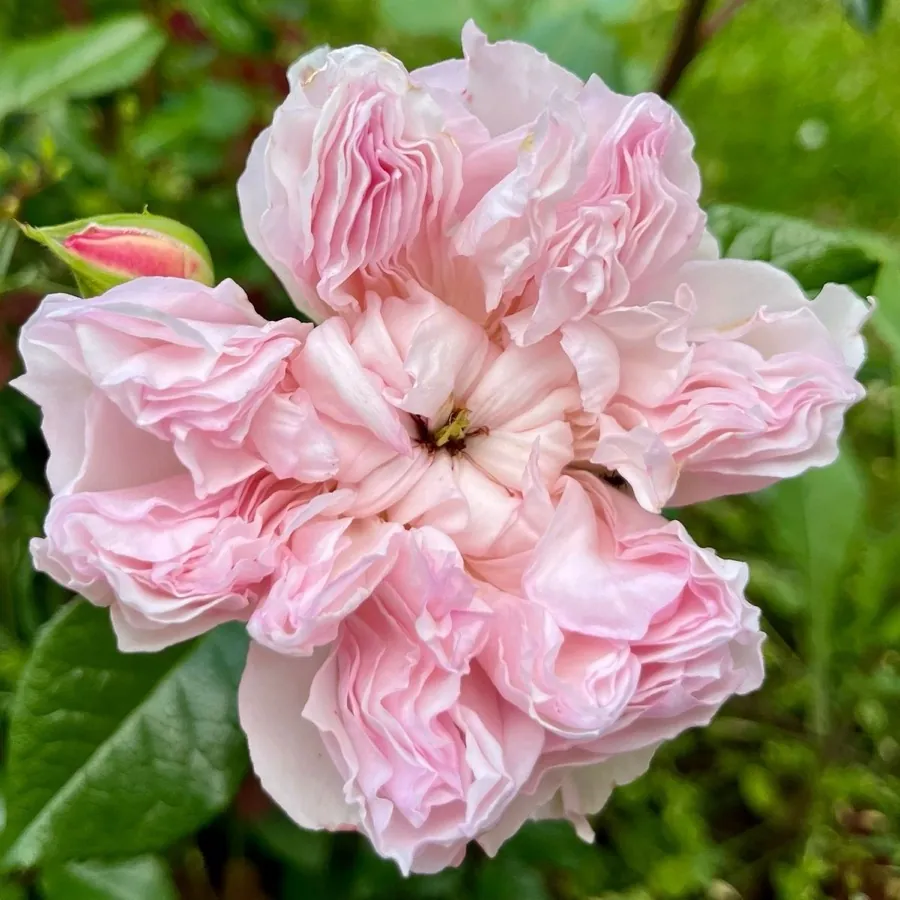
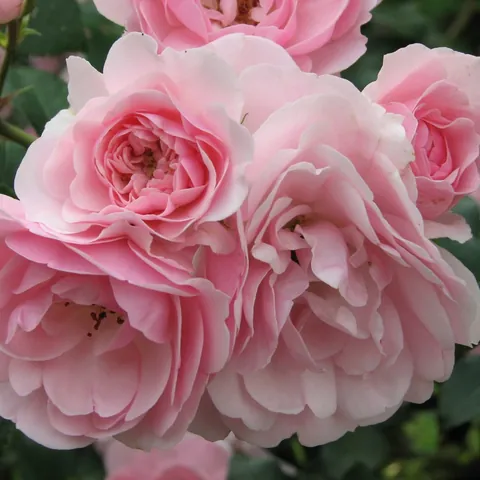
Very double, 'split' (3–5 sectors), peony-like, with a characteristic 'button-eye' centre; diameter 8 cm
Centre
Green 'eye' — a dense centre of greenish tone, a rare trait for roses
Fullness
Very double, 41+ petals (very full)
Flower carriage
In small sprays of 3–5 flowers per stem

Fragrance

Moderate

Moderate, with a spicy note.

Disease resistance

5 out of 5
Black spotresistantPowdery mildewresistant

High — resistant to powdery mildew, black spot and frost (according to the Ukrainian nurseries that sell the variety).

Sun

Full sun

The green 'eye' is more pronounced in cool weather.

Thorns

Moderate
thornlessfewmoderatemanyvery many

Moderate number of prickles (the breeder has not published an exact estimate).

Foliage

Dark green, healthy.

All characteristics in a table
Group
Shrub rose; Japanese florist type
Breeder
Takunori Kimura, 2011
Bud shape
Round-oval, pale pink
Open flower
Very double, 'split' (3–5 sectors), peony-like, with a characteristic 'button-eye' centre; diameter 8 cm
Centre
Green 'eye' — a dense centre of greenish tone, a rare trait for roses
Colour
Pale pink – nearly white as it fades; the green eye persists throughout the flowering period
Fullness
Very double, 41+ petals (very full)
Flower carriage
In small sprays of 3–5 flowers per stem
Flowering
Repeat flowering, abundant
Fragrance
Moderate, with a spicy note
Hips
Data not verified
Habit
Compact — the typical Japanese 'florist' form
Branching
Good; the bush looks rounded
Shoots
Medium stiffness
Thorns
Moderate number of prickles (the breeder has not published an exact estimate).
Dimensions
70–125 cm high; width approximately 70–90 cm — a compact bush
Support
Does not need support
Foliage
Dark green, healthy
Resistance
High — resistant to powdery mildew, black spot and frost (according to the Ukrainian nurseries that sell the variety)
Variations of the variety
HMF records the spelling 'Cecil de Volanges' (without the 'e'); the correct name of the novel's heroine is Cécile (with the 'e' in French). Websites often confuse it with Massad/Guillot — that is not their variety; the breeder is Takunori Kimura, Japan

Colour scheme

Pale pink – nearly white as it fades; the green eye persists throughout the flowering period

Rose neighbours

Perennials to plant nearby

Neighbouring roses

A soft pink and creamy white palette for a romantic Japanese-style garden:

Companion perennials

Purple and silver-green — they highlight the green 'eye' of the flower:

geranium 'Rozanne'astrantia 'Roma'lavender 'Munstead'soft lady's mantle (Alchemilla)

Contrasting accents

Green-silver for dramatic depth:

heuchera 'Lime Marmalade'blue fescuegreater ammi (Ammi majus)

More about the variety

Hips
Data not verified
Variations of the variety
HMF records the spelling 'Cecil de Volanges' (without the 'e'); the correct name of the novel's heroine is Cécile (with the 'e' in French). Websites often confuse it with Massad/Guillot — that is not their variety; the breeder is Takunori Kimura, Japan

How to grow

Where to plant. Romantic borders in a Japanese style, the foreground with low perennials, roses for wedding bouquets; thanks to its compact habit it suits containers and small beds.

Climate. To −23 °C — northern regions of Ukraine with moderate cover; southern — no cover needed.

Care. Minimal thanks to high disease resistance. Removing spent flowers encourages new flushes; formative pruning in spring.

About the name

Name. After Cécile de Volanges — the main heroine of 'Les Liaisons dangereuses' by Pierre Choderlos de Laclos (1782). The 15-year-old Cécile is a symbol of innocence who falls victim to a plot by the Marquise de Merteuil and the Vicomte de Valmont. The name conveys the tender, almost naive character of the pale pink flower.

Breeding. Bred by Takunori Kimura in Japan, 2011. Parentage not officially disclosed. HMF spells it 'Cecil de Volanges' (without the 'e'). Websites often wrongly attribute it to Massad/Guillot — this is incorrect, the variety is Japanese.

Significance. A rare example of a rose with a green 'eye' — a characteristic trait of Japanese florist varieties. Exceptional resistance to disease and frost made it popular with Ukrainian nurseries (EDROSES). The name, taken from a character of XVIII-century French literature, is a typical Japanese tribute to European culture in flower names.

Frequently asked questions about Cécile de Volanges

Does Cécile de Volanges need winter protection?

The cultivar’s reference temperature is −23 °C (USDA zone 6–9). Overwintering depends on the conditions.

How many times a season does Cécile de Volanges flower?

Repeat flowering, abundant.

How big does Cécile de Volanges grow?

70–125 cm tall, 70–90 cm wide.

Which diseases affect Cécile de Volanges?

Overall resistance: 5 out of 5. High resistance to powdery mildew, black spot and frost.

How much sun does Cécile de Volanges need?

Sun; full sun; the green 'eye' is more pronounced in cool weather.

What does Cécile de Volanges smell like?

Moderate, with a spicy note.

Gardeners' photos and reviews

My climate

Choose a reference temperature to compare with the cultivar’s data. This is not an overwintering forecast or advice on winter protection; consider wind, moisture and the duration of frost.

Regional data are generalised. USDA describes average annual extreme minima, not a forecast; the values in the list are rounded. Check the conditions at your site. More information: Roses in Ukraine's climate.