

Back to catalogue
Climber; large-floweredKordes, 2003Apricot and orange

Aloha Hawaii

Not to be confused with the classic Aloha Boerner (1949) or the cut-flower Aloha (Kordes, around 2012).

Climbing Max series · suitable as a tall shrub

Variety profile

Flowering

Repeat, in flushes

Repeat-flowering — peak in early summer, a second wave until autumn. Months are approximate, for the climate of Ukraine.

Winter hardiness

−20 °C

USDA zone 6b–9b. All of Ukraine · north with winter protection.

Compare reference temperatures

Plant size

250–300 × 100–120 cm
person 170 cm250–300 cm
Habit
Upright climber with good basal branching
Dimensions
250–300 cm tall × 100–120 cm wide
Support
Needs support: an arch, obelisk, wall or pergola; leave the main canes horizontal for abundant flowering
Shoots
Strong, flexible for tying in
Branching
Dense from the base

Flower

8–10 cm
Bud shape
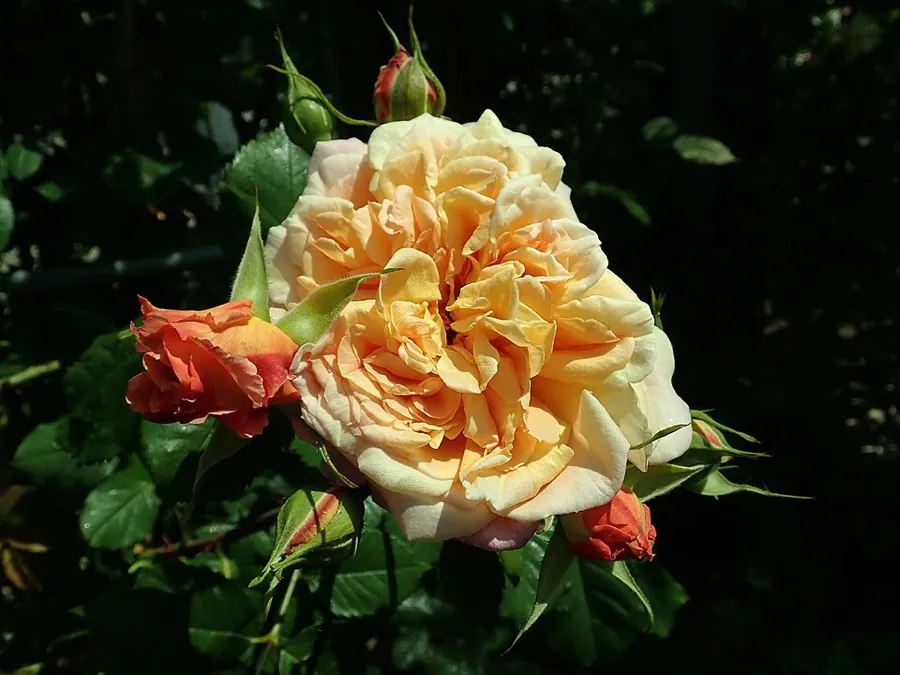
Reddish orange, dense, conical
Open flower
Cupped to rosette-shaped, with overlapping petals (imbricated); diameter 8–10 cm
Centre
Full, packed with petals, no stamens visible
Fullness
Very double (about 40 petals)
Flower carriage
In clusters of 3–10 flowers per stem

Fragrance

Moderate

Moderate — fruity, with notes of apple and ripe fruit (Kordes labels it ‘strong, intense’, HelpMeFind ‘moderate fruity’).

Disease resistance

4 out of 5
Black spotresistantPowdery mildewresistantRustsusceptible

Very high resistance to black spot and powdery mildew; weaker against rust, so it needs preventive treatment.

Sun

Full sun for abundant flowering and richer colour

Thorns

Moderate
thornlessfewmoderatemanyvery many

. Standard for a Kordes climber.

Foliage

Dark green, glossy, large — like a Rugosa-hybrid (inherited from Rugelda).

Other names

Breeder's code KORwesrug.

All characteristics in a table
Group
Climber; large-flowered
Breeder
Kordes, 2003
Bud shape
Reddish orange, dense, conical
Open flower
Cupped to rosette-shaped, with overlapping petals (imbricated); diameter 8–10 cm
Centre
Full, packed with petals, no stamens visible
Colour
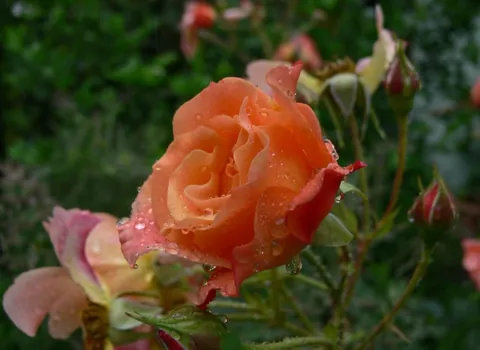
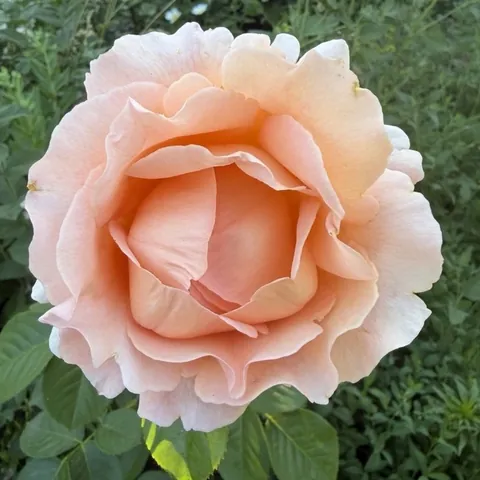
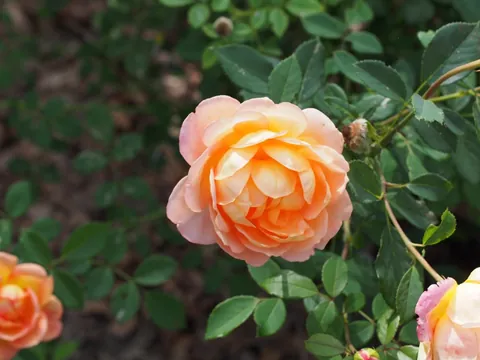
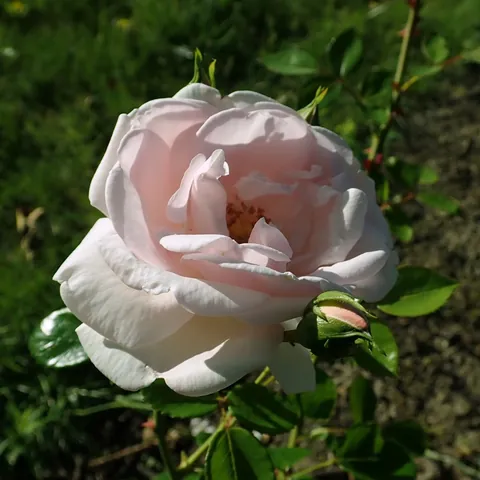
Base of the petal peach-apricot, with a soft coral flush towards the edge; the reverse of the petal slightly paler
Fullness
Very double (about 40 petals)
Flower carriage
In clusters of 3–10 flowers per stem
Flowering
Repeat-flowering — peak in early summer, a second wave until autumn
Fragrance
Moderate — fruity, with notes of apple and ripe fruit (Kordes labels it ‘strong, intense’, HelpMeFind ‘moderate fruity’)
Hips
Few, because the flowers are so double — no ornamental value
Habit
Upright climber with good basal branching
Branching
Dense from the base
Shoots
Strong, flexible for tying in
Thorns
. Standard for a Kordes climber.
Dimensions
250–300 cm tall × 100–120 cm wide
Support
Needs support: an arch, obelisk, wall or pergola; leave the main canes horizontal for abundant flowering
Foliage
Dark green, glossy, large — like a Rugosa-hybrid (inherited from Rugelda)
Resistance
Very high resistance to black spot and powdery mildew; weaker against rust, so it needs preventive treatment
Variations of the variety
In nurseries it is sold without the ‘Hawaii’ name, simply as ‘Aloha Kordes’ or ‘Kordes Rose Aloha’. Not to be confused with the classic Aloha Boerner 1949 or the cut-flower Aloha KORcut0430, around 2012

Colour scheme

Base of the petal peach-apricot, with a soft coral flush towards the edge; the reverse of the petal slightly paler

Rose neighbours

Perennials to plant nearby

Neighbouring roses

Warm peach-apricot varieties keep one coral-apricot tone around Aloha Hawaii. Westerland is a parent variety.

Perennial companions

A purple-silver framework that sets off the warm glow of coral-apricot:

salvia ‘Caradonna’spike speedwell (veronica)woolly lamb's ears (Stachys)heuchera ‘Caramel’

Contrasting accents

For contrast in tone, lavender-blue and purple accents at the base:

Nepeta Walker's LowGeranium RozanneAllium Globemaster

More about the variety

Hips
Few, because the flowers are so double — no ornamental value
Variations of the variety
In nurseries it is sold without the ‘Hawaii’ name, simply as ‘Aloha Kordes’ or ‘Kordes Rose Aloha’. Not to be confused with the classic Aloha Boerner 1949 or the cut-flower Aloha KORcut0430, around 2012

How to grow

Where to plant. Along a fence, on an arch or obelisk, or against a south or west wall of the house; as a tall shrub in a mixed border.

Climate. Hardy to −20 °C. It grows well in Ukraine from zone 5b (with winter protection) to zone 8: Kyiv, Lviv, Odesa, and the Carpathians with shelter.

Care. Moderate pruning (cut out weak and old canes; leave the main canes horizontal for abundant flowering); tie in; mulch; preventive treatments against rust.

About the name

Name. ‘Aloha’ is a Hawaiian word meaning ‘love, hello, goodbye, compassion’, a symbol of warmth and hospitality. Kordes deliberately echoed the name of the classic Aloha Boerner (1949), adding ‘Hawaii’ for the international market to emphasise its ‘tropical’ palette.

Breeding. Bred by W. Kordes & Sons in 2003. Parentage: Westerland (Kordes 1969, a warm orange-apricot shrub rose) × Rugelda (Kordes 1989, a yellow-red rugosa hybrid with good hardiness). Patent code: KORwesrug.

Meaning. The warm ‘tropical’ palette of coral-apricot flowers, plus the sturdiness of Rosa rugosa — hence the Hawaiian name. Not to be confused with the classic Aloha Boerner (1949, climbing HT) or the cut-flower Aloha (KORcut0430, around 2012): three different varieties with the same name.

Frequently asked questions about Aloha Hawaii

Does Aloha Hawaii need winter protection?

The cultivar’s reference temperature is −20 °C (USDA zone 6b–9b). Overwintering depends on the conditions.

How many times a season does Aloha Hawaii flower?

Repeat-flowering — peak in early summer, a second wave until autumn.

How big does Aloha Hawaii grow?

250–300 cm tall, 100–120 cm wide.

Which diseases affect Aloha Hawaii?

Overall resistance: 4 out of 5. Very resistant to black spot and powdery mildew; weak against rust.

How much sun does Aloha Hawaii need?

Sun; full sun for abundant flowering and richer colour.

What does Aloha Hawaii smell like?

Moderate — fruity, with notes of apple and ripe fruit (Kordes labels it ‘strong, intense’, HelpMeFind ‘moderate fruity’).

Gardeners' photos and reviews

My climate

Choose a reference temperature to compare with the cultivar’s data. This is not an overwintering forecast or advice on winter protection; consider wind, moisture and the duration of frost.

Regional data are generalised. USDA describes average annual extreme minima, not a forecast; the values in the list are rounded. Check the conditions at your site. More information: Roses in Ukraine's climate.