



Back to catalogue
GrandifloraJames A. Sproul; Weeks Roses, 2005Yellow

Honey Dijon

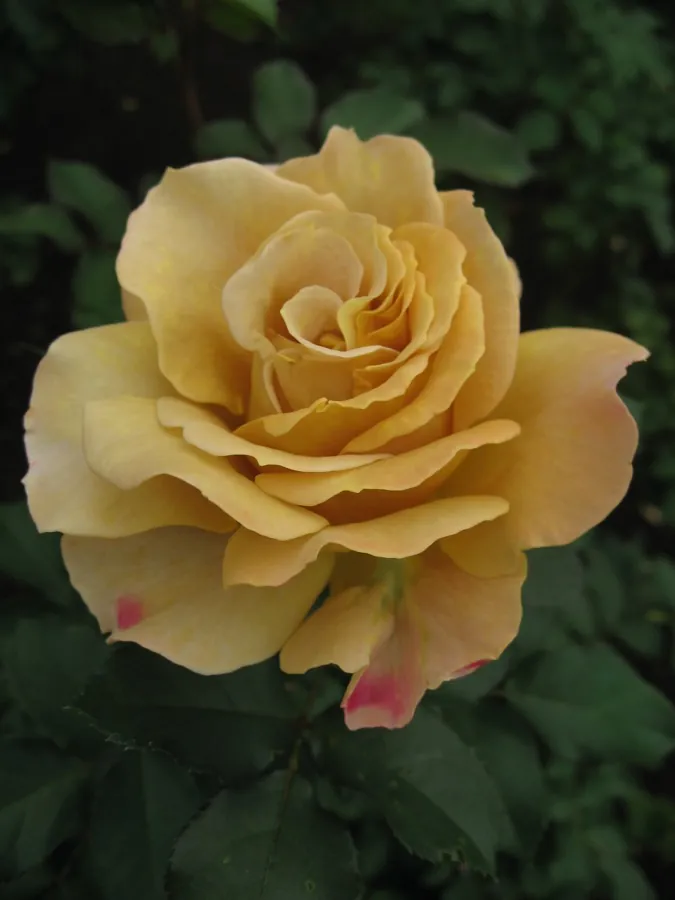
A unique colour — golden mustard that fades to beige; the first commercial variety of James A. Sproul; parentage Stainless Steel × Singin' in the Rain.

Show HT-Grandiflora

Variety profile

Flowering

Repeat flowering, in flushes through the season

Origin

Sproul/Weeks

2005 · US PP17,822 · the first commercial Sproul rose

Winter hardiness

−20 °C

USDA zone 6b–9b. In Ukraine with moderate cover.

Compare reference temperatures

Plant size

100–150 × 90 cm
person 170 cm100–150 cm
Habit
Upright, mounded — the bush forms a characteristic 'cap'
Dimensions
100–150 cm tall × ~90 cm wide
Support
No support needed
Shoots
Strong, straight
Branching
Good, even

Flower

≈ 12 cm

26–40 petals.

Bud shape
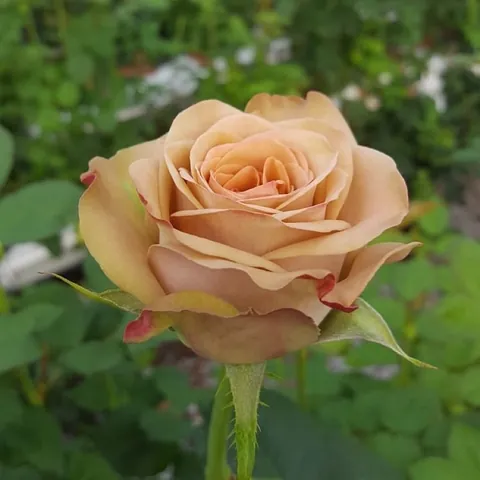
Elongated, high-centred, golden mustard with bronze notes
Open flower
Classic Grandiflora-form, very double; diameter ~12 cm — large, striking flowers
Centre
Dense centre of golden mustard with noticeable light bronze variations
Fullness
Very full, 26–40 petals
Flower carriage
Singly or in small clusters of 2–3 — typical of Grandiflora

Fragrance

Moderate

Moderate-strong fruity scent — Weeks officially describes it as 'pleasant fruity', not 'honey and spices' (a typical error in the working notes).

Disease resistance

4 out of 5

Good — rated 'EXCELLENT-' in HMF by members.

Sun

Full sun to bring out the mustard tone

Thorns

Moderate
thornlessfewmoderatemanyvery many

Average number, typical of exhibition HTs.

Foliage

Dark green, leathery.

All characteristics in a table
Group
Grandiflora
Breeder
James A. Sproul; Weeks Roses, USA, 2005
Bud shape
Elongated, high-centred, golden mustard with bronze notes
Open flower
Classic Grandiflora-form, very double; diameter ~12 cm — large, striking flowers
Centre
Dense centre of golden mustard with noticeable light bronze variations
Colour
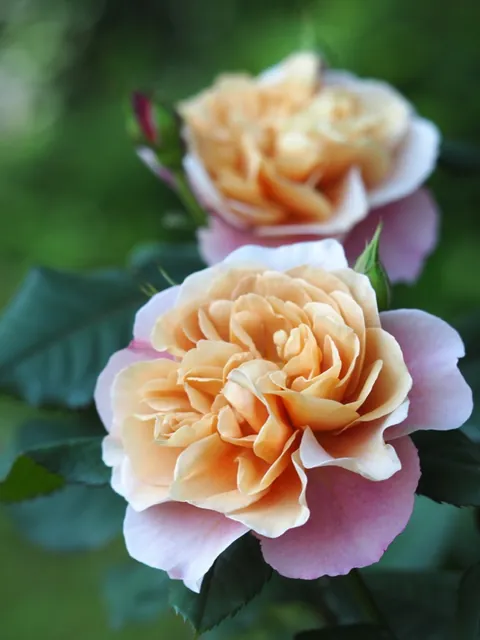
'brownish gold shading to golden beige' — golden mustard in bud, turning to beige as the flower fades; unique among HTs and Grandifloras. It looks especially lovely in evening light
Fullness
Very full, 26–40 petals
Flower carriage
Singly or in small clusters of 2–3 — typical of Grandiflora
Flowering
Repeat flowering, in flushes through the season
Fragrance
Moderate-strong fruity scent — Weeks officially describes it as 'pleasant fruity', not 'honey and spices' (a typical error in the working notes)
Hips
Not documented
Habit
Upright, mounded — the bush forms a characteristic 'cap'
Branching
Good, even
Shoots
Strong, straight
Thorns
Average number, typical of exhibition HTs.
Dimensions
100–150 cm tall × ~90 cm wide
Support
No support needed
Foliage
Dark green, leathery
Resistance
Good — rated 'EXCELLENT-' in HMF by members
Variations of the variety
Code WEKsproulses; important: 'WEK' stands for Weeks Roses (the introducer), but the true breeder is James A. Sproul; patent US PP17,822 (2007); a class conflict: Weeks and HMF classify it as Grandiflora, RHS as Floribunda; we take Grandiflora per the registration

Colour scheme

'brownish gold shading to golden beige' — golden mustard in bud, turning to beige as the flower fades; unique among HTs and Grandifloras. It looks especially lovely in evening light

Rose neighbours

Perennials to plant nearby

Neighbouring roses

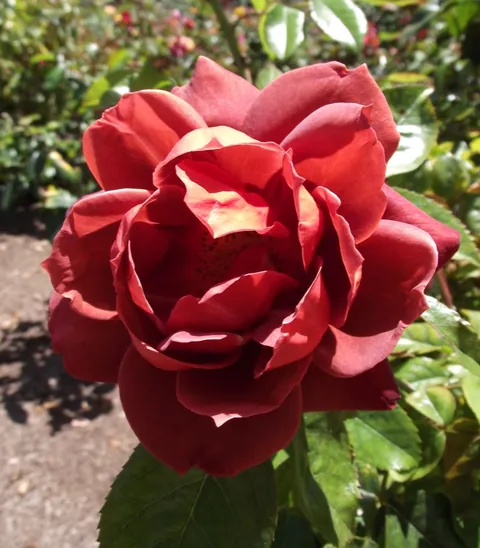
A thematic group of the fashionable 'browns' of the 2000s:

Companion perennials

Violet-silver accents for the 'vintage' mustard tones:

lavender 'Hidcote'Byzantine stachys (Stachys byzantina)lady's mantle (Alchemilla)catmint (Nepeta) 'Walker's Low'

Availability worldwide

An American variety, especially popular in wedding floristry:

🇪🇺 Europe: moderate · specialist nurseries🇺🇸 USA: HIGH · Weeks Roses bestseller🇯🇵 Asia: high · wedding floristry🇺🇦 Ukraine: moderate · from Weeks dealers

More about the variety

Hips
Not documented
Variations of the variety
Code WEKsproulses; important: 'WEK' stands for Weeks Roses (the introducer), but the true breeder is James A. Sproul; patent US PP17,822 (2007); a class conflict: Weeks and HMF classify it as Grandiflora, RHS as Floribunda; we take Grandiflora per the registration

How to grow

Where to plant. 'vintage' borders, containers near places where people sit, themed 'brown' groups with Hot Cocoa and Guinness; prized in wedding flowers for its rare colour, and good in bouquet arrangements; lovely in evening light, where the mustard tone 'glows'.

Climate. Down to −20 °C — in Ukraine with moderate cover in the northern regions; in the south, no cover needed.

Care. Classic Grandiflora — prune in spring by ⅓; removing spent blooms encourages new flushes; standard seasonal disease prevention.

About the name

Name. 'Honey Dijon' — English for 'honey Dijon mustard'. The name is a tribute to the French Dijon mustard sauce with its characteristic honey-golden colour. The variety is known precisely for its unique 'honey-mustard' colour, which is rare among garden roses.

Breeding. IMPORTANT CLARIFICATION: from the code WEKsproulses one might have assumed Tom Carruth (Weeks Roses), but in fact the breeder is James A. Sproul, USA (a private amateur breeder); Weeks Roses is only the distributor and introducer. Bred around 2003, with commercial introduction in 2005. Patent US PP17,822 (19.06.2007), Australian patent AU3679P (2008). Sproul's first major commercial success. Parentage: 'Stainless Steel'™ (Tom Carruth, 1991, a lavender-grey HT) × 'Singin' in the Rain' (McGredy 1991, a salmon-apricot floribunda, AARS 1995).

Significance. Honey Dijon is popular in wedding flowers: a rare 'vintage' colour that combines well with cream, powder and silver arrangements. Among the 'brown' varieties, together with Hot Cocoa (Carruth 2003, AARS 2003), Cappuccino (Tantau Evers 2005) and Guinness (Netherlands, ~2011), it forms a new commercial category of roses for unusual bouquets in the 2000s. It is an example of how private breeders can create varieties with a unique market niche, competing with the big houses.

Frequently asked questions about Honey Dijon

Does Honey Dijon need winter protection?

The cultivar’s reference temperature is −20 °C (USDA zone 6b–9b). Overwintering depends on the conditions. In Ukraine with moderate cover.

How many times a season does Honey Dijon flower?

Repeat flowering, in flushes through the season.

How big does Honey Dijon grow?

100–150 cm tall, about 90 cm wide.

Which diseases affect Honey Dijon?

Overall resistance: 4 out of 5. «EXCELLENT-» per HMF; good garden quality.

How much sun does Honey Dijon need?

Sun; full sun to bring out the mustard tone.

What does Honey Dijon smell like?

Moderate-strong fruity scent — Weeks officially describes it as 'pleasant fruity', not 'honey and spices' (a typical error in the working notes).

Gardeners' photos and reviews

My climate

Choose a reference temperature to compare with the cultivar’s data. This is not an overwintering forecast or advice on winter protection; consider wind, moisture and the duration of frost.

Regional data are generalised. USDA describes average annual extreme minima, not a forecast; the values in the list are rounded. Check the conditions at your site. More information: Roses in Ukraine's climate.